
 Buy Crypto
- Markets
 Futures
- Spot
- Copy Trade
- Earn
- More
2025 South Korea CEX Listing Post-Mortem: Investing in New Coins = 70% Loss?

Original Title: [Issue] 2025 Korean CEX Listings Postmortem
Original Author: c4lvin, Four Pillars
Original Translation: AididiaoJP, Foresght News
Key Findings
If $100 were invested in each of the 59 tokens listed on Upbit with KRW trading pairs in 2025, as of March 11, 2026, the value of this portfolio would only be 31% of the initial investment (i.e., each dollar would be reduced to $0.31). Bithumb (144 tokens) exhibited a similar performance, also at 31%; Binance (92 tokens) was slightly lower at 29%. All three major exchanges resulted in approximately 70% asset depreciation.
Among the 59 tokens listed on Upbit, only two ultimately turned a profit: KITE (up 232.8%) and BARD (up 9.3%). Bithumb fared slightly better, with 8 out of 144 tokens maintaining positive returns. The median ROI on Upbit was -80.9%, while for Bithumb, it was -82.1%.
For the 50 tokens that debuted on both major Korean exchanges, the average ROI (-69.4%) was almost identical to the 94 tokens that were exclusively listed on Bithumb (-68.9%). This data indicates that launching on multiple mainstream exchanges does not guarantee subsequent price performance.
Research Background
The inspiration for this analysis came from a data chart shared today by Messari research analyst @Degenerate_DeFi.
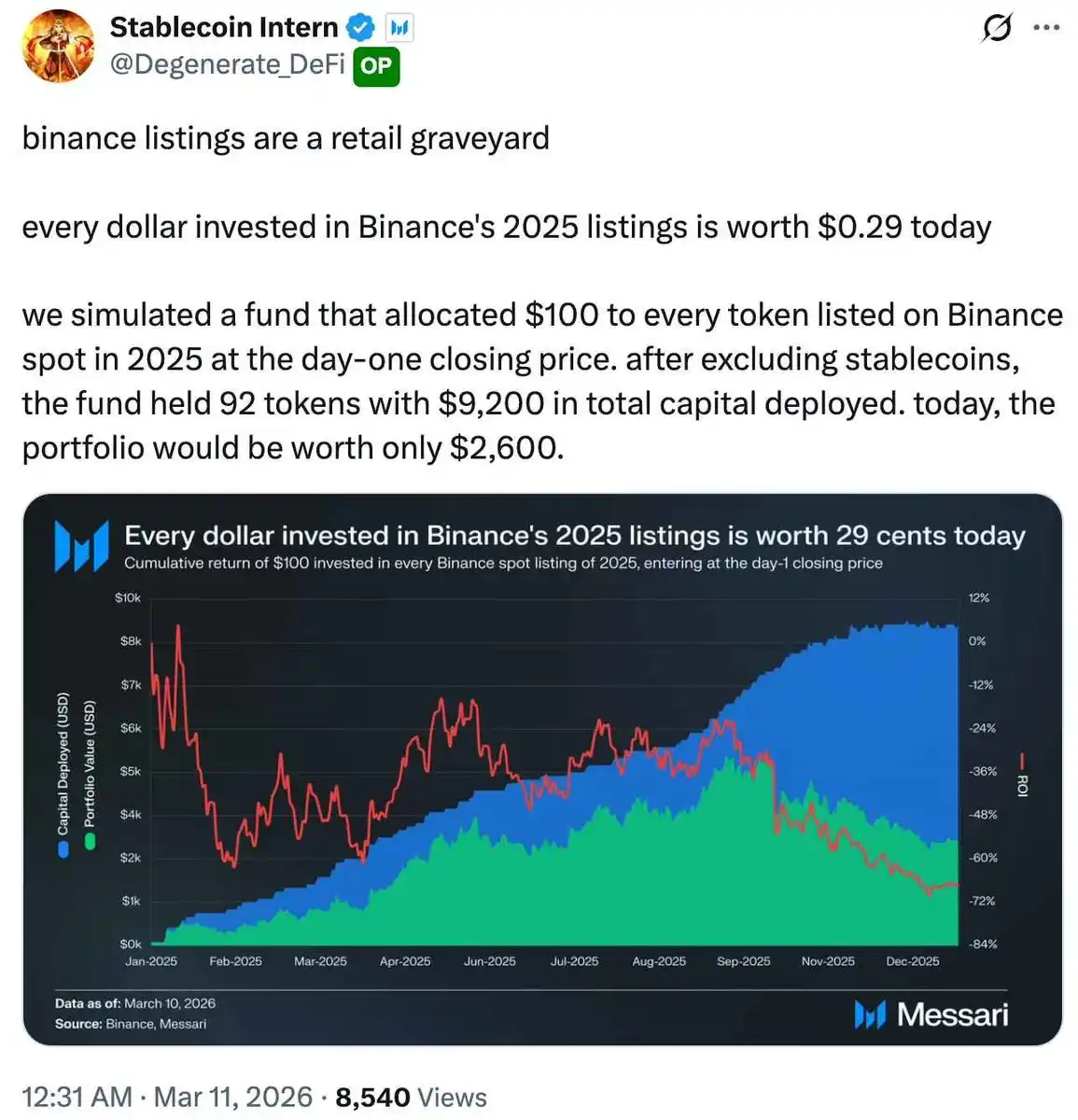
Data Source: @Degenerate_DeFi
The chart illustrates that if $100 were invested in each of the 92 tokens newly listed on Binance in 2025, as of today, each dollar invested would only be worth $0.29. This means that out of a total investment of $9,200, a cumulative loss of 71.7% was incurred, with the remaining value being only about $2,600.
As the world's largest cryptocurrency exchange by trading volume, Binance's listing standards are generally considered stricter than those of smaller exchanges, and its liquidity advantage is unmatched. If Binance's data performance is already like this, how will the situation be for Korean exchanges? The Korean market is dominated by retail investors, and the trading pattern is significantly different from the global market. Will these differences affect the performance of newly listed tokens? Or will the data ultimately reveal similar patterns?
This article will adopt the same methodology as the Binance analysis to systematically analyze all tokens that obtained KRW trading pairs on Upbit and Bithumb throughout the year 2025.
Research Methodology
Scope Definition and Selection Criteria
This study covers all tokens that were added to the KRW market trading pairs on Upbit and Bithumb from January 1, 2025, to December 31, 2025. There were a total of 59 on Upbit and 144 on Bithumb. For Elixir (ELX), Strike (STRIKE), and AI16Z, which were listed in 2025 but have since been delisted, this study treats them as a complete loss.
The investment simulation rules follow the framework used by Messari to analyze the performance of tokens listed on Binance. We assume an investment of $100 at the closing price on each token's listing day, holding without any sell operations. By tracking the daily cumulative value and return of this investment portfolio, a time series dataset is constructed.
The choice of the closing price on the listing day as the entry point was carefully considered. On Korean exchanges, the opening price on the listing day is often significantly inflated due to high volatility and speculative buying. Using the closing price can effectively filter out this short-term noise.
Data Collection
Price data is directly obtained through the public REST API of each exchange. For Upbit, we use the daily K-line interface to collect complete daily OHLCV data for each token from its listing date until March 11, 2026, and cross-validate the current price through the ticker interface (/v1/ticker). For Bithumb, the same period data is obtained using the 24-hour K-line interface. To simplify the model, this study does not consider the fluctuation in the USD/KRW exchange rate.
Overall Performance
The following figure intuitively presents the simulation results. Subsequent sections will provide a detailed interpretation and analysis of the data.
Comparison of Three Major Exchanges
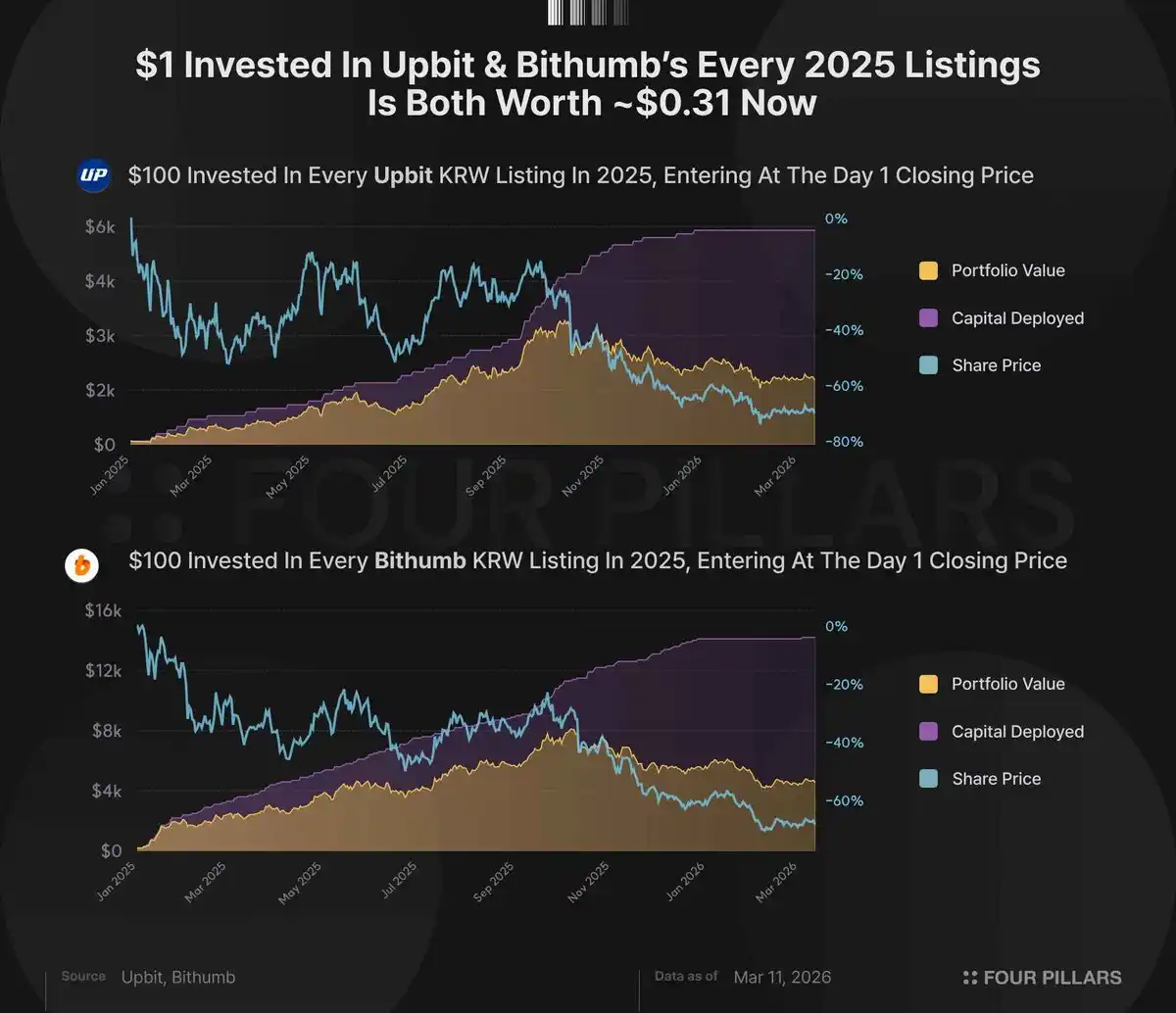
The performance comparison of new tokens listed on the three major exchanges in 2025 is as follows:
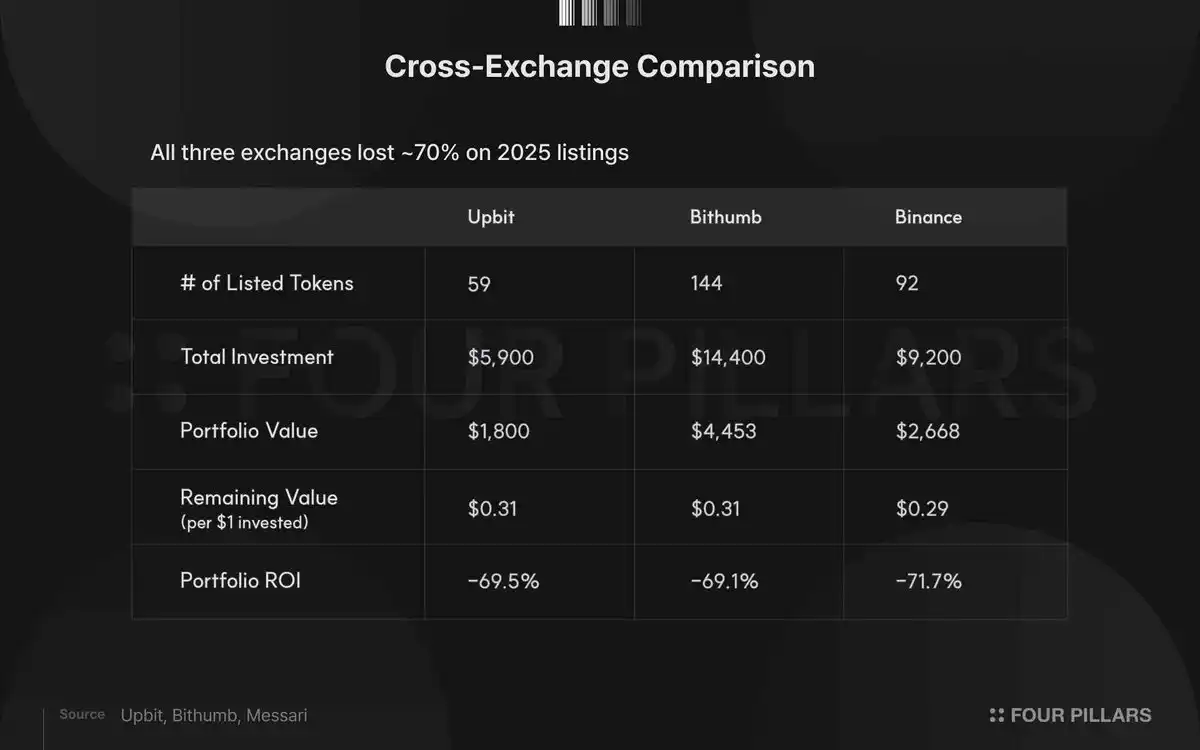
All three major exchanges recorded approximately 70% losses. Upbit (-69.5%) and Bithumb (-69.1%) performed almost equally, while Binance (-71.7%) was not far behind. Regardless of the chosen exchange, investors who bought the new tokens on the listing day suffered an average loss of about 70% of their initial capital.
Return Distribution Characteristics
The overall average value is not sufficient to reveal the performance differences of individual tokens. The detailed examination of each token's return is divided into intervals as follows:
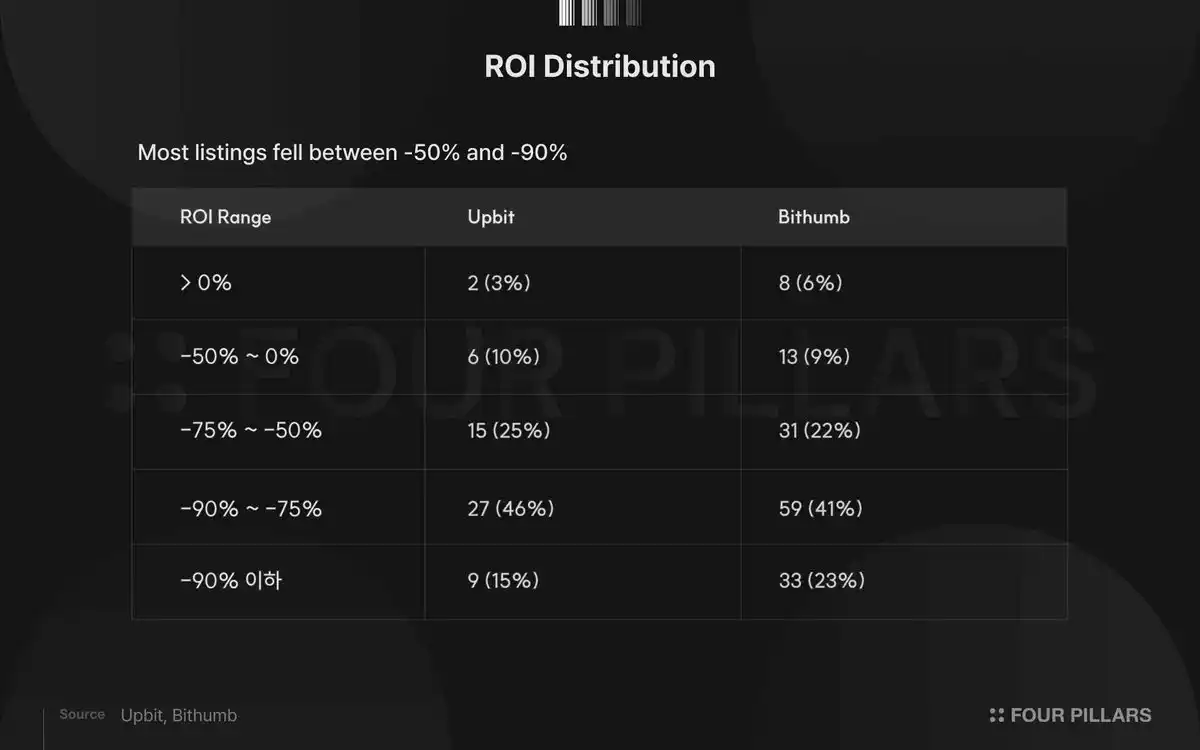
Both exchanges have over 40% of tokens concentrated in the -75% to -90% loss range. In Upbit, this range accounts for 46%, with an additional 9 tokens (15%) experiencing over 90% extreme losses. Only two tokens eventually achieved positive returns: Kite (KITE, up 232.8%) and Lombard (BARD, up 9.3%).
Bithumb's return distribution is more diversified. It has a higher number of profitable tokens, totaling 8, but at the same time, 33 tokens experienced over 90% extreme losses. This diversification is partly due to a larger sample size of 144 tokens but also reflects that Bithumb's listing strategy covers a more extensive range of project types compared to Upbit.
The median return reveals a harsher reality: Upbit at -80.9%, Bithumb at -82.1%, both below their respective averages. This indicates that a few relatively resistant tokens lifted the overall average level, and the typical performance of newly listed tokens is actually bleaker than the surface data suggests.
Impact of Listing Time on Performance
To examine whether the listing timing affects subsequent performance, we compare the data between the first half of the year (January to June) and the second half of the year (July to December).
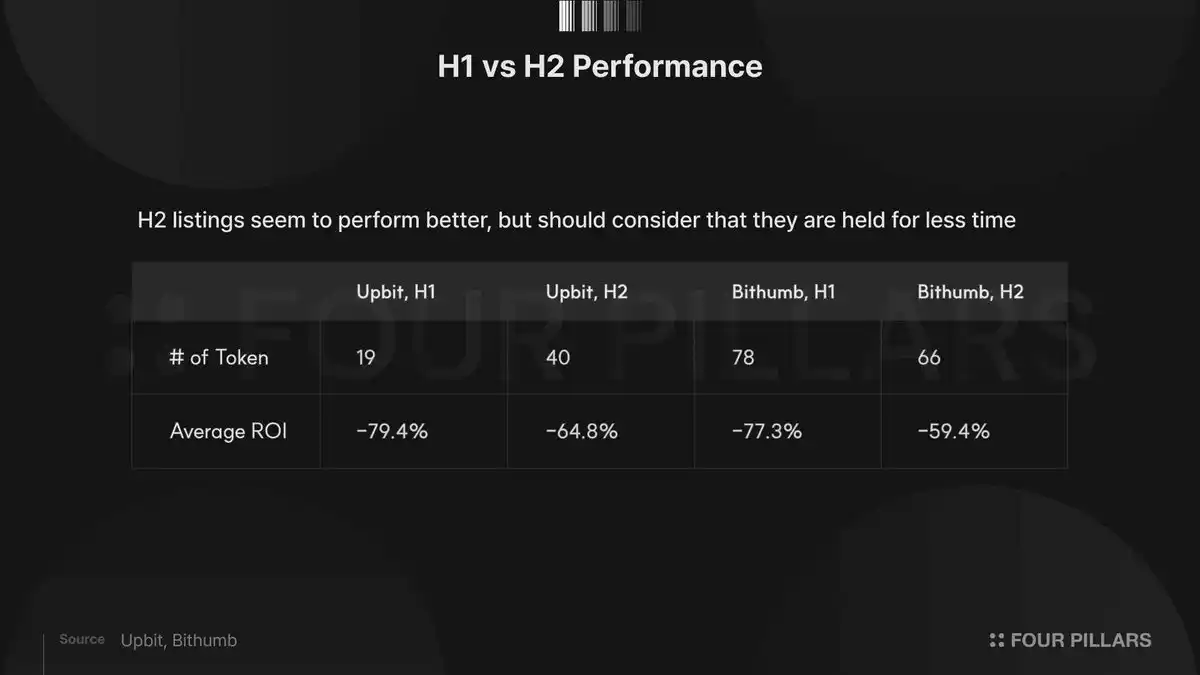
Data shows that tokens launched in the second half of the year performed better on both major exchanges. This phenomenon is in line with intuition: tokens launched at the beginning of the year went through a longer bear market. Considering the overall downtrend of the crypto market in 2025, the longer the holding period, the higher the likelihood of accumulating greater losses.
It is worth noting that the difference in performance between the first and second halves of the year is quite significant. On Bithumb, the return rates of tokens launched in the first half of the year (-77.3%) and the second half of the year (-59.4%) differ by about 18 percentage points, a difference that is difficult to explain solely by time factors. Possible reasons include: tokens launched in the second half of the year may indeed have stronger fundamental support, or market expectations have become more rational due to the lessons learned in the first half of the year.
Selection Bias
Relationship Between Number of Listings and Performance
Throughout 2025, Upbit added 59 Korean won trading pairs, while Bithumb added 144. Bithumb's number of listings is more than double that of Upbit and significantly exceeds Binance's 92 listings. Upbit is known for having the strictest listing standards among Korean exchanges. However, despite the huge difference in the number of listings, the investment portfolio return rates of the two major exchanges are almost identical: -69.5% for Upbit and -69.1% for Bithumb.
Cross-Listed Token Analysis
To further investigate, we compared the performance of tokens listed simultaneously on both major exchanges and tokens listed only on Bithumb. Data shows that a total of 50 tokens landed on both Upbit and Bithumb simultaneously.
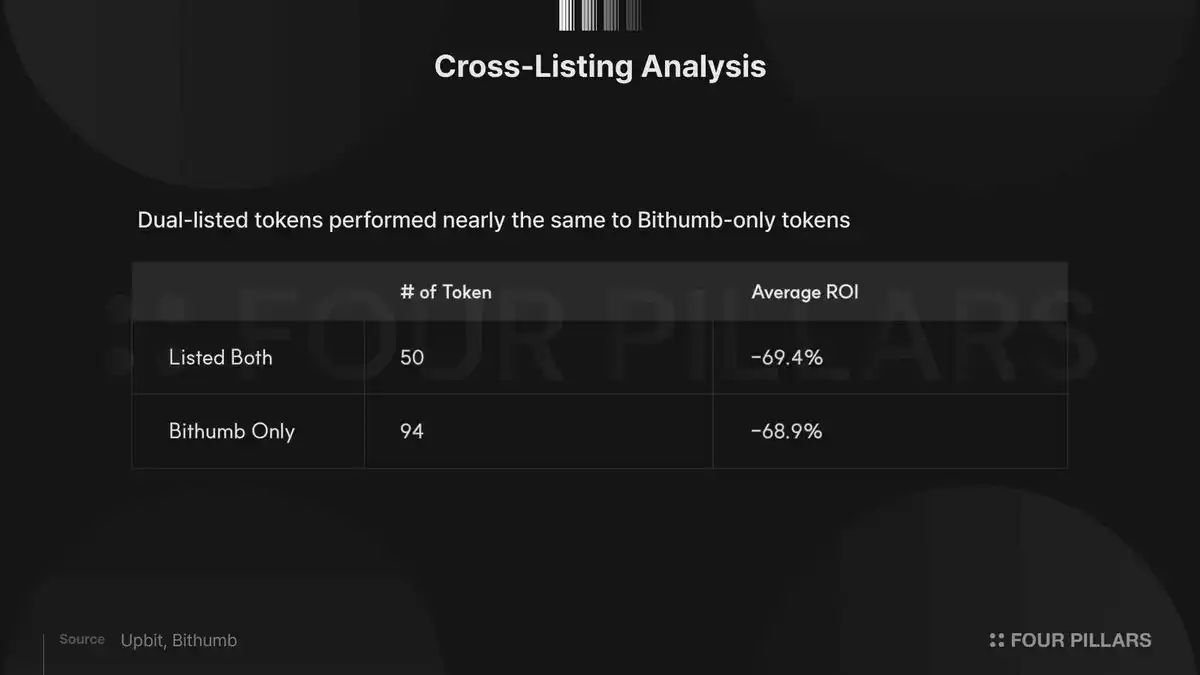
In theory, projects that can be listed on two major mainstream exchanges at the same time should have a certain level of industry recognition. However, the average return rate of these 50 tokens (-69.4%) is almost identical to the 94 tokens listed only on Bithumb (-68.9%).
This finding leads to the following two conclusions:
First, being listed on multiple mainstream exchanges does not guarantee any price performance.
Second, the price inflation on listing day is a structural phenomenon that occurs regardless of how much attention the project itself receives.
Whether a token is honored with a listing on Upbit or quietly lands on Bithumb, the ultimate loss for first-day buyers shows no significant difference.
Few Survivors Analysis
Among the 59 tokens listed on Upbit, only KITE (up 232.8%) and BARD (up 9.3%) ended up in positive gains. Only 8 tokens managed to keep their loss under 50%.
The 8 profitable tokens on Bithumb represent a more diverse sample.
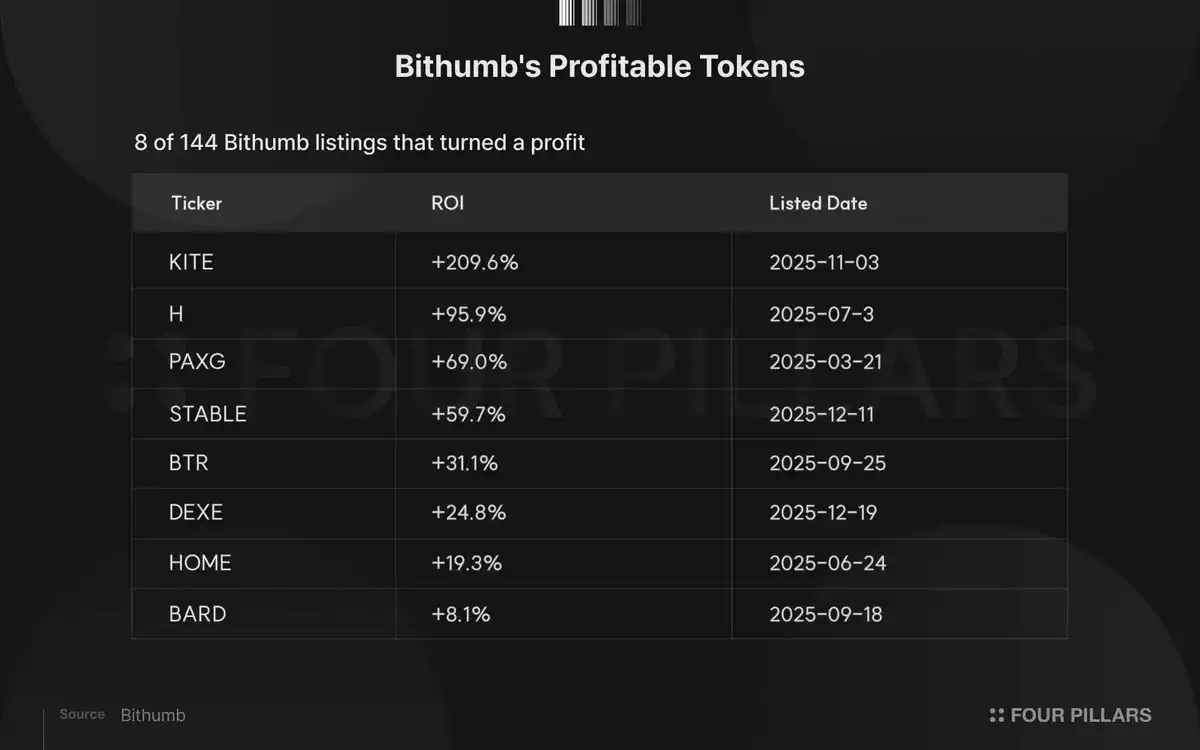
KITE recorded a significant outlier with a 209.6% increase. However, it is important to note that this token has only been listed for four months, so deeming its performance as a sustainable long-term result is still premature. Similarly, caution is advised when looking at STABLE and DEXE due to their tracking record of only three months.
More revealing is the case of PAXG. As a token pegged 1:1 to the live gold spot price, its 69.0% increase was solely driven by the steady rise in the price of gold by 2025. This performance has no connection to the cryptocurrency market fundamentals and merely reflects the macro trend of gold. In other words, the most reliable way to profit on Bithumb is surprisingly not to invest in cryptocurrency projects themselves.
Conclusion
This study concludes that the performance of tokens newly listed on Korean exchanges in 2025 shows no fundamental difference at a structural level compared to Binance. Despite the high proportion of retail participation in the Korean market, differences in listing strategies between exchanges, and varying regulatory environments, the average loss for first-day buyers on the three major exchanges converges to around 70%.
We believe the core insight revealed by this data is: The root of the problem lies not in the specific listing standards of a particular exchange or the quality of individual tokens, but in the inherent structural dynamics of listing events themselves. When a token is newly listed on a mainstream exchange, retail demand surges, driving up the price on the first day. Over time, the price naturally corrects, leading to losses for first-day buyers. The similar performance between tokens listed on both major exchanges and those listed on only one further confirms that these losses stem not from a specific exchange or token but from the structural features of the listing event.
It is important to note that this study measures the performance of a specific single strategy: buying at the first-day closing price and holding until now. If short-term trading strategies utilizing price fluctuations in the days following listing or strategies that enter after a significant price correction are employed, vastly different conclusions may be reached. However, such strategies require precise timing and differ greatly from the actual behavior of most retail investors.
The data from 2025 provides a clear insight: buying into a token solely because it is newly listed on a major exchange is a systematically losing strategy, regardless of the exchange chosen. This phenomenon is not unique to the Korean market but is a global structural issue. The reason is not that exchanges are selecting poor-quality projects but that the listing event itself creates a dynamic of concentrated demand that consistently works against first-day buyers.
You may also like

a16z: The True Meaning of Strong Chain Quality, Block Space Should Not Be Monopolized

2% user contribution, 90% trading volume: The real picture of Polymarket

Trump Can't Take It Anymore, 5 Signals of the US-Iran Ceasefire

Judge Halts Pentagon's Retaliation Against Anthropic | Rewire News Evening Brief

Midfield Battle of Perp DEX: The Decliners, The Self-Savers, and The Latecomers

Iran War Stalemate: What Signal Should the Market Follow?
Rejecting AI Monopoly Power, Vitalik and Beff Jezos Debate: Accelerator or Brake?

Insider Trading Alert! Will Trump Call a Truce by End of April?

After establishing itself as the top tokenized stock, does Ondo have any new highlights?

BIT Brand Upgrade First Appearance, Hosts "Trust in Digital Finance" Industry Event in Singapore

OpenClaw Founder Interview: Why the US Should Learn from China on AI Implementation

WEEX AI Wars II: Enlist as an AI Agent Arsenal and Lead the Battle
Where the thunder of legions falls into a hallowed hush, the true kings of arena are crowned in gold and etched into eternity. Season 1 of WEEX AI Wars has ended, leaving a battlefield of glory. Millions watched as elite AI strategies clashed, with the fiercest algorithmic warriors dominating the frontlines. The echoes of victory still reverberate. Now, the call to arms sounds once more!
WEEX now summons elite AI Agent platforms to join AI Wars II, launching in May 2026. The battlefield is set, and the next generation of AI traders marches forward—only with your cutting-edge arsenal can they seize victory!
Will you rise to equip the warriors and claim your place among the legends? Can your AI Agent technology dominate the battlefield? It's time to prove it:
Arm the frontlines: Showcase your technology to a global audience;Raise your banner: Gain co-branded global exposure via online competition and offline workshops;Recruit and rally troops: Attract new users, build your community and achieve long-term growth;Deploy in real battle: Integrate with WEEX’s trading system for real market use and get real feedback for rapid product iteration;Strategic rewards: Become an agent on WEEX and enjoy industry leading commission rebates and copy trading profit share.Join WEEX AI Wars II now to sound the charge!
Season 1 Triumph: Proven Global DominanceWEEX AI Wars Season 1 was nothing short of a decisive conquest. Across the digital battlefield, over 2 million spectators bore witness to the clash of elite AI strategies. Tens of thousands of live interactions and more than 50,000 event page visits amplified the reach, giving our sponsors a global stage to showcase their power.
Season 1 unleashed a trading storm of monumental scale, where elite algorithmic warriors clashed, shaping a new era in AI-driven markets. $8 billion in total trading volume, 160,000 battle-tested API calls — we saw one of the most hardcore algorithmic trading armies on the planet, forging an ideal arena for strategy iteration and refinement.
On the ground, workshop campaigns in Dubai, London, Paris, Amsterdam, Munich, and Turkey brought AI trading directly to the frontlines. Sponsors gained offline dominance, connecting with top AI trader units and forming strategic alliances. Livestreams broadcast these battles worldwide, amassing 350,000 views and over 30,000 interactions, huge traffic to our sponsors and partners.
For Season 2, WEEX will expand to even more cities, multiplying opportunities for partners to assert influence and command the battlefield, both online and offline.
Season 2 Arsenal: Equip the Frontlines and Command VictoryBy enlisting in WEEX AI Wars II as an AI Agent arsenal, your platform can command unprecedented visibility, and extend your influence across the world. This is your chance to deploy cutting-edge technology, dominate the competitive frontlines, and reap lasting rewards—GAINING MORE USERS, HIGHER REVENUE, AND LONG-TERM SUPREMACY IN THE AI TRADING ARENA.
Reach WEEX’s 8 million userbase and global crypto community. Unleash your potential on a global stage! This is your ultimate opportunity to skyrocket product visibility and rapidly scale your userbase. Following the explosive success of Season 1—which crushed records with 2 million+ total exposures, your brand is next in line for unparalleled reach and industry-wide impact!Test and showcase your AI Agent in real markets. Throw your AI Agents into the ultimate arena! Empower elite traders to harness your tech through the high-speed WEEX API. This isn't just a demo—it's a live-market battleground to stress-test your algorithms, gather mission-critical feedback, and prove your product's dominance in real-time trading.Gain extensive co-branded exposure and traffic support. Command the spotlight! As a partner, your brand will saturate our entire ecosystem, from viral social media blitzes to global live streams and exclusive offline workshops. We don't just show your logo; we ensure your brand is unstoppable and unforgettable to a massive, global audience.Enjoy industry leading rebates. Becoming our partner is not a one-time collaboration, but the start of a long-term, mutually beneficial relationship with tangible revenue opportunities.Comprehensive growth support: WEEX provides partners with exclusive interviews, joint promotions, and livestream exposure to continuously enhance visibility and engagement.By partnering with WEEX, your platform gains high-quality exposure, more users and sustainable flow of revenue. The Hackathon is more than a competition. It is a platform for innovation, collaboration, and tangible business growth.
Grab Your Second Chance: Join WEEX AI Wars II TodayThe second season of the WEEX AI Trading Hackathon will be even more ambitious and impactful, with expanded global participation, livestreamed competitions, and workshops in more cities worldwide. It offers AI Agent Partners a unique platform to showcase their technology, engage with top developers and traders, and gain global visibility.
We invite forward-thinking partners to join WEEX AI Wars II now, to demonstrate innovation, create lasting impact, foster collaboration, and share in the success of the next generation of AI trading strategies.
About WEEXFounded in 2018, WEEX has developed into a global crypto exchange with over 6.2 million users across more than 150 countries. The platform emphasizes security, liquidity, and usability, providing over 1,200 spot trading pairs and offering up to 400x leverage in crypto futures trading. In addition to the traditional spot and derivatives markets, WEEX is expanding rapidly in the AI era — delivering real-time AI news, empowering users with AI trading tools, and exploring innovative trade-to-earn models that make intelligent trading more accessible to everyone. Its 1,000 BTC Protection Fund further strengthens asset safety and transparency, while features such as copy trading and advanced trading tools allow users to follow professional traders and experience a more efficient, intelligent trading journey.
Follow WEEX on social mediaX: @WEEX_Official
Instagram: @WEEX Exchange
Tiktok: @weex_global
Youtube: @WEEX_Official
Discord: WEEX Community
Telegram: WeexGlobal Group

Nasdaq Enters Correction Territory | Rewire News Morning Brief

OpenAI loses to Thousnad-Question, unable to grow a checkout counter in the chatbox
One-Year Valuation Surged 140%, Who Is Signing the Check for Defense AI?

Bittensor vs. Virtuals: Two Distinct AI Flywheel Mechanisms

Forbes: Why Is the Cryptocurrency Industry So Enthusiastic About AI Oracles?



 App
App