
 Buy Crypto
- Markets
 Futures
- Spot
- Copy Trade
- Earn
- More
Grayscale 2025 Q1 Top Picks: 20 Tokens with High Growth Potential

Original Title: Grayscale Research Insights: Crypto Sectors in Q1 2025
Original Source: Grayscale Research
Original Translation: Golem, Odaily Planet Daily
Summary:
· The crypto market saw a significant surge in Q4 2024, with the FTSE/Grayscale Crypto Sectors Index demonstrating strong market performance. The rally largely reflected the market's positive response to the outcome of the U.S. presidential election.
· Competition in the smart contract platform sector remains intense. The price performance of sector leader Ethereum has lagged behind its second-largest competitor Solana, and investors are increasingly focusing on other Layer 1 networks such as Sui and The Open Network (TON).
· Grayscale Research updated the Top 20 token list, representing diversified assets in the cryptocurrency industry that may have high potential in the next quarter. New assets added in Q1 2025 include HYPE, ENA, VIRTUAL, JUP, JTO, and GRASS. All assets in the Top 20 list exhibit high price volatility and should be considered high-risk.
Grayscale Crypto Sectors Index
The Grayscale Crypto Sectors provide a comprehensive framework for understanding the range of investable digital assets and their relationship to underlying technologies. Building on this framework and in collaboration with FTSE Russell, Grayscale has developed the FTSE Grayscale Crypto Sectors Index series to measure and monitor crypto assets (Figure 1). Grayscale Research incorporates this index into its analysis of the digital asset market.
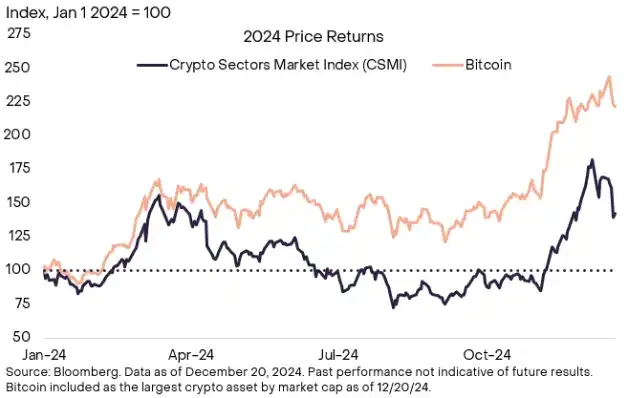
Figure 1: Positive Returns of the 2024 Grayscale Crypto Sectors Index
Cryptocurrency valuations soared in the fourth quarter of 2024, primarily due to the market's positive reaction to the U.S. election results. According to the Crypto Sector Market Index (CSMI), the industry's total market cap increased from $1 trillion to $3 trillion in this quarter. Figure 2 compares the total cryptocurrency market cap to various traditional public and private market asset categories. For instance, the current market value of the digital asset industry is roughly equivalent to the global inflation-linked bond market – more than double the U.S. high-yield bond market, yet still significantly below the global hedge fund industry or the Japanese stock market.
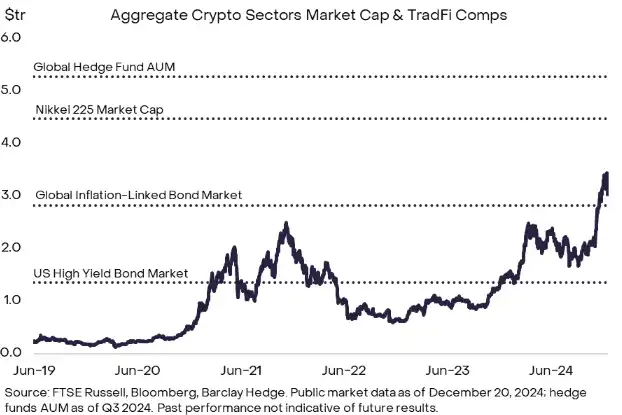
Figure 2: Cryptocurrency Market Cap Increases by $1 Trillion in Q4 2024
Due to the valuation increase, many new tokens met the inclusion criteria of Grayscale's Crypto Sectors framework (which sets a minimum market cap requirement of $1 billion for most tokens). In this quarter's rebalance, Grayscale added 63 new assets to the index series, now totaling 283 tokens. The consumer and culture sectors saw the most new token additions, reflecting the ongoing strong performance of meme coins and the appreciation of various assets related to gaming and social media.
By market cap, the largest new asset in Crypto Sectors is Mantle, an Ethereum Layer 2 protocol, which now meets the minimum liquidity requirement (for more detailed information on Grayscale index inclusion criteria, please refer to here).
Smart Contract Platform Competition
The smart contract platform space may be the most fiercely competitive submarket in the digital asset industry. While 2024 was a milestone year for the leader in this space, Ethereum—receiving approval for a U.S. exchange-traded product (ETP) and undergoing significant upgrades—ETH's performance lags behind some competitors like Solana, the second-largest asset by market cap in the space. Investors are also turning their attention to other L1 networks, including high-performance blockchains like Sui and the blockchain TON integrated with the Telegram platform.
When building infrastructure for application developers, architects of smart contract blockchains face a variety of design choices. These design choices impact the three factors that make up the "blockchain trilemma": network scalability, network security, and network decentralization. For example, prioritizing scalability often manifests as high transaction throughput and low fees (e.g., Solana), while prioritizing decentralization and network security may result in lower throughput and higher fees (e.g., Ethereum). These design choices lead to different block times, transaction throughputs, and average transaction fees (Figure 3).
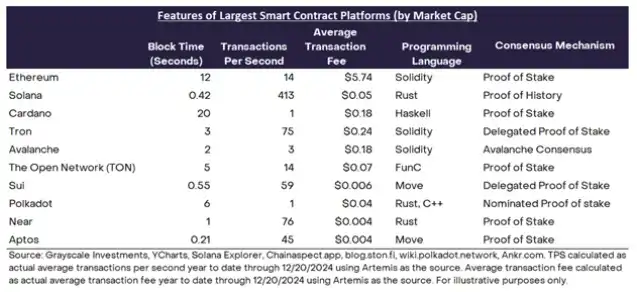
Figure 3: Smart Contract Platforms Have Different Technical Features
Regardless of design choices and network trade-offs, smart contract platforms derive their value through network fee revenue. While other metrics such as total TVL are also crucial, fee revenue can be seen as a primary driver of token value accumulation in this market segment (related reading: The Value War in Smart Contract Platforms).
As shown in Figure 4, there is a statistical relationship between smart contract platform fee revenue and market capitalization. The stronger the network's ability to generate fee revenue, the greater its ability to pass value to the network in the form of token burning or staking rewards. This quarter, the Top 20 token list listed by Grayscale Research includes some smart contract platform tokens: ETH, SOL, SUI, and OP.
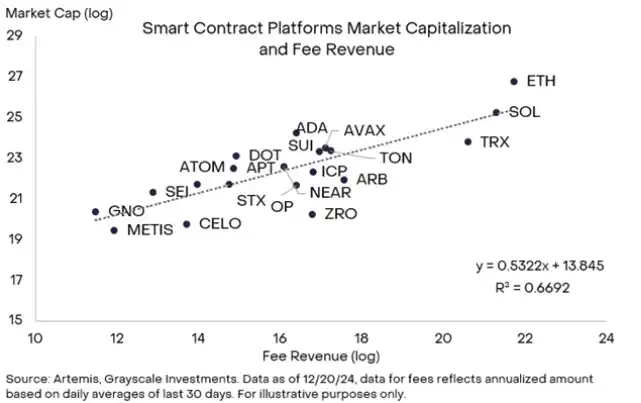
Figure 4: All smart contract platforms are competing for fee revenue
Grayscale Research Top 20 Token List
Each quarter, the Grayscale Research team analyzes hundreds of digital assets to provide insights for the rebalancing process of the FTSE/Grayscale Crypto Sectors index series. Following this process, Grayscale Research generates a list of the top 20 assets within the Crypto Sectors domain. The top 20 represent diversified assets across Crypto Sectors and these assets may have high potential in the upcoming quarter (Figure 4). The selection of this list combines a range of factors, including network growth/adoption, upcoming catalysts, sustainability of fundamentals, token valuation, token supply inflation, and potential tail risks.
In Q1 2025, Grayscale will focus on tokens that are involved in at least one of the following three core market themes:
· The U.S. election and its potential impact on industry regulation, especially in decentralized finance (DeFi) and staking;
· Continued breakthroughs in decentralized AI technology and the use of AI agents in blockchain;
· Growth of the Solana ecosystem.
Based on these themes, the following six assets have been added to the Top 20 list for the first quarter of 2025:
1. Hyperliquid (HYPE): Hyperliquid is an L1 blockchain designed to support on-chain financial applications. Its primary application is a decentralized exchange (DEX) for perpetual futures with a fully on-chain order book.
2. Ethena (ENA): The Ethena protocol has evolved into the new stablecoin USDe, primarily collateralized by Bitcoin and Ethereum hedge positions. Specifically, the protocol holds long positions in Bitcoin and Ether as well as short positions in perpetual futures contracts of the same assets. The staked version of this token provides yield through the price differential between spot and futures.
3. Virtual Protocol (VIRTUAL): Virtual Protocol is a platform built on the Ethereum L2 network Base to create AI agents. These AI agents are designed to mimic human decision-making and autonomously perform tasks. The platform allows for the creation and co-ownership of tokenized AI agents that can interact with their environment and other users.
4. Jupiter (JUP): Jupiter is a top-tier DEX aggregator on Solana with the highest TVL in the network. With retail traders increasingly entering the cryptocurrency market through Solana and speculative activities surrounding Solana-based memecoins and AI agent tokens on the rise, we believe Jupiter is well-positioned to capitalize on this growing market.
5. Jito (JTO): Jito is a liquidity protocol on Solana. Jito has seen significant adoption over the past year and boasts the best financials in the cryptocurrency space, with fee revenue surpassing $5.5 billion in 2024.
6. Grass (GRASS): Grass is a decentralized data network that rewards users for sharing their unused internet bandwidth through a Chrome extension. This bandwidth is used to scrape online data, which is then sold to AI companies and developers for training machine learning models, effectively enabling web data scraping while compensating users.
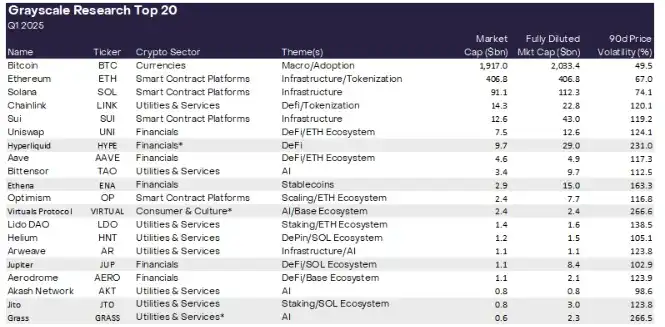
Figure 5: Top 20 Additions including DeFi Applications, AI Agents, and the Solana Ecosystem
Note: Shadow denotes new tokens coming in the upcoming quarter (Q1 2025). "*" denotes sector-related assets not included in the Crypto Sectors index. Data Source: Artemis, Grayscale Investments. Data as of December 20, 2024, for reference only. Assets are subject to change. Grayscale and its affiliates and clients may hold positions in the digital assets discussed in this document. All Top 20 assets are highly price volatile and should be considered high-risk assets.
In addition to the new themes mentioned above, Grayscale remains bullish on themes from the past few quarters, such as Ethereum scaling solutions, tokenization, and Decentralized Physical Infrastructure (DePIN). These themes are still reflected through protocols re-entering the Top 20, such as Optimism, Chainlink, and Helium.
This quarter, we have removed Celo from the Top 20. Grayscale Research continues to be optimistic about these projects and believes they remain integral to the crypto ecosystem. However, the revised Top 20 list may offer a more compelling risk-reward profile in the next quarter.
Investing in crypto assets carries risks, some of which are unique to the asset class, including smart contract vulnerabilities and regulatory uncertainty. Furthermore, all assets in the Top 20 exhibit high volatility and should be considered high-risk, making them unsuitable for all investors. Given the risks of the asset class, any investment in digital assets should be considered in the context of a portfolio and with respect to an investor's financial goals.
You may also like

2% user contribution, 90% trading volume: The real picture of Polymarket

Trump Can't Take It Anymore, 5 Signals of the US-Iran Ceasefire

Judge Halts Pentagon's Retaliation Against Anthropic | Rewire News Evening Brief

Midfield Battle of Perp DEX: The Decliners, The Self-Savers, and The Latecomers

Iran War Stalemate: What Signal Should the Market Follow?

Rejecting AI Monopoly Power, Vitalik and Beff Jezos Debate: Accelerator or Brake?

Insider Trading Alert! Will Trump Call a Truce by End of April?

After establishing itself as the top tokenized stock, does Ondo have any new highlights?

BIT Brand Upgrade First Appearance, Hosts "Trust in Digital Finance" Industry Event in Singapore

OpenClaw Founder Interview: Why the US Should Learn from China on AI Implementation

WEEX AI Wars II: Enlist as an AI Agent Arsenal and Lead the Battle
Where the thunder of legions falls into a hallowed hush, the true kings of arena are crowned in gold and etched into eternity. Season 1 of WEEX AI Wars has ended, leaving a battlefield of glory. Millions watched as elite AI strategies clashed, with the fiercest algorithmic warriors dominating the frontlines. The echoes of victory still reverberate. Now, the call to arms sounds once more!
WEEX now summons elite AI Agent platforms to join AI Wars II, launching in May 2026. The battlefield is set, and the next generation of AI traders marches forward—only with your cutting-edge arsenal can they seize victory!
Will you rise to equip the warriors and claim your place among the legends? Can your AI Agent technology dominate the battlefield? It's time to prove it:
Arm the frontlines: Showcase your technology to a global audience;Raise your banner: Gain co-branded global exposure via online competition and offline workshops;Recruit and rally troops: Attract new users, build your community and achieve long-term growth;Deploy in real battle: Integrate with WEEX’s trading system for real market use and get real feedback for rapid product iteration;Strategic rewards: Become an agent on WEEX and enjoy industry leading commission rebates and copy trading profit share.Join WEEX AI Wars II now to sound the charge!
Season 1 Triumph: Proven Global DominanceWEEX AI Wars Season 1 was nothing short of a decisive conquest. Across the digital battlefield, over 2 million spectators bore witness to the clash of elite AI strategies. Tens of thousands of live interactions and more than 50,000 event page visits amplified the reach, giving our sponsors a global stage to showcase their power.
Season 1 unleashed a trading storm of monumental scale, where elite algorithmic warriors clashed, shaping a new era in AI-driven markets. $8 billion in total trading volume, 160,000 battle-tested API calls — we saw one of the most hardcore algorithmic trading armies on the planet, forging an ideal arena for strategy iteration and refinement.
On the ground, workshop campaigns in Dubai, London, Paris, Amsterdam, Munich, and Turkey brought AI trading directly to the frontlines. Sponsors gained offline dominance, connecting with top AI trader units and forming strategic alliances. Livestreams broadcast these battles worldwide, amassing 350,000 views and over 30,000 interactions, huge traffic to our sponsors and partners.
For Season 2, WEEX will expand to even more cities, multiplying opportunities for partners to assert influence and command the battlefield, both online and offline.
Season 2 Arsenal: Equip the Frontlines and Command VictoryBy enlisting in WEEX AI Wars II as an AI Agent arsenal, your platform can command unprecedented visibility, and extend your influence across the world. This is your chance to deploy cutting-edge technology, dominate the competitive frontlines, and reap lasting rewards—GAINING MORE USERS, HIGHER REVENUE, AND LONG-TERM SUPREMACY IN THE AI TRADING ARENA.
Reach WEEX’s 8 million userbase and global crypto community. Unleash your potential on a global stage! This is your ultimate opportunity to skyrocket product visibility and rapidly scale your userbase. Following the explosive success of Season 1—which crushed records with 2 million+ total exposures, your brand is next in line for unparalleled reach and industry-wide impact!Test and showcase your AI Agent in real markets. Throw your AI Agents into the ultimate arena! Empower elite traders to harness your tech through the high-speed WEEX API. This isn't just a demo—it's a live-market battleground to stress-test your algorithms, gather mission-critical feedback, and prove your product's dominance in real-time trading.Gain extensive co-branded exposure and traffic support. Command the spotlight! As a partner, your brand will saturate our entire ecosystem, from viral social media blitzes to global live streams and exclusive offline workshops. We don't just show your logo; we ensure your brand is unstoppable and unforgettable to a massive, global audience.Enjoy industry leading rebates. Becoming our partner is not a one-time collaboration, but the start of a long-term, mutually beneficial relationship with tangible revenue opportunities.Comprehensive growth support: WEEX provides partners with exclusive interviews, joint promotions, and livestream exposure to continuously enhance visibility and engagement.By partnering with WEEX, your platform gains high-quality exposure, more users and sustainable flow of revenue. The Hackathon is more than a competition. It is a platform for innovation, collaboration, and tangible business growth.
Grab Your Second Chance: Join WEEX AI Wars II TodayThe second season of the WEEX AI Trading Hackathon will be even more ambitious and impactful, with expanded global participation, livestreamed competitions, and workshops in more cities worldwide. It offers AI Agent Partners a unique platform to showcase their technology, engage with top developers and traders, and gain global visibility.
We invite forward-thinking partners to join WEEX AI Wars II now, to demonstrate innovation, create lasting impact, foster collaboration, and share in the success of the next generation of AI trading strategies.
About WEEXFounded in 2018, WEEX has developed into a global crypto exchange with over 6.2 million users across more than 150 countries. The platform emphasizes security, liquidity, and usability, providing over 1,200 spot trading pairs and offering up to 400x leverage in crypto futures trading. In addition to the traditional spot and derivatives markets, WEEX is expanding rapidly in the AI era — delivering real-time AI news, empowering users with AI trading tools, and exploring innovative trade-to-earn models that make intelligent trading more accessible to everyone. Its 1,000 BTC Protection Fund further strengthens asset safety and transparency, while features such as copy trading and advanced trading tools allow users to follow professional traders and experience a more efficient, intelligent trading journey.
Follow WEEX on social mediaX: @WEEX_Official
Instagram: @WEEX Exchange
Tiktok: @weex_global
Youtube: @WEEX_Official
Discord: WEEX Community
Telegram: WeexGlobal Group

Nasdaq Enters Correction Territory | Rewire News Morning Brief

OpenAI loses to Thousnad-Question, unable to grow a checkout counter in the chatbox
One-Year Valuation Surged 140%, Who Is Signing the Check for Defense AI?

Bittensor vs. Virtuals: Two Distinct AI Flywheel Mechanisms

Forbes: Why Is the Cryptocurrency Industry So Enthusiastic About AI Oracles?

Ethereum Foundation publishes: Restructuring the division of labor between L1 and L2, jointly building the ultimate Ethereum ecosystem


 App
App