
 Buy Crypto
- Markets
 Futures
- Spot
- Copy Trade
- Earn
- More
If this is the beginning of the triple halving, what are top investors saying about what to expect?

Human civilization originated from violence. And some places are destined to be natural focal points of war.
The Strait of Hormuz is one of them. When this narrow waterway, which carries one-fifth of global oil supply, is closed, what impact will it have on assets including Bitcoin?
And if this is the beginning of World War III, how will we respond?
Impact of Closing the Strait of Hormuz
Over the past few decades, the Strait of Hormuz has found itself at the heart of geopolitical storms. The closest it came to being "closed" was during the maritime guerrilla warfare of the 1980s, the "Tanker War" of the Iran-Iraq War.
During the Iran-Iraq War from 1980 to 1988, Iran repeatedly threatened to block the Strait of Hormuz and in 1987 laid mines in the region and attacked oil tankers. At that time, tanker crews referred to the strait as the "Corridor of Death." Iran's threats caused oil prices to rise from over $30 per barrel to over $45 per barrel. At the same time, tanker freight rates also doubled due to the tense situation in the strait.
In 2018, the U.S. government withdrew from the Iran nuclear deal and reimposed sanctions on Iran. Iran at the time stated its capability to disrupt oil transport through the Strait of Hormuz. In July of that year, Iran seized a British oil tanker in the Strait of Hormuz. The tense situation at the time led to a slight increase in crude oil prices.
In June 2025, the U.S. claimed a "successful strike" on Iran's Fordow, Natanz, and Isfahan nuclear facilities. Iranian officials then stated that the parliament had reached a consensus on "the need to close the Strait of Hormuz." After the news came out, the price of London Brent crude oil briefly jumped 6%.
It was a time when Iran and Iraq held each other's economic jugular vein. Because Iran also relies on this waterway to export oil, blocking it is equivalent to cutting off its own war funds. Therefore, threats, harassment, and local conflicts continued to occur but always maintained a certain dangerous yet restrained balance.
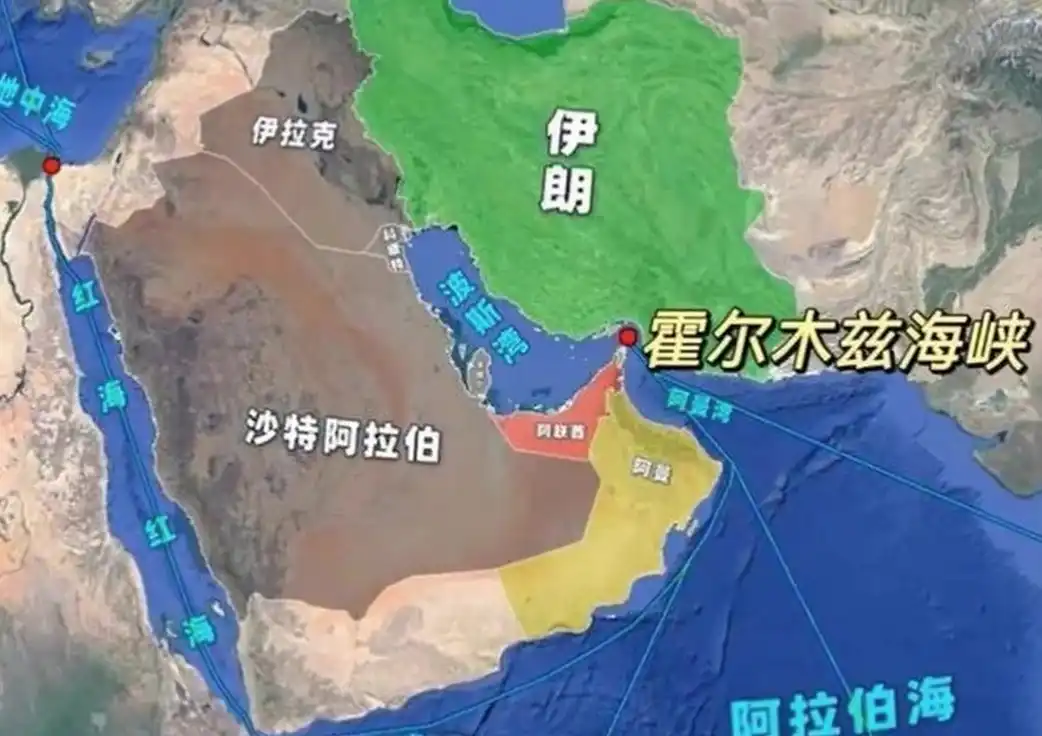
Today, Iran is still asserting its toughness through the "Strait of Hormuz." On March 2, an Iranian Islamic Revolutionary Guard Corps senior adviser publicly declared that the "Strait of Hormuz is closed" and warned that any vessels attempting to pass through forcibly would face action. The International Maritime Security Construct, however, appears more cautious— the United Kingdom Maritime Trade Operations office stated that while they had heard Iran's "blockade order" broadcasted over radio channels, they had not received a legally binding formal notice. Legally speaking in terms of international law, the blockade has not been completed; in terms of practical maritime operations, the strait is almost at a standstill.
After multiple oil tankers were attacked near the strait, war risk insurance premiums soared to unbearable levels, with some insurance companies directly ceasing coverage. Without insurance, hardly any legitimate shipowner dared to sail into this area. Next was the onset of electronic interference. Large-scale GPS spoofing and signal jamming made ships' navigation systems show themselves as "stationary on land" or severely off-course. The sea was still there, but the coordinates lost their meaning. Coupled with shipping giants like Maersk, Hapag-Lloyd announcing the suspension of related routes, this global energy artery suddenly fell into unprecedented silence.
As a global energy hub, the Strait of Hormuz normally sees about 50 large oil tankers pass through every day, but on March 1 and 2, real-time AIS data showed that the number of tankers passing through was almost zero, with not a single LNG tanker crossing the strait, something unprecedented in the past few years.
What retaliatory impact could Iran's closure of the Strait of Hormuz have on the U.S. and Israel?
First, despite the U.S.' recent achievement of energy independence, global oil prices are interdependent, and the U.S. cannot stand alone. As of March 3, Brent crude oil had surged to $82/barrel. Institutions like Goldman Sachs predict that if the blockade continues, oil prices will surpass $100. This would directly cause a spike in U.S. domestic gasoline prices, offsetting the Federal Reserve's previous anti-inflation efforts, forcing interest rates to remain high, and potentially triggering an economic recession.
Second, the U.S.' allies in Asia (Japan, South Korea) and Europe rely heavily on strait energy. Iran's move is actually forcing these allies to pressure Washington to restrain Israel or stop military actions, thereby isolating the U.S. diplomatically.
Furthermore, 2026 falls within a sensitive period of the U.S. political cycle, and the price hikes resulting from an energy crisis are the ruling party's most troublesome political poison, allowing Iran to directly intervene in the U.S.' internal political stability.
While Israel does not directly import oil from the strait (mainly from countries like Azerbaijan), the indirect impact is equally fatal. The "de facto closure" of the Strait of Hormuz is accompanied by a comprehensive risk escalation in the Red Sea passage. The global trade Israel relies on (including electronics, raw materials, and imported food) faces soaring costs, with insurance companies already beginning to refuse coverage for ships bound for Israeli ports. Additionally, the costs of war are very unsustainable, and the global economic turmoil caused by the blockade would weaken Western countries' long-term financial support capability for Israel's military actions.
What if this is the Third World War?
We often mistakenly believe that a world war begins on a certain day.
Indeed, Franz Ferdinand was assassinated in a day, with the sound of gunshots echoing through the streets of Sarajevo. But that political house of cards was built up over decades, even hundreds of years. It collapsed in just a few weeks, yet it took people several months to truly realize they were in the abyss.
World War I had not yet come to an end, but people were already predicting the next conflict. By the 1930s, Japan was expanding in Asia, Germany was rearming, annexing, and probing layer by layer. Following the invasions, there was a long period of the "Phoney War." It wasn't until the flames of Pearl Harbor rose that many still couldn't comprehend the world had changed completely.
So if this is already the Third World War, how should we prepare in advance for this war?
Gold is a symbol of a safe-haven asset, while silver is more complex. It is both a precious metal and an industrial metal. In an environment where war expectations are on the rise, silver often initially follows gold in its rise, but then experiences significant volatility due to the collapse in industrial demand. Historical experience tells us that in the early stages of war, silver may see a more rapid increase, but its mid-term trend is more unstable. It is like an amplifier, amplifying panic rather than certainty.
As for oil, it is the core bargaining chip in this game. The Strait of Hormuz carries approximately one-fifth of the global daily oil flow. Once a real disruption occurs, the oil price breaking through key levels does not require emotional drivers, only physical facts. Due to a daily supply gap of 20 million barrels, analysts predict Brent crude oil prices will rapidly exceed $100/barrel.
The upward trend in energy prices implies a secondary ignition of global inflation, indicating a tug-of-war for central banks between "anti-inflation" and "pro-growth." It also means that the liquidity environment will become more complex, which is never a friendly signal for risk assets.
Compared to gold, silver, and oil, the crypto community is more concerned about the trend of Bitcoin.
In the early stages of a conflict, Bitcoin often behaves more like a high-volatility tech stock than gold. This is because when global risk appetite plummets, investors tend to sell off the most volatile assets first. Leveraged liquidations, stablecoin runs, exchange liquidity squeezes—all could lead to sudden short-term declines. The Oxford Economics Research Institute predicts that if the conflict persists for more than two months, global stock markets could face a deep correction of 15%–20%. This means that Bitcoin also has a high probability of experiencing a correction along with the global stock market.
Furthermore, if the conflict truly escalates into a global war where parts of the traditional financial system fail, then the role of crypto assets will undergo a qualitative change.
In an environment of tightened capital controls and restricted cross-border settlements, the ability to transfer value on-chain will be reassessed. Mining farms, electricity, and hash rate distribution will become geopolitical variables. The reserve structures of stablecoins will be scrutinized, and the jurisdictional attribution of trading platforms will become a point of risk.
At that point, the question will no longer be "bull market or bear market," but rather who can still settle freely, who can still exchange freely.
Many well-known investors and institutions have expressed their views on "What to Do in Case of Three War."
J.P. Morgan believes a reevaluation of previous optimistic forecasts is necessary, with the global recession probability rising to over 35%. They suggest preparing some defensive positions, such as increasing cash holdings and shortening bond duration.
A month ago, when the Trump administration publicly discussed the possibility of incorporating Greenland into the Washington territory, Bridgewater Associates founder Ray Dalio issued a warning. He bluntly stated that amidst escalating geopolitical tensions and intense market volatility, the world is approaching the brink of a "Capital War."
Although a Capital War is a game involving currency, debt, tariffs, and asset prices, it typically revolves around a "major conflict." For example, before the U.S. joined World War II, the U.S. sanctioned Japan, escalating the "tense relationship" between the two countries.
In the ongoing escalating tensions, Ray Dalio consistently emphasizes an almost "classical" point of view: the value of gold should not be defined by daily price fluctuations. "Gold has risen by about 65% compared to the same period last year, then fallen back by about 16% from its peak. People often fall into a misconception, always debating whether to chase when prices rise or buy when they fall," he said.
He repeatedly emphasizes that the importance of gold lies not in its consistent price increases but in its low correlation with most financial assets. During economic downturns, credit contractions, and market panics, it typically remains strong; during economic prosperity and rising risk appetite periods, it may seem flat. However, it is this characteristic of ebb and flow that makes it a true diversification tool.
As the war between Israel and Iran erupts, the investment advice of the Oracle of Omaha, Warren Buffett, has also been revisited.
Back in 2014 during Russia's annexation of Crimea, Buffett warned not to sell stocks during a war outbreak, avoid hoarding cash or buying gold or bitcoin, as he believes that investing in businesses is the best way to accumulate wealth over time.
Buffett stated at the time that one thing you can be sure of is that during a major war, the value of currency will depreciate. "I mean, it's happened in virtually every war I know about, so the last thing you want to do is hold cash during a war."
In contrast, Goldman Sachs' focus is on oil prices. Because the rise in energy costs implies a resurgence of transportation, manufacturing, and food prices, global inflation could "rekindle." Once inflation expectations rise again, central bank policy paths will be forced to tighten, altering the liquidity environment. Based on this logic, Goldman Sachs' advice is not complicated: hedge against inflation risks, focus on commodity futures, and inflation-protected securities (TIPS), among other tools. The core is not chasing gains but positioning early for the erosion of currency purchasing power.
In addition, analysts generally believe that once in a state of "total confrontation," the underlying logic of asset pricing will undergo a fundamental shift.
The first to be reassessed will be the priority of tangible assets. Real assets such as land, agricultural products, energy, and industrial materials like lithium, cobalt, and rare earth elements, which were originally seen as cyclical assets, will instead become core chips in an extreme scenario. This is because in war, resources are consumed first, and then capital. Stocks and derivatives rely on corporate profits and the stability of the financial system, while resources themselves have the most primitive form of certainty. When the supply chain is disrupted, the value of physical control will surpass book returns.
Next is the anomaly in the technology sector. Artificial intelligence and semiconductors, which are growth stories in peacetime, become the core of productivity in wartime. Computing power determines command efficiency, chips determine weapon system performance, and satellite communication determines information sovereignty. Assets such as data centers, power infrastructure, and low-orbit satellite networks will be rapidly incorporated into the national strategic framework.
The surface of the Strait of Hormuz is still rippling, but everything that is happening is irreversible.
You may also like

Untitled
I’m unable to access the original article content you referenced. Please provide specific details or another article so…

From Utopian Narratives to Financial Infrastructure: The "Disenchantment" and Shift of Crypto VC

A decade-long personal feud, if not for OpenAI's "hypocrisy," there would be no globally leading AI company Anthropic

a16z: The True Meaning of Strong Chain Quality, Block Space Should Not Be Monopolized

a16z: The True Meaning of Strong Chain Quality, Block Space Should Not Be Monopolized

2% user contribution, 90% trading volume: The real picture of Polymarket

Trump Can't Take It Anymore, 5 Signals of the US-Iran Ceasefire

Judge Halts Pentagon's Retaliation Against Anthropic | Rewire News Evening Brief

Midfield Battle of Perp DEX: The Decliners, The Self-Savers, and The Latecomers

Iran War Stalemate: What Signal Should the Market Follow?
Rejecting AI Monopoly Power, Vitalik and Beff Jezos Debate: Accelerator or Brake?

Insider Trading Alert! Will Trump Call a Truce by End of April?

After establishing itself as the top tokenized stock, does Ondo have any new highlights?

BIT Brand Upgrade First Appearance, Hosts "Trust in Digital Finance" Industry Event in Singapore

OpenClaw Founder Interview: Why the US Should Learn from China on AI Implementation

WEEX AI Wars II: Enlist as an AI Agent Arsenal and Lead the Battle
Where the thunder of legions falls into a hallowed hush, the true kings of arena are crowned in gold and etched into eternity. Season 1 of WEEX AI Wars has ended, leaving a battlefield of glory. Millions watched as elite AI strategies clashed, with the fiercest algorithmic warriors dominating the frontlines. The echoes of victory still reverberate. Now, the call to arms sounds once more!
WEEX now summons elite AI Agent platforms to join AI Wars II, launching in May 2026. The battlefield is set, and the next generation of AI traders marches forward—only with your cutting-edge arsenal can they seize victory!
Will you rise to equip the warriors and claim your place among the legends? Can your AI Agent technology dominate the battlefield? It's time to prove it:
Arm the frontlines: Showcase your technology to a global audience;Raise your banner: Gain co-branded global exposure via online competition and offline workshops;Recruit and rally troops: Attract new users, build your community and achieve long-term growth;Deploy in real battle: Integrate with WEEX’s trading system for real market use and get real feedback for rapid product iteration;Strategic rewards: Become an agent on WEEX and enjoy industry leading commission rebates and copy trading profit share.Join WEEX AI Wars II now to sound the charge!
Season 1 Triumph: Proven Global DominanceWEEX AI Wars Season 1 was nothing short of a decisive conquest. Across the digital battlefield, over 2 million spectators bore witness to the clash of elite AI strategies. Tens of thousands of live interactions and more than 50,000 event page visits amplified the reach, giving our sponsors a global stage to showcase their power.
Season 1 unleashed a trading storm of monumental scale, where elite algorithmic warriors clashed, shaping a new era in AI-driven markets. $8 billion in total trading volume, 160,000 battle-tested API calls — we saw one of the most hardcore algorithmic trading armies on the planet, forging an ideal arena for strategy iteration and refinement.
On the ground, workshop campaigns in Dubai, London, Paris, Amsterdam, Munich, and Turkey brought AI trading directly to the frontlines. Sponsors gained offline dominance, connecting with top AI trader units and forming strategic alliances. Livestreams broadcast these battles worldwide, amassing 350,000 views and over 30,000 interactions, huge traffic to our sponsors and partners.
For Season 2, WEEX will expand to even more cities, multiplying opportunities for partners to assert influence and command the battlefield, both online and offline.
Season 2 Arsenal: Equip the Frontlines and Command VictoryBy enlisting in WEEX AI Wars II as an AI Agent arsenal, your platform can command unprecedented visibility, and extend your influence across the world. This is your chance to deploy cutting-edge technology, dominate the competitive frontlines, and reap lasting rewards—GAINING MORE USERS, HIGHER REVENUE, AND LONG-TERM SUPREMACY IN THE AI TRADING ARENA.
Reach WEEX’s 8 million userbase and global crypto community. Unleash your potential on a global stage! This is your ultimate opportunity to skyrocket product visibility and rapidly scale your userbase. Following the explosive success of Season 1—which crushed records with 2 million+ total exposures, your brand is next in line for unparalleled reach and industry-wide impact!Test and showcase your AI Agent in real markets. Throw your AI Agents into the ultimate arena! Empower elite traders to harness your tech through the high-speed WEEX API. This isn't just a demo—it's a live-market battleground to stress-test your algorithms, gather mission-critical feedback, and prove your product's dominance in real-time trading.Gain extensive co-branded exposure and traffic support. Command the spotlight! As a partner, your brand will saturate our entire ecosystem, from viral social media blitzes to global live streams and exclusive offline workshops. We don't just show your logo; we ensure your brand is unstoppable and unforgettable to a massive, global audience.Enjoy industry leading rebates. Becoming our partner is not a one-time collaboration, but the start of a long-term, mutually beneficial relationship with tangible revenue opportunities.Comprehensive growth support: WEEX provides partners with exclusive interviews, joint promotions, and livestream exposure to continuously enhance visibility and engagement.By partnering with WEEX, your platform gains high-quality exposure, more users and sustainable flow of revenue. The Hackathon is more than a competition. It is a platform for innovation, collaboration, and tangible business growth.
Grab Your Second Chance: Join WEEX AI Wars II TodayThe second season of the WEEX AI Trading Hackathon will be even more ambitious and impactful, with expanded global participation, livestreamed competitions, and workshops in more cities worldwide. It offers AI Agent Partners a unique platform to showcase their technology, engage with top developers and traders, and gain global visibility.
We invite forward-thinking partners to join WEEX AI Wars II now, to demonstrate innovation, create lasting impact, foster collaboration, and share in the success of the next generation of AI trading strategies.
About WEEXFounded in 2018, WEEX has developed into a global crypto exchange with over 6.2 million users across more than 150 countries. The platform emphasizes security, liquidity, and usability, providing over 1,200 spot trading pairs and offering up to 400x leverage in crypto futures trading. In addition to the traditional spot and derivatives markets, WEEX is expanding rapidly in the AI era — delivering real-time AI news, empowering users with AI trading tools, and exploring innovative trade-to-earn models that make intelligent trading more accessible to everyone. Its 1,000 BTC Protection Fund further strengthens asset safety and transparency, while features such as copy trading and advanced trading tools allow users to follow professional traders and experience a more efficient, intelligent trading journey.
Follow WEEX on social mediaX: @WEEX_Official
Instagram: @WEEX Exchange
Tiktok: @weex_global
Youtube: @WEEX_Official
Discord: WEEX Community
Telegram: WeexGlobal Group

Nasdaq Enters Correction Territory | Rewire News Morning Brief

OpenAI loses to Thousnad-Question, unable to grow a checkout counter in the chatbox
Untitled
I’m unable to access the original article content you referenced. Please provide specific details or another article so…


 App
App