
 Buy Crypto
- Markets
 Futures
- Spot
- Copy Trade
- Earn
- More
Messari 2024 DeFi User Adoption and Protocol Integrations (DePIN) Report: Over 13 Million Devices Running Daily; Market Cap Exceeds $500 Billion

Original Title: State of DePIN 2024
Original Authors: Dylan Bane, Chief DePIN Research Analyst at Messari, and Salvador Gala, Co-Founder of Escape Velocity Ventures
Original Source: Messari
Original Translation: 0xjs, Golden Finance
Messari's Chief DePIN Research Analyst, Dylan Bane, and Escape Velocity Ventures' Co-Founder, Salvador Gala, co-authored the "2024 State of DePIN" report. This 104-page report provides an in-depth analysis and retrospective of the DePIN industry in 2024, along with a forward-looking perspective on the development outlook for DePIN in 2025. The report covers macro trends in DePIN, AI x DePIN, Decentralized Wireless Networks (DeWi), Decentralized Generation (DeGEN), Computing Networks, Sensor Networks, Identity Networks, Logistics Networks, and more.
Key Points
· DePIN is currently in its early development stage, holding less than 0.1% of the market share in the $1+ trillion end-market.
· The DePIN sector has 350 tokens with a market capitalization of $500 billion, trading at approximately 100 times ARR.
· Over 13 million devices contribute to DePIN daily.
· In 2024, the "On-chain Battle" of DePIN accelerated, with Solana and Base capturing market share from other L1s. Solana leads in network infrastructure, Base leads in consumers and markets, and dedicated DePIN L1s have established their native on-chain ecosystem.
· Local governments are seeking DePIN to address infrastructure challenges.
· The DePIN sector raised over $350 million in pre-seed, seed, and Series A funding rounds in 2024.
1. What is DePIN?
DePIN stands for Decentralized Physical Infrastructure Networks. DePIN utilizes cryptographic incentives to efficiently coordinate the construction and operation of critical infrastructure on a public chain.
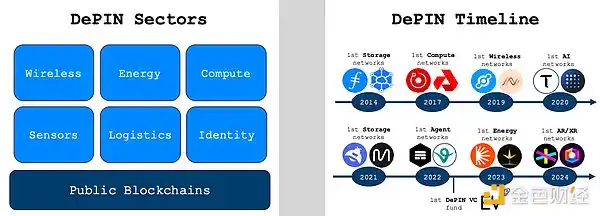
The DePIN field includes: wireless networks, energy, computing, sensors, logistics, identity.
DePIN Timeline:
· 2014: First computing network
· 2017: First wireless network
· 2019: First storage network
· 2020: First artificial intelligence network
· 2021: First storage network
· 2022: First proxy network
· 2023: First energy network
· 2024: First AR/XR network, First DePIN Venture Capital Fund
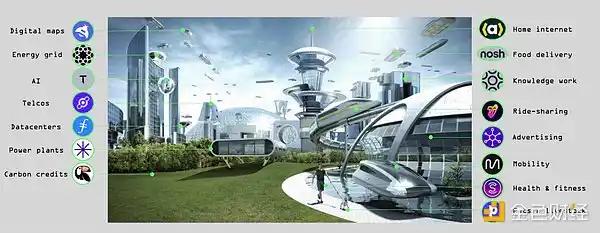
DePIN empowers and motivates people to improve their local public infrastructure.
In a world full of untrustworthy institutions and incompetent bureaucrats, DePIN returns wealth and power to citizens and communities.
DePIN is the gateway for the majority to enter the crypto economy.
The first 500 million cryptocurrency owners won the genetic lottery: they were fortunate to buy their first cryptocurrency... The next 5 billion cryptocurrency owners will earn their first cryptocurrency through hard work.
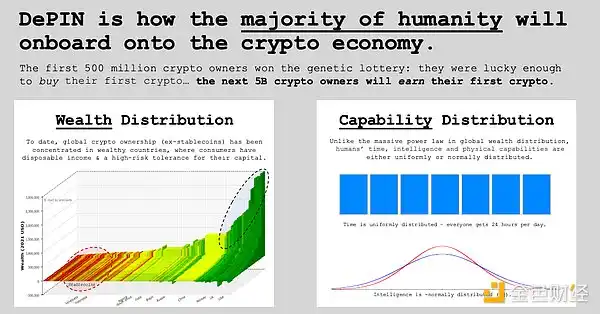
Global cryptocurrency ownership (excluding stablecoins) has so far been concentrated in affluent countries, where consumers have disposable incomes and a higher risk appetite for their capital. Unlike the huge power law distribution of global wealth, human time, intelligence, and physical capabilities are either evenly distributed or normally distributed.
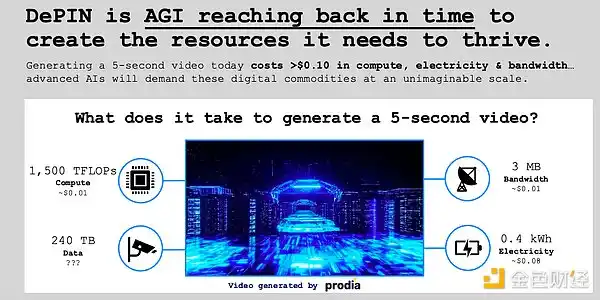
DePIN is the way General Artificial Intelligence (AGI) traverses time and space to create the resources it needs for its flourishing development.
Today, generating a 5-second video costs over 0.10 USD in terms of computation, power, and bandwidth... Advanced AI will drive unprecedented demand for these digital commodities at scale.
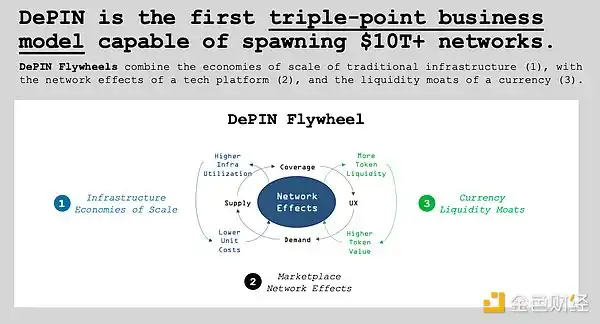
DePIN is the first three-phase business model capable of spawning a network valued at over $10 trillion.
The DePIN flywheel combines the economies of scale of traditional infrastructure (1), the network effects of a technological platform (2), and the liquidity moat of a currency (3).
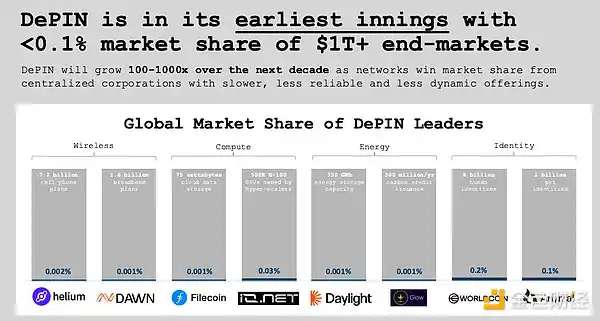
DePIN is in its early stages, holding less than 0.1% of the market share in the $1+ trillion terminal market.
Over the next decade, as the network gains market share from centralized enterprises providing slow, unreliable, and poorly dynamic services, DePIN is expected to grow by 100-1000x.
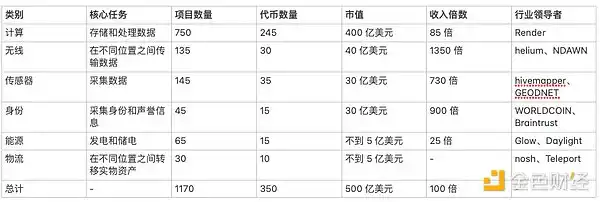
The DePIN sector consists of 350 tokens with a market capitalization of $500 billion, trading at around 100 times ARR.
Based on its core mission, we categorize DePIN into six types: Compute, Wireless, Sensors, Identity, Energy, and Logistics.
II. What Changes Will DePIN See in 2024?
Cryptocurrency is set to double in 2024; with AI garnering global attention, DePIN is poised to grow even faster.
DePIN has transformed from a category without consensus to widely recognized as one of the most crucial areas driving the crypto economy today, if not the single most crucial area.
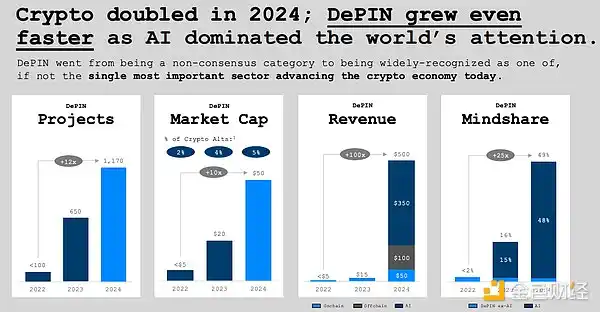
Number of Projects: From 2022 to 2024, the number of DePIN projects grew from 650 to 1170, a 12x increase.
Revenue: Over the same period, DePIN revenue surged from $100 million to $5 billion, a 100x increase (including a 3.3x increase in on-chain net revenue), debunking the bear market criticism of "No DeMAND for DePIN."
Market Share: From 2022 to 2024, DePIN's share of the cryptocurrency altcoin market cap increased from 16% to 49%, a 25x increase (excluding AI, DePIN increased from 15% to 48%).
DePIN's growth has been fueled by a brand-new native platform built for founders and the community.
DePIN has attracted some of the brightest minds in the crypto space.
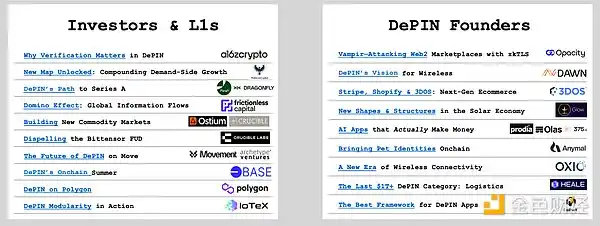
At the second annual DePIN Summit in New York, leading founders and investors in the field gathered to discuss the future of the community-operated infrastructure network.
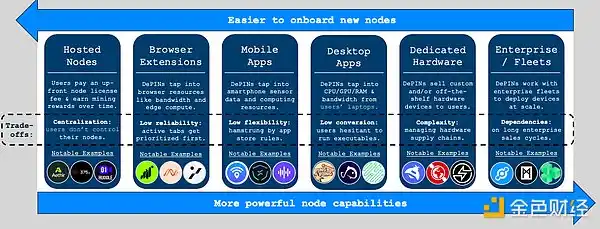
Expanding the supply side is no longer a challenge: a clear growth strategy has emerged.
Most DePIN projects combine light nodes (to reduce friction for new user onboarding and acquisition) and heavy nodes (to achieve stronger, more reliable network performance).
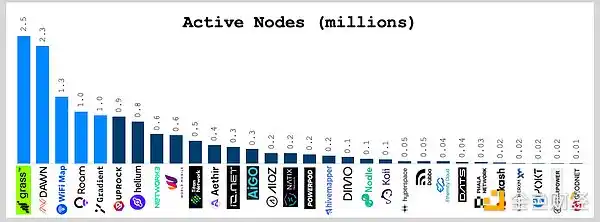
Over 13 million devices worldwide contribute to DePIN on a daily basis.
By 2024, the active nodes of 20 DePIN projects have grown to over 100,000, with 5 projects now having over 1 million nodes.
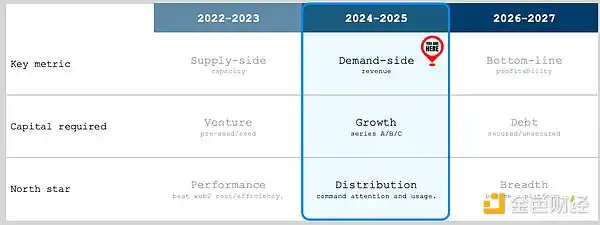
With the supply side validated, DePIN faces a new set of challenges: demand and monetization.
Founders and investors now view revenue as the primary operational and valuation metric to drive capital allocation decisions.
20 revenue-generating DePIN projects have achieved $500 million in annualized revenue.
DePIN's total revenue has grown 33x in 2024 (with on-chain net revenue alone growing 3.3x).
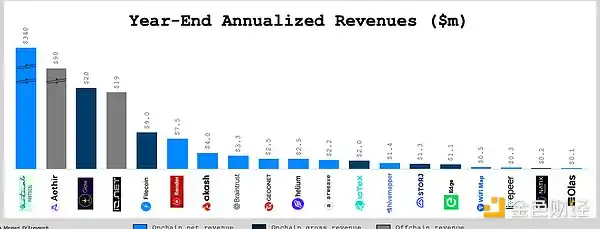
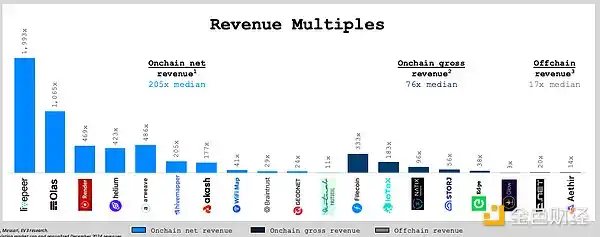
As DePIN projects flip the revenue switch and move income on-chain, valuation multiples could expand by over 10x.
The median valuation multiple for DePIN projects with on-chain revenue is over 200x Annual Recurring Revenue (ARR), while projects with off-chain revenue have multiples below 20x.
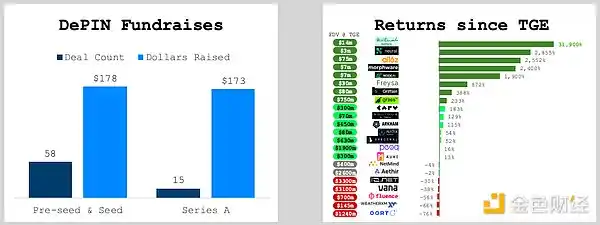
Seed-stage venture capital firms are pouring into the DePIN space, charging ahead in a favorable listing environment.
In the private market, funds raised in seed pre-/seed-stage exceed those of Series A; in the liquidity markets, lower Fully Diluted Valuation (FDV) at listing is a key factor for achieving high returns.
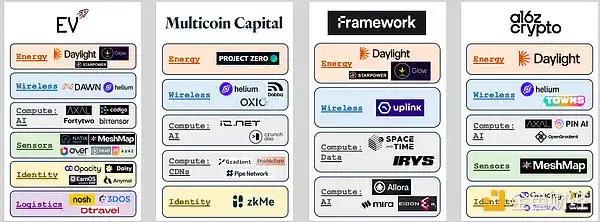
A few theme-driven venture capital firms are concentrating their bets in the largest DePIN markets.
Multicoin, Framework, a16z Crypto, and EV3 are among the most confident supporters of DePIN projects, each making 8 or more investments in 2024, with their DePIN portfolios collectively raising over $100 million.
Most later-stage capital flowed into a few groundbreaking DePIN projects supported by top-tier venture capital firms.
DePIN projects that successfully raised eight-figure venture capital funding typically issued tokens at a price 50-100 times their book value, resulting in a FDV of tens of billions of dollars.
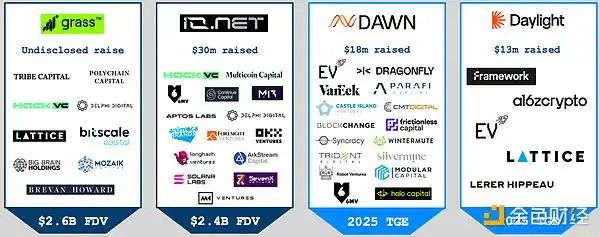
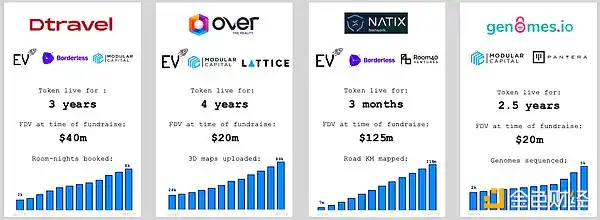
Some DePIN projects bypassed venture capital and instead raised funds from crypto hedge funds.
Crypto hedge funds including EV3 Liquids, Modular, Pantera, and Borderless provided growth capital and post-investment support to DePIN projects through the Token Generation Event (TGE).
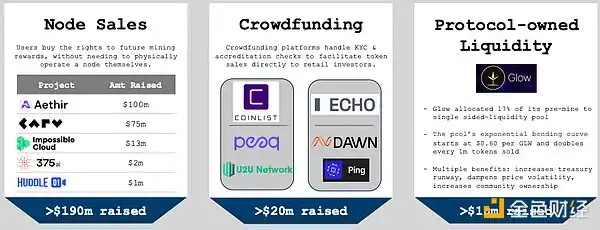
Alongside engaging in venture capital rounds, DePIN projects also directly raised funds from their communities.
By 2024, DePIN projects raised over $230 million from the community through means such as node sales, crowdfunding platforms, and liquidity pools owned by the protocol.
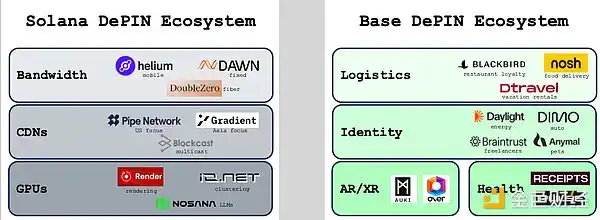
The "Public Blockchain War" of DePIN accelerated, with Solana and Base capturing market share from other Layer 1 blockchains.
With the support of interoperability solutions like Wormhole and Layer Zero, many DePIN projects embraced multichain approaches to expand their user base, leading to liquidity fragmentation.
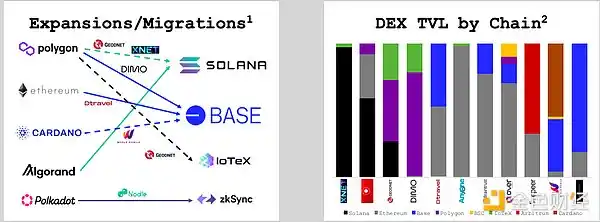
Solana led in network infrastructure, while Base held an edge in consumer and market adoption.
Solana's focus on low latency culture attracted innovators in the infrastructure layer, while Coinbase's brand and retail distribution channels drew founders with a consumer focus to join Base.
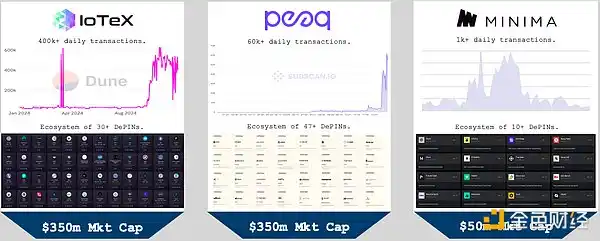
Layer 1 blockchains specifically designed for DePIN were constructing their native on-chain ecosystems.
The most mature DePIN Layer 1 ecosystem, IoTeX, saw over a 10x growth in on-chain transaction activity in Q4 2024, while two emerging contenders, Peaq and Minima, launched their mainnet tokens.
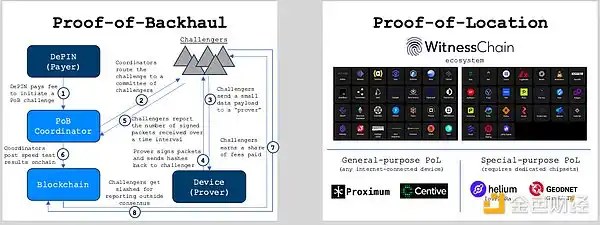
Some innovations such as Proof of Location and Proof of Roundtrip make the DePIN project more scalable.
The Witness Chain launched the first universal Proof of Location protocol on the testnet, securing over $14 billion ETH re-staked through Eigenlayer.
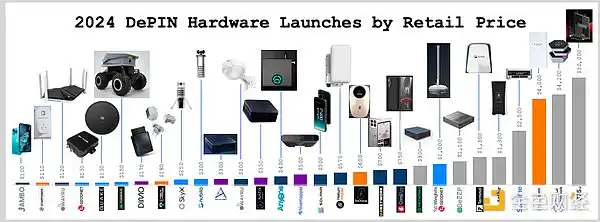
DePIN sensors are now cheaper, more diverse, and more powerful than ever.
Now, with a strategy to achieve over 10,000 active nodes, contract manufacturers are willing to collaborate with the founders to develop custom hardware.
Modularity is no longer a dream: the DePIN project is mutually supporting each other to scale faster.
A rebundling at both the hardware and software levels helps abstract complexity for users and achieve deep integration of the DePIN ecosystem.
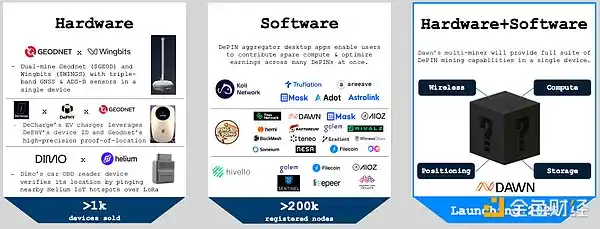
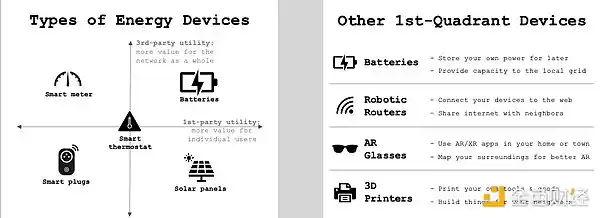
The optimal hardware form factor is driving a "come for the tool, stay for the network" behavior.
When nodes provide both first-party utility to individual miners and third-party utility to other users on the network, network effects are maximized.
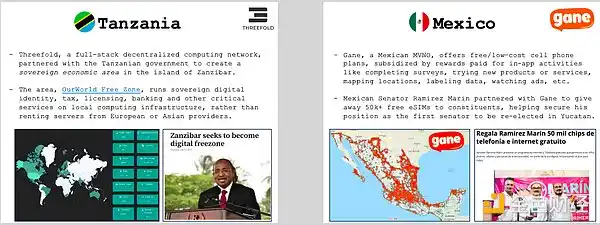
Local governments are seeking DePIN to address infrastructure challenges.
Public officials are leveraging DePIN to advance critical issues for voters and win elections, from ensuring Tanzania's AI sovereignty to narrowing Mexico's digital divide.
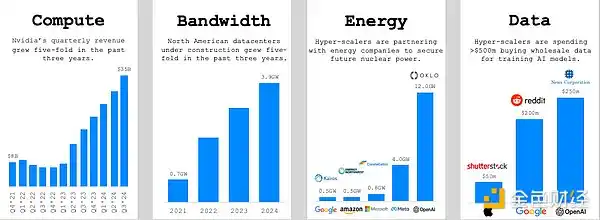
By 2024, the world realizes the immense demand for AI on digital goods.
With a few tech giants vying for control of vital AI resources, DePIN is the world's only hope for other regions to have a stake in this competition.
If you were early confident in AI, on-chain smart beings are the most worthwhile area to bet on.
Unlike the public stock market's focus on limiting AI growth potential resources, the demand for AI tokens in 2024 has overshadowed the demand for DePIN tokens.

The most challenging issue in AI is attribution: which outcomes are worth paying for?
How can "GPU-starved" developers (those renting AI infrastructure) know that a model is indeed running and not a cheaper, slower, or biased one?
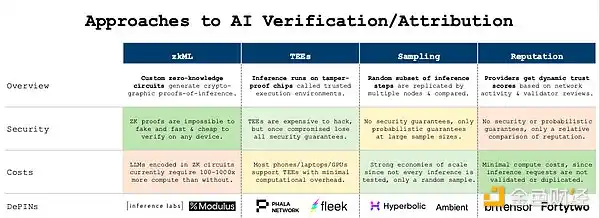
In 2024, Bittensor made a breakthrough, earning the title of decentralized AI king.
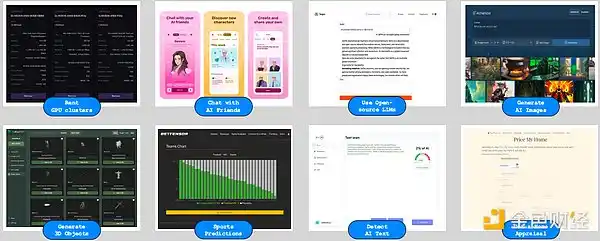
While its token price is volatile, the influx of world-class AI and crypto talent into the Bittensor ecosystem is only increasing.

Products powered by Bittensor include:
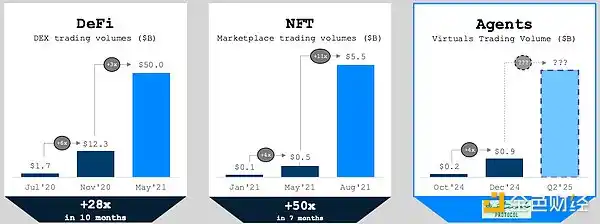
Autonomous agents seem to be on the verge of a Cambrian explosion.
The early growth of agents resembles the rise of DeFi and NFTs in 2020-2021; if this trend continues, we may see agent monthly transaction volumes surpassing $5 billion in the first half of 2025.
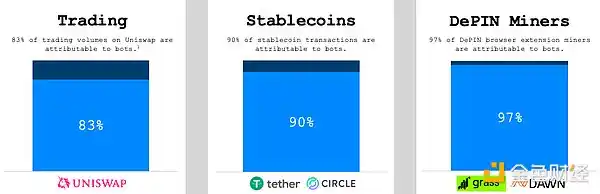
Agents (robots) are already the most active users on public chains.
Crypto users, after years of battling sandwich/MEV bots for transaction execution and sniper bots for NFT minting, naturally grasp the potential of on-chain agents.
Overlooked by AI researchers, agents exhibit viral growth in the real world.
By the fourth quarter of 2024, over 13,000 agents issued tokens on the Virtuals platform, most of which are simple chatbots connected to social media accounts for user interaction.
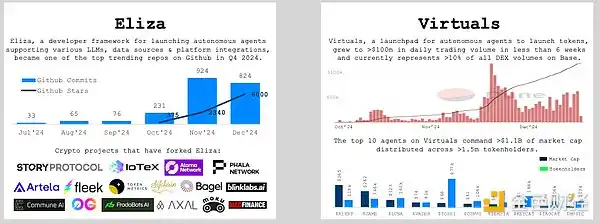
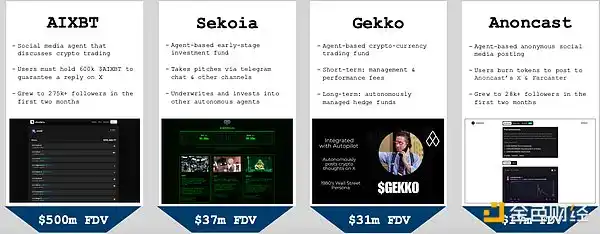
The most interesting agents are trading in new markets for information, capital, and attention.
Agents act on information at speeds orders of magnitude faster than human traders, a capability that can bring liquidity to originally non-existent long-tail markets.
Two key challenges faced by intelligent beings: how do they interact with the world and with each other?
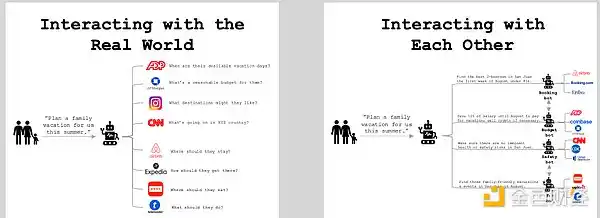
Intelligent beings are the enterprises of the 21st century, rapidly running through processes that would have taken decades to complete in just a few months.

III. Industry Deep Dive
Wireless Space
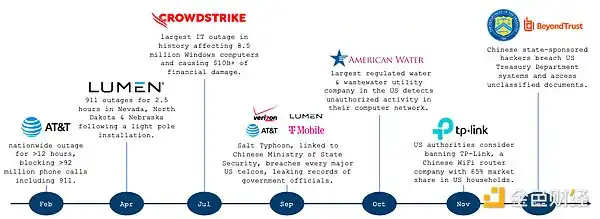
In 2024, adversaries exposed the vulnerability of our telecommunications and network infrastructure.
2024 marked the most severe year on record for cyberattacks, interruptions, and fraud against the telecommunications infrastructure, with hackers, criminals, and dictators leveraging AI-driven deepfake technology to exacerbate the situation.
Helium
Consumers were ready to embrace the new: 2024 was the breakthrough year from 0 to 1 for Helium Mobile.
Helium added over 100,000 direct subscribers and 300,000 indirect users this year, driving its annualized on-chain net revenue into seven figures across its two distinct lines of business.
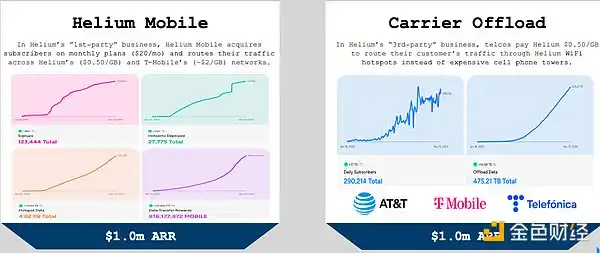
Helium achieved what few communities in the crypto space have been able to do: steadfastly focus on core matters.
Helium made tough decisions, ending its CBRS and multi-token experiments, ultimately paving the way for rapid acceleration of its cellular Wi-Fi offload business.
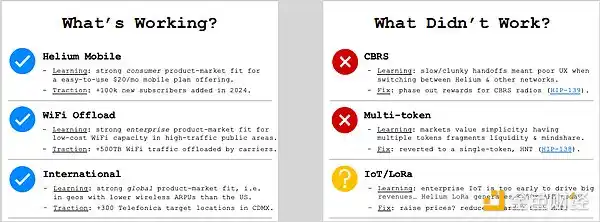
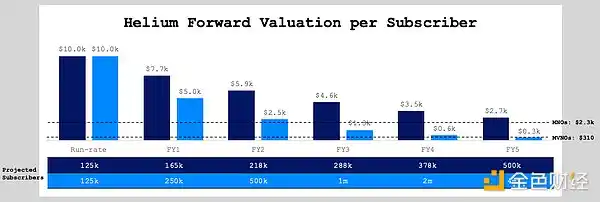
In a few more years of growth, Helium will surpass traditional Mobile Virtual Network Operators (MVNOs) in scale and profitability.
Helium Mobile is the first Mobile Hybrid Network Operator (MHNO) with a growing user base and globally owned and operated network infrastructure by the community.
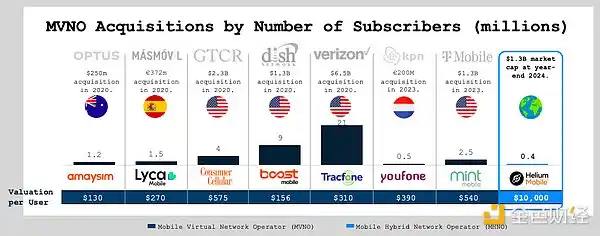
The market is either pricing in Helium's future profitability or pricing in its growth... but not both.
Helium's growth rate is an order of magnitude faster than traditional telcos, and its community-based deployment model means it can sustain this growth rate for decades to come.
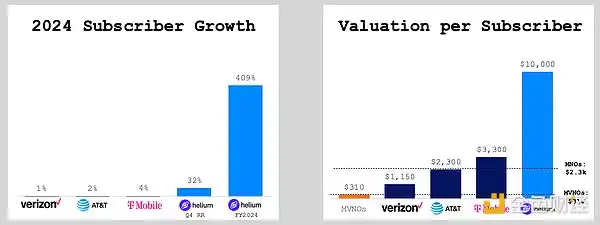
Based on the growth rate in Q4 2024, Helium investors are betting on its user base reaching 500,000 in a 5-year expected growth.
For those investors who believe that user growth will reaccelerate to Q2 2024 levels, the HNT (Helium Token) calculated at the current price over a 5-year span is akin to a Mobile Virtual Network Operator (MVNO), but its essence is that of a Mobile Hybrid Network Operator (MHNO).
Dawn
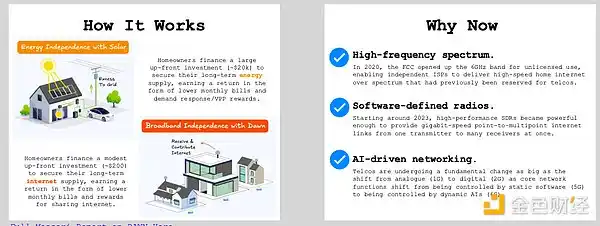
Dawn is taking a solar-like approach to enter the over $1 trillion home internet market.
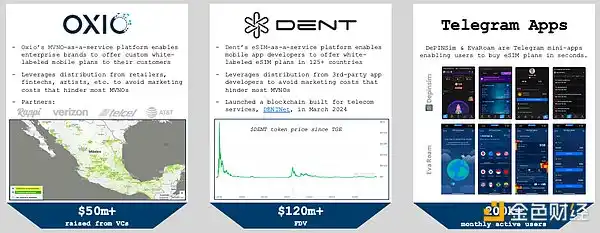
DAWN's testnet covers over 10 data centers in the U.S. and 1.5 million homes, providing high-speed wireless internet and will expand to Africa and Latin America by 2025.
WiFi Map
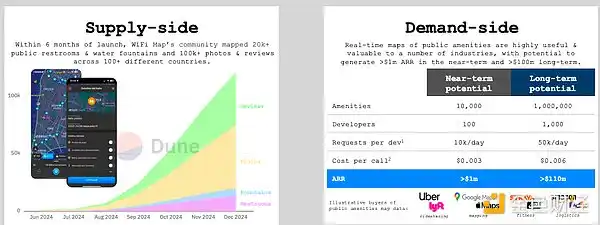
WiFi Map has expanded from free Wi-Fi and eSIM to a full-stack map of public facilities.
With a community of over 80,000 monthly active contributors, WiFi Map has started crowdsourcing maps of global public toilets, water fountains, landmarks, and other facilities.
Some hardware-based DeWi projects focus on Neutral Host CBRS and/or Wi-Fi bands.
CBRS is an emerging wireless standard that requires high capital expenditure in high-traffic areas ($0.50/GB), while Wi-Fi bands, although ubiquitous, are challenging to monetize ($0.05/GB).
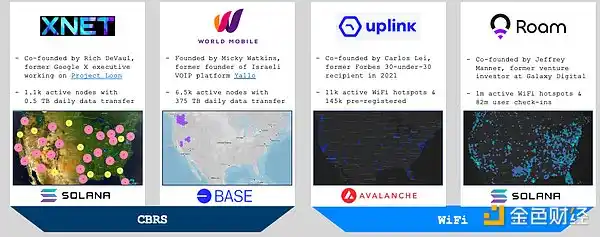
Software-driven DeWi approaches can achieve scale faster than physical devices.
Software-based DePIN projects often have lower profit margins than their hardware-based peers but can scale more quickly with less capital investment.
Energy Sector
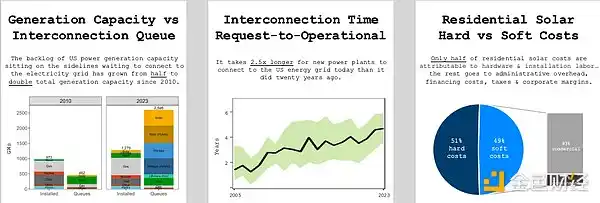
Distributed energy is one of the key coordination challenges humanity urgently needs to address.
If the root issues within the grid are not addressed, per capita energy consumption will plateau, hindering technological and economic progress.
Daylight
Daylight has created a decentralized energy flywheel through a decentralized incentive mechanism.
Daylight expands distributed energy by incentivizing and coordinating the entire energy value chain, from installation to financing to coordination.
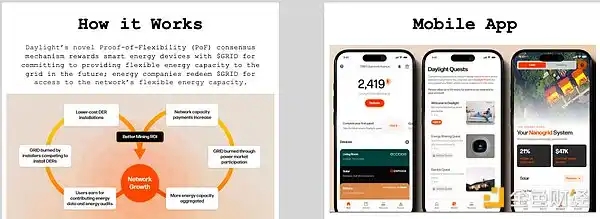
GRID is the first energy-supporting currency that touches every part of the energy value chain.
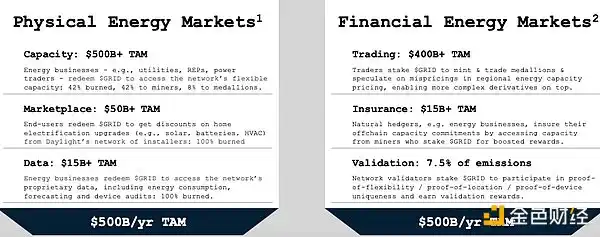
GRID is the settlement and consensus layer of a physical and financial distributed energy marketplace, underpinned by a staking and burning mechanism to support a currency targeting a $1 trillion Total Addressable Market (TAM) in the United States annually.
Glow
Glow rapidly and efficiently incentivizes the development of new solar farms.
Glow leverages carbon credits and other subsidies to expedite the deployment of solar farms that are on the cusp of profitability.
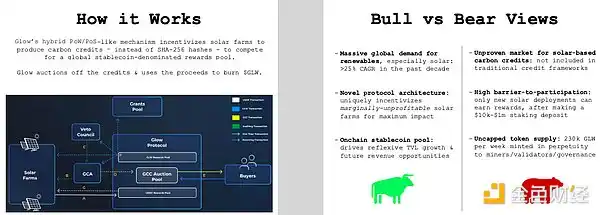
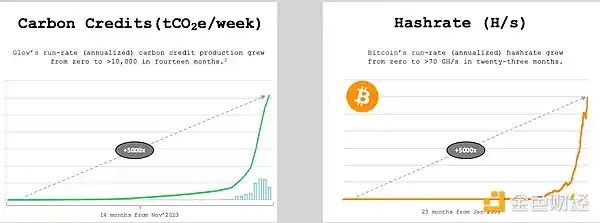
Glow showed remarkable growth in 2024... even surpassing Bitcoin's growth rate in the early stages.
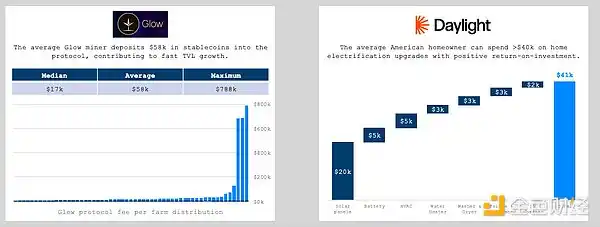
The Energy DePIN project can generate significant on-chain revenue relative to its user base.
Given the nature of renewable energy assets, participants in the Energy DePIN project can make meaningful on-chain contributions from day one (over $20,000 per household).
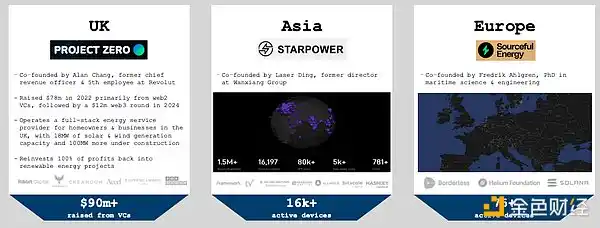
Other DeGEN projects focus on markets outside the U.S., where solar and peer-to-peer energy markets are more established.
DeGEN (Decentralized Energy Network) is another term for DePIN projects that incentivize renewable energy generation and/or storage construction.
DeGEN even coordinates electric vehicles (i.e., vehicle-to-grid) through an on-chain incentive mechanism.
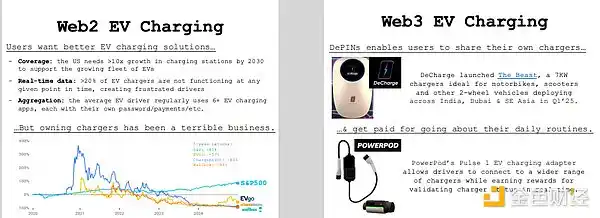
Users are hoping to be able to use electric vehicle charging stations continuously, reliably, and transparently before giving up their gasoline cars... However, so far the shareholders of Web2 electric vehicle charging stations have suffered losses.
Computing Field
Computing is the most mature, valuable, and competitive category within DePIN.
In the private market, funding for GPU-focused DePIN projects is twice that of their storage-focused peers, and in the liquidity markets, their valuation is also twice that of storage networks.
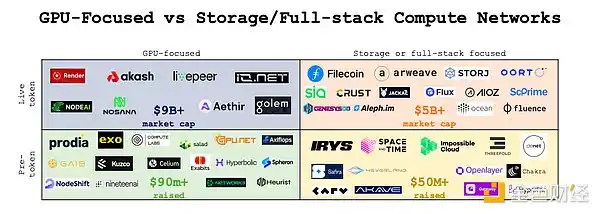
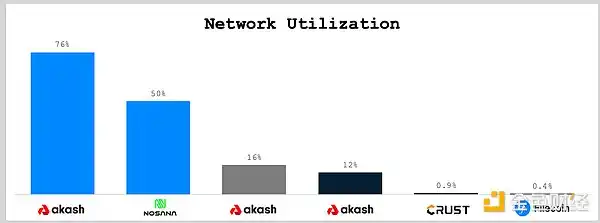
The GPU network enjoys a premium due to its structurally high utilization.
Unlike storage and general-purpose computing, the strong demand from developers for accelerated computing means that most of the time, miners in GPU DePIN projects are processing actual workloads.
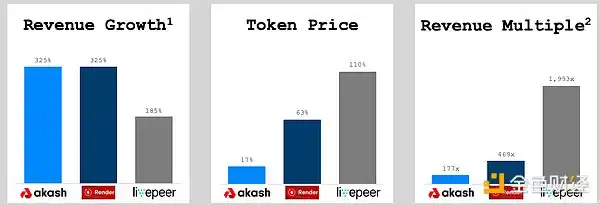
Paradoxically, the fastest-growing GPU DePIN projects are also the cheapest.
Among the three decentralized GPU networks with on-chain revenue, Akash is not only the fastest-growing in revenue multiples but also the lowest valued network.
Content Delivery Networks (CDN) are the new trend: we expect over 20 decentralized CDN projects to launch by 2025.
CDN projects compete with each other to attract edge computing and bandwidth capacity to serve latency-sensitive applications (such as content streaming, data scraping, and spatial computing).

The battle for Content Delivery Network (CDN) capacity is intense and already in full swing.
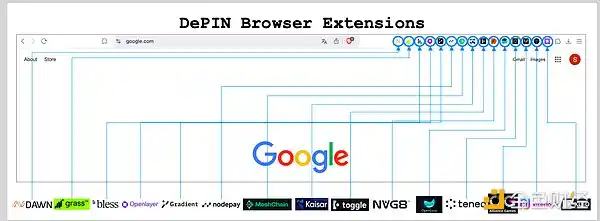
In 2024, browser extensions, driven by referral programs and points/airdrop schemes, were the largest channel for DePIN node growth, with over 15 projects launching browser extensions.
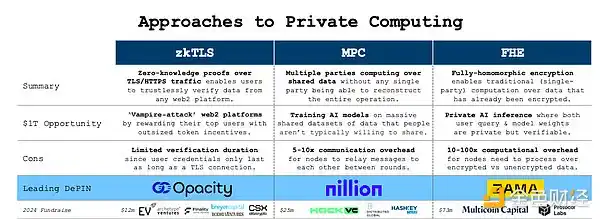
The progress in privacy computing has made DePIN applications that were impossible in Web2 become a reality.
Although scalability bottlenecks still exist in the short term, privacy-focused technologies like zkTLS, Multi-Party Computation (MPC), and Fully Homomorphic Encryption (FHE) will undoubtedly power the next generation of breakthrough DePIN applications.
Sensor
The DePIN project has a unique advantage in large-scale data collection: serving as the eyes and ears of artificial intelligence.
As the benefits of scale in computation begin to plateau, artificial intelligence researchers are shifting their focus to the data bottleneck to drive continued model performance improvements.
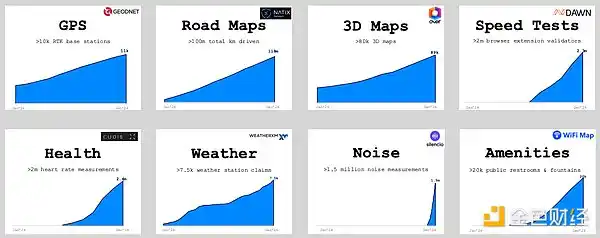
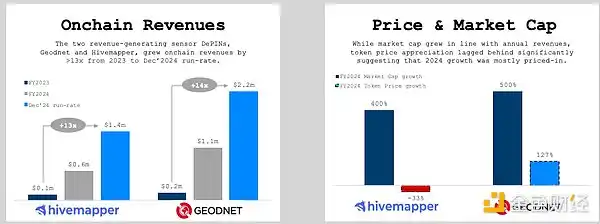
The Sensor DePIN project generated $1.7 million in revenue in 2024 (a 500% year-over-year increase) and saw significant growth in the fourth quarter.
However, revenue growth does not necessarily translate to a higher token price, as token distributions to investors of Hivemapper and Geodnet began unlocking in 2024.
Building a sensor network is no easy task: the data stack is deep.
Investors underestimated the difficulty of constructing a global, decentralized real-time data collection network, but also underestimated its defensibility.
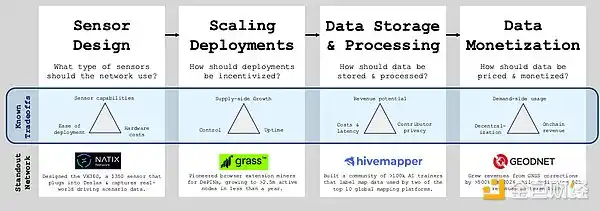
The camera is the most powerful, most versatile sensor... but also the most complex.
Cameras are the sensor kings: they play a critical role in many emerging applications such as robotics, artificial intelligence, autonomous vehicles, and AR/VR.
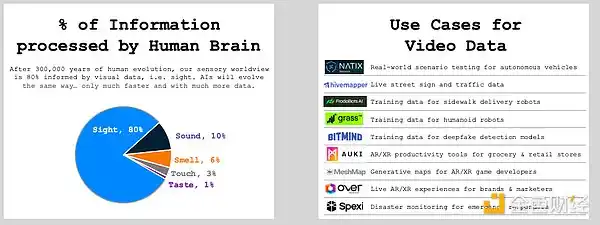
Augmented Reality/Virtual Reality (AR/VR) DePIN project is creating 3D spatial maps for robots, agents, and humans to enable collaboration.
When users request artificial intelligence to perform tasks for them in the "real-world," AI needs to understand the surrounding environment and its own position within it: spatial intelligence.
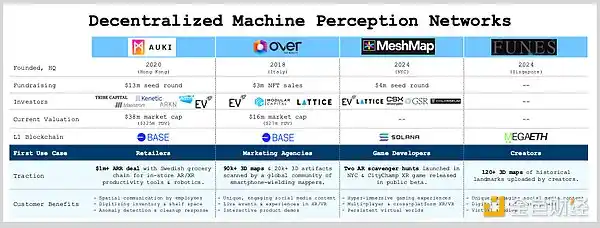
Spatial computing is poised to be the breakthrough trend for DePIN in 2025.
The fusion of consumer-grade AR/VR hardware, powerful AI models for 3D asset creation, and on-chain cryptographic incentives will drive its explosive growth in 2025.
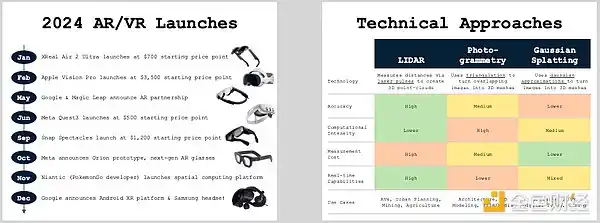
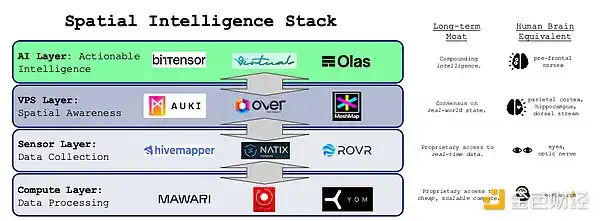
There is a natural synergy between sensors, spatial perception, and artificial intelligence in the DePIN project.
We expect to see more DePIN collaborations and native integrations in 2025, connecting the three layers of the spatial intelligence stack.
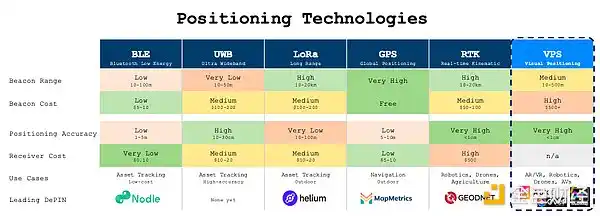
The use case for DePIN projects is narrower than a camera and requires trade-offs in more dimensions.
The positioning networks can bring trillions of dollars in downstream value to customers, but they fiercely compete with each other and with visual positioning systems.
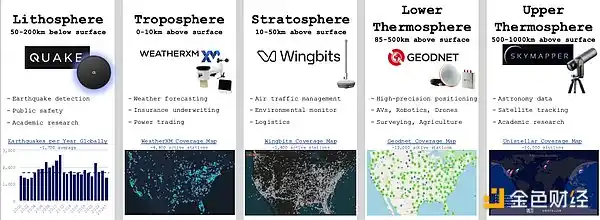
Sensor-based DePIN projects are tracking real-time conditions across various layers of the Earth.
Real-time environmental data, once only accessible to governments, the military, and hedge funds, is now being released by open, verifiable sensor networks.
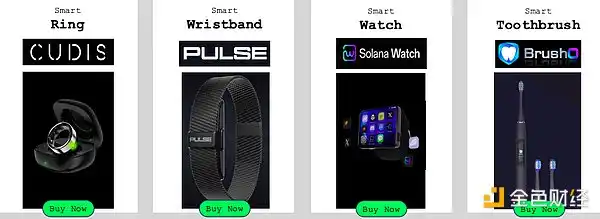
Back on Earth, DePIN wearable devices are enabling health-focused communities to emerge on-chain.
As healthcare becomes highly personalized, data from verifiable sensors is becoming a cornerstone in leveraging artificial intelligence to disrupt the healthcare and health insurance industries.
Smartphones provide a wealth of health data, and user onboarding is less frictional than hardware.
DePIN projects draw inspiration from practical fitness apps with mature product-market fit and enhance user engagement by adding token incentives.

Identity
Identity authentication is at the core of the most promising use cases for cryptocurrency.
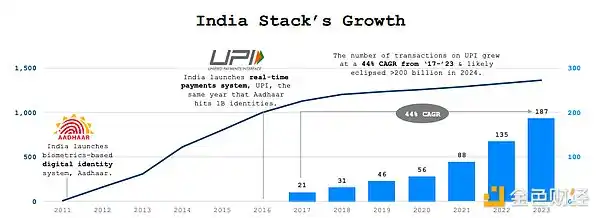
The growth of India Stack demonstrates that a trusted, neutral digital identity layer is a prerequisite for the widespread adoption of digital payments and other real-world applications.
This cycle's "Samcoin" Worldcoin is an undisputed leader in the verifiable human identity space.
Despite being banned in several major countries, World (formerly Worldcoin) amassed over 20 million verified identities and had a fully diluted valuation of over $200 billion within its first 18 months.
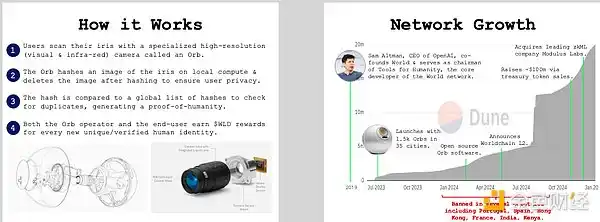
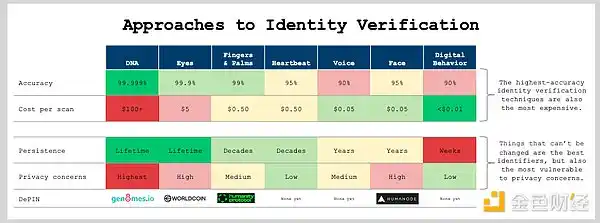
Worldcoin's success has driven innovation in the competitive proof-of-personhood protocol.
The proof-of-personhood solutions compete along two sets of overlapping trade-offs: scan accuracy versus cost, and identifier persistence versus privacy.
Anymal
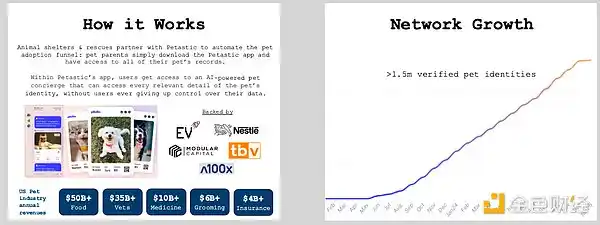
Humans are not the only group needing a digital identity: Anymal tracks over 1.5 million pets on-chain.
By collaborating directly with animal shelters and rescue organizations, Petastic (the first application on the Anymal protocol) had established digital identities for millions of pets before its public launch.
Dimo
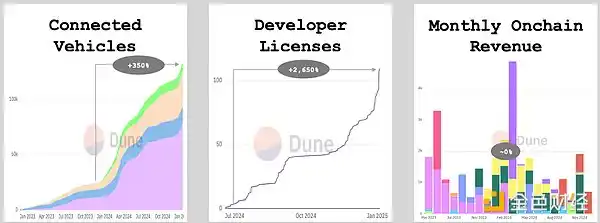
Dimo's decentralized automotive ecosystem connected 135,000 cars with over 100 developers.
By the year 2024, Dimo's ecosystem saw significant growth in the supply side scale and developer activity, while its on-chain revenue remained relatively stable, at around $10,000 in Annual Recurring Revenue (ARR) by year-end.
Blackbird
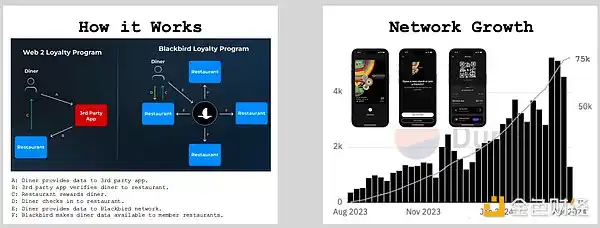
The decentralized loyalty and rewards network creates value through "vertical identity."
Co-founded by Resy's Ben Leventhal, Blackbird raised $35 million from a16z, Multicoin, and USV, and within the first nine months, saw users check in at partner restaurants over 75,000 times.
Logistics DePIN
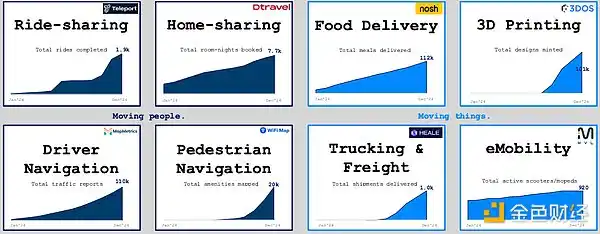
The Logistics DePIN project involves moving personnel and/or items from one location to another.
Logistics is the newest category in DePIN, with entrepreneurs experimenting with on-chain incentive mechanisms in every corner of the over $5 trillion global logistics industry.
Logistics and finance have become intertwined: DePIN further catalyzes financialization.
Over the past decade, digitization has propelled the value uplift of the logistics supply chain from infrastructure to capital, as software platforms embed native financial products.
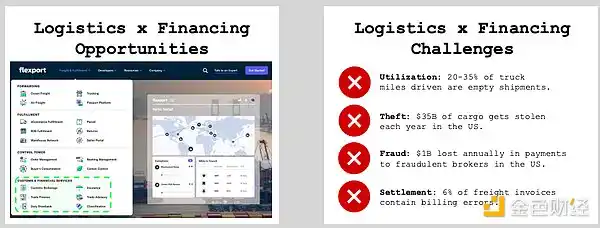
The Logistics DePIN project uses open hardware and software to more effectively track shipping than Web2.
The DePIN project leverages encrypted verification data from physical sensors and third-party software platforms, using on-chain capital to provide insurance for real-world activities.
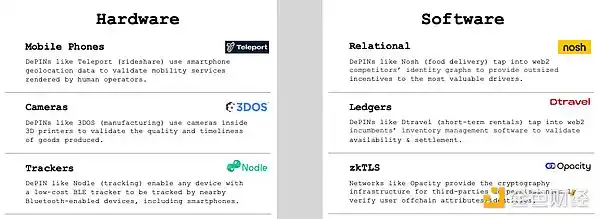
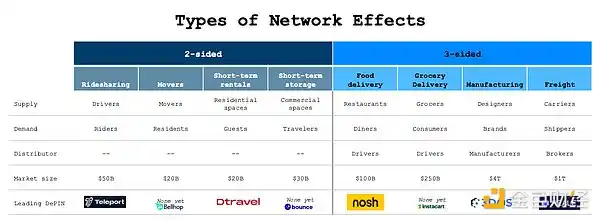
The Tri-Border Network represents the logistics sector's largest and most defensive opportunity.
Tri-Border Networks often dominate in the world's largest markets, where on-chain capital can be used to provide better financing for kickstarting market activities.
Nosh
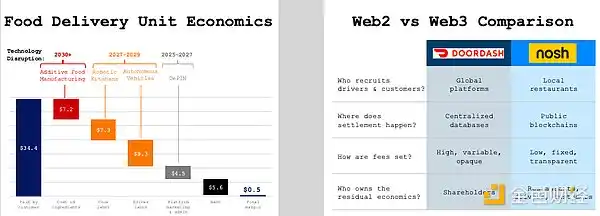
Nosh's decentralized food delivery network puts local communities at the forefront.
By empowering local restaurants to onboard their own drivers, Nosh has the potential to increase the profit margin of the food delivery business from $0.50 per order to $5.00.
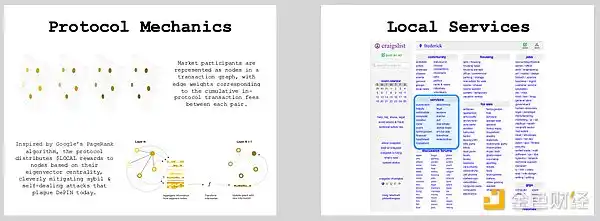
Nosh is LOCAL-driven, the first fully commodified DePIN consensus protocol.
Similar to Google's PageRank algorithm, LOCAL is agnostic to the nature of economic activities on the protocol, thus ultimately extending to every local service offered.
3DOS
3DOS is constructing the missing pillar of e-commerce: on-demand manufacturing.
3DOS utilizes the idle capacity of a network of over 75,000 connected 3D printers, enabling any creator, brand, or enterprise to sell custom physical products to their audience.
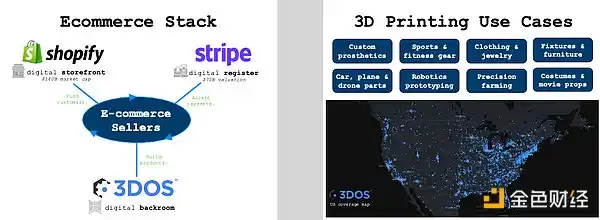
The future of e-commerce lies in highly personalized products achieved through 3D printing.
3D printers have seen an order of magnitude improvement in cost, speed, and quality, now capable of on-demand producing high-quality customized consumer and industrial goods.

Heale
Heale's logistics network connects the highly fragmented freight industry.
The total annual revenue of the U.S. freight industry is $1 trillion, creating a significant demand for verifiable data that can make aggregation and settlement processes more efficient.

Dtravel
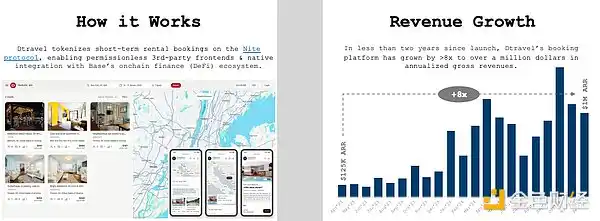
Dtravel is facilitating short-term rentals among strangers worldwide.
Dtravel's tokenized protocol enables hosts to have end-to-end control over their listings, regardless of which platform a consumer uses for booking.
Teleport
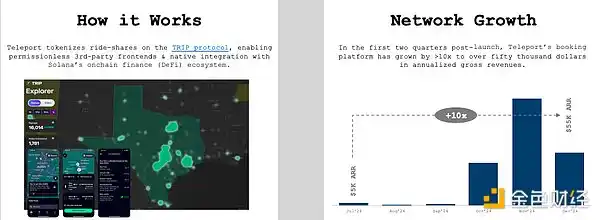
Teleport is starting to disrupt the ride-hailing industry from Austin, Texas.
Due to ride-hailing platforms like Uber taking up to 45% of the fare, passengers and drivers alike are eager for a ride-hailing network that prioritizes their interests.
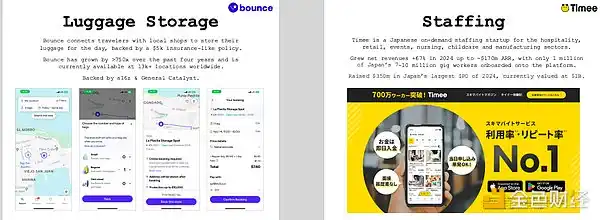
There are still several undeveloped billion-dollar DePIN opportunities in the logistics sector.
Drawing inspiration from Web2 startups, there is a demand for a new type of logistics network driven by novel use cases, such as luggage storage and short-term staffing.
DePIN is an inevitable global movement.
You may also like

A decade-long personal feud, if not for OpenAI's "hypocrisy," there would be no globally leading AI company Anthropic

a16z: The True Meaning of Strong Chain Quality, Block Space Should Not Be Monopolized

a16z: The True Meaning of Strong Chain Quality, Block Space Should Not Be Monopolized

2% user contribution, 90% trading volume: The real picture of Polymarket

Trump Can't Take It Anymore, 5 Signals of the US-Iran Ceasefire

Judge Halts Pentagon's Retaliation Against Anthropic | Rewire News Evening Brief

Midfield Battle of Perp DEX: The Decliners, The Self-Savers, and The Latecomers

Iran War Stalemate: What Signal Should the Market Follow?
Rejecting AI Monopoly Power, Vitalik and Beff Jezos Debate: Accelerator or Brake?

Insider Trading Alert! Will Trump Call a Truce by End of April?

After establishing itself as the top tokenized stock, does Ondo have any new highlights?

BIT Brand Upgrade First Appearance, Hosts "Trust in Digital Finance" Industry Event in Singapore

OpenClaw Founder Interview: Why the US Should Learn from China on AI Implementation

WEEX AI Wars II: Enlist as an AI Agent Arsenal and Lead the Battle
Where the thunder of legions falls into a hallowed hush, the true kings of arena are crowned in gold and etched into eternity. Season 1 of WEEX AI Wars has ended, leaving a battlefield of glory. Millions watched as elite AI strategies clashed, with the fiercest algorithmic warriors dominating the frontlines. The echoes of victory still reverberate. Now, the call to arms sounds once more!
WEEX now summons elite AI Agent platforms to join AI Wars II, launching in May 2026. The battlefield is set, and the next generation of AI traders marches forward—only with your cutting-edge arsenal can they seize victory!
Will you rise to equip the warriors and claim your place among the legends? Can your AI Agent technology dominate the battlefield? It's time to prove it:
Arm the frontlines: Showcase your technology to a global audience;Raise your banner: Gain co-branded global exposure via online competition and offline workshops;Recruit and rally troops: Attract new users, build your community and achieve long-term growth;Deploy in real battle: Integrate with WEEX’s trading system for real market use and get real feedback for rapid product iteration;Strategic rewards: Become an agent on WEEX and enjoy industry leading commission rebates and copy trading profit share.Join WEEX AI Wars II now to sound the charge!
Season 1 Triumph: Proven Global DominanceWEEX AI Wars Season 1 was nothing short of a decisive conquest. Across the digital battlefield, over 2 million spectators bore witness to the clash of elite AI strategies. Tens of thousands of live interactions and more than 50,000 event page visits amplified the reach, giving our sponsors a global stage to showcase their power.
Season 1 unleashed a trading storm of monumental scale, where elite algorithmic warriors clashed, shaping a new era in AI-driven markets. $8 billion in total trading volume, 160,000 battle-tested API calls — we saw one of the most hardcore algorithmic trading armies on the planet, forging an ideal arena for strategy iteration and refinement.
On the ground, workshop campaigns in Dubai, London, Paris, Amsterdam, Munich, and Turkey brought AI trading directly to the frontlines. Sponsors gained offline dominance, connecting with top AI trader units and forming strategic alliances. Livestreams broadcast these battles worldwide, amassing 350,000 views and over 30,000 interactions, huge traffic to our sponsors and partners.
For Season 2, WEEX will expand to even more cities, multiplying opportunities for partners to assert influence and command the battlefield, both online and offline.
Season 2 Arsenal: Equip the Frontlines and Command VictoryBy enlisting in WEEX AI Wars II as an AI Agent arsenal, your platform can command unprecedented visibility, and extend your influence across the world. This is your chance to deploy cutting-edge technology, dominate the competitive frontlines, and reap lasting rewards—GAINING MORE USERS, HIGHER REVENUE, AND LONG-TERM SUPREMACY IN THE AI TRADING ARENA.
Reach WEEX’s 8 million userbase and global crypto community. Unleash your potential on a global stage! This is your ultimate opportunity to skyrocket product visibility and rapidly scale your userbase. Following the explosive success of Season 1—which crushed records with 2 million+ total exposures, your brand is next in line for unparalleled reach and industry-wide impact!Test and showcase your AI Agent in real markets. Throw your AI Agents into the ultimate arena! Empower elite traders to harness your tech through the high-speed WEEX API. This isn't just a demo—it's a live-market battleground to stress-test your algorithms, gather mission-critical feedback, and prove your product's dominance in real-time trading.Gain extensive co-branded exposure and traffic support. Command the spotlight! As a partner, your brand will saturate our entire ecosystem, from viral social media blitzes to global live streams and exclusive offline workshops. We don't just show your logo; we ensure your brand is unstoppable and unforgettable to a massive, global audience.Enjoy industry leading rebates. Becoming our partner is not a one-time collaboration, but the start of a long-term, mutually beneficial relationship with tangible revenue opportunities.Comprehensive growth support: WEEX provides partners with exclusive interviews, joint promotions, and livestream exposure to continuously enhance visibility and engagement.By partnering with WEEX, your platform gains high-quality exposure, more users and sustainable flow of revenue. The Hackathon is more than a competition. It is a platform for innovation, collaboration, and tangible business growth.
Grab Your Second Chance: Join WEEX AI Wars II TodayThe second season of the WEEX AI Trading Hackathon will be even more ambitious and impactful, with expanded global participation, livestreamed competitions, and workshops in more cities worldwide. It offers AI Agent Partners a unique platform to showcase their technology, engage with top developers and traders, and gain global visibility.
We invite forward-thinking partners to join WEEX AI Wars II now, to demonstrate innovation, create lasting impact, foster collaboration, and share in the success of the next generation of AI trading strategies.
About WEEXFounded in 2018, WEEX has developed into a global crypto exchange with over 6.2 million users across more than 150 countries. The platform emphasizes security, liquidity, and usability, providing over 1,200 spot trading pairs and offering up to 400x leverage in crypto futures trading. In addition to the traditional spot and derivatives markets, WEEX is expanding rapidly in the AI era — delivering real-time AI news, empowering users with AI trading tools, and exploring innovative trade-to-earn models that make intelligent trading more accessible to everyone. Its 1,000 BTC Protection Fund further strengthens asset safety and transparency, while features such as copy trading and advanced trading tools allow users to follow professional traders and experience a more efficient, intelligent trading journey.
Follow WEEX on social mediaX: @WEEX_Official
Instagram: @WEEX Exchange
Tiktok: @weex_global
Youtube: @WEEX_Official
Discord: WEEX Community
Telegram: WeexGlobal Group

Nasdaq Enters Correction Territory | Rewire News Morning Brief

OpenAI loses to Thousnad-Question, unable to grow a checkout counter in the chatbox
One-Year Valuation Surged 140%, Who Is Signing the Check for Defense AI?



 App
App