
 Buy Crypto
- Markets
 Futures
- Spot
- Copy Trade
- Earn
- More
People Behind Pokémon Go: Started with CIA's Money, Now Mapping the World for the Military AI

Author | Sleepy.txt
Throughout human history, there have been several large-scale geographic data collection initiatives, each of which has altered the power dynamics.
During the Age of Discovery, Portugal and Spain sent fleets to map the seas. Whoever had accurate navigation charts held the trade and colonial initiative.
During World War II, the U.S. Army Map Service created global military maps. Eisenhower later said that the Allies could win because a key part of it was the maps.
During the Cold War, the U.S. and the USSR used spy satellites to photograph each other's territories. Image analysts spent their days staring at blurry satellite images, counting the number of missile silos.
These three initiatives had one thing in common: they were all state-led, carried out in secret, required massive military budgets, and the general public was completely unaware.
In the summer of 2016, 500 million people voluntarily picked up their phones, walked into parks, took to the streets, entered malls, and used their cameras to scan everything around them, all while playing a game called Pokémon Go. What they didn't know was that they were participating in the largest, lowest-cost, most efficient geographic data collection effort in human history. Every time someone went out, they were uploading ground-level images of global structures to the game's servers.
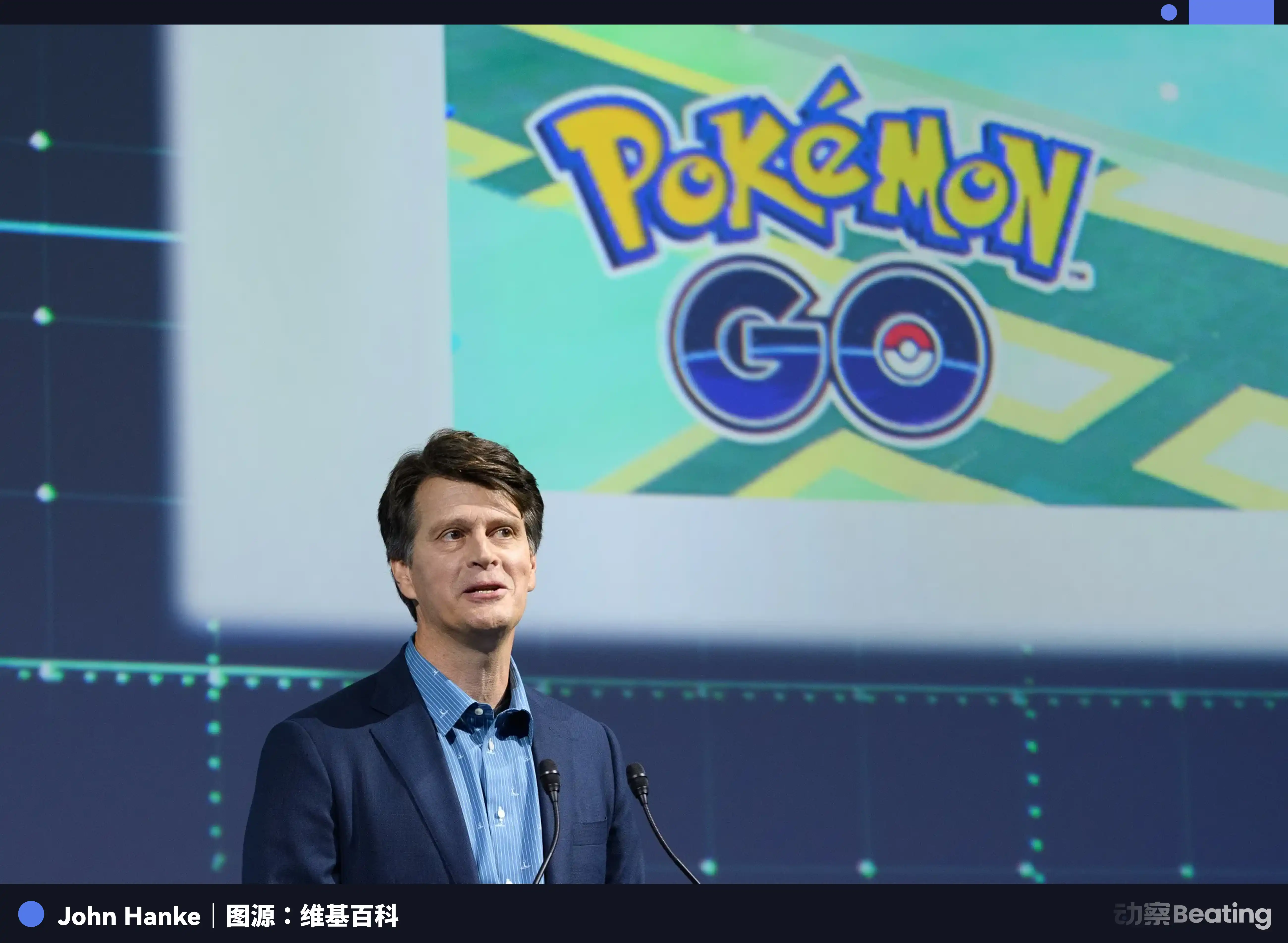
When John Hanke, the creator of the game, first started working on Pokémon Go, he simply wanted to create a fun AR game. However, a decade later, he made another decision: to let this data flow into AI and military applications.
Behind this decision lies a chilling clue: when Hanke founded his startup in 2001, the first money he received came from the CIA.
The CIA's First Funding and a Young Man's Map Dream
In 1996, John Hanke graduated from the Haas School of Business at the University of California, Berkeley, with an MBA degree, and then did something that seemed quite rash in those days: he ventured into internet entrepreneurship.
His first company, Archetype Interactive, developed a role-playing online game called "Meridian 59," one of the earliest 3D online games in history, predating "World of Warcraft" by almost a decade. This company was later acquired by 3DO, and Hanke received his first pot of gold in life.
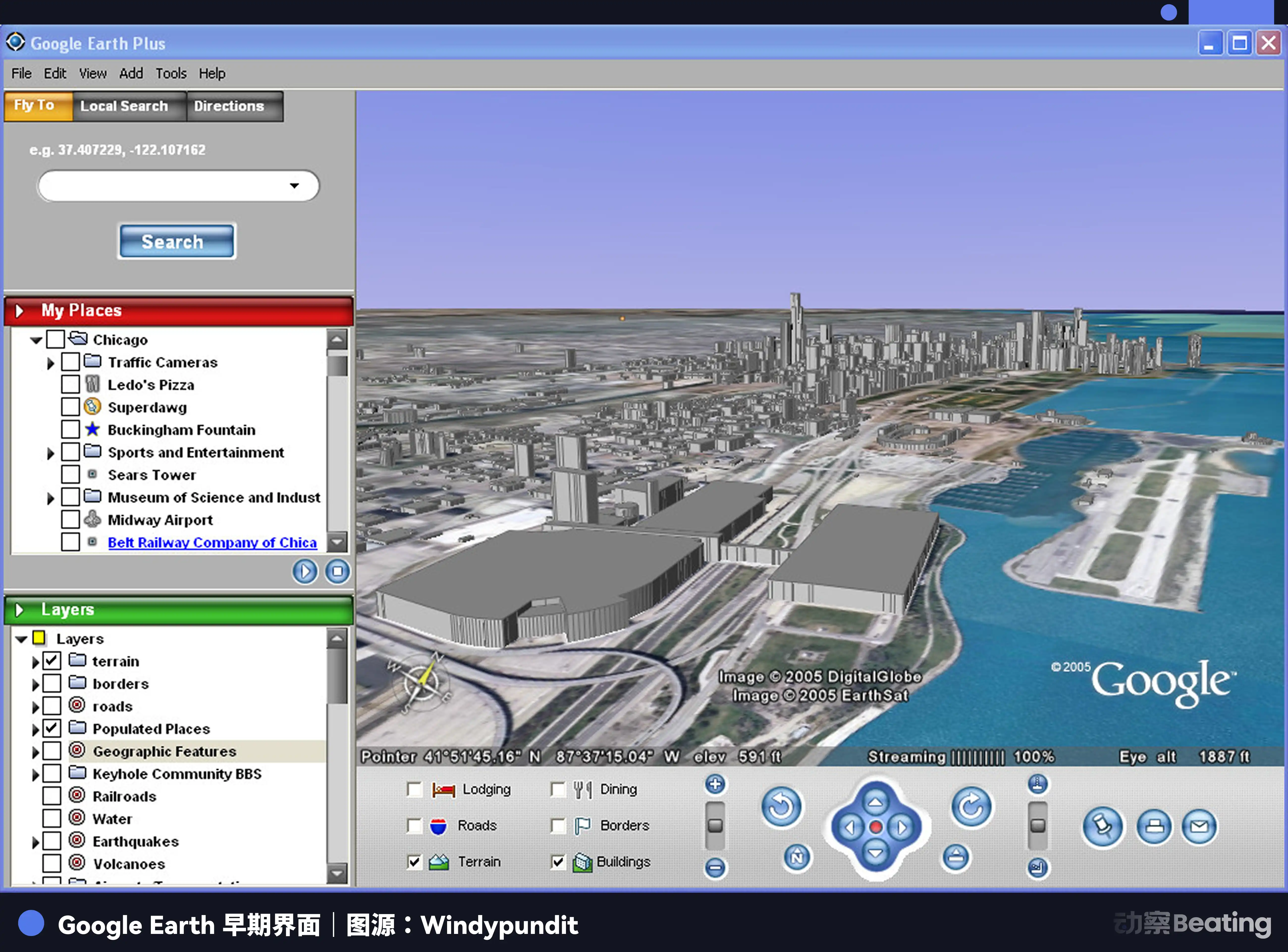
In 2001, he founded Keyhole.
He had a vision for the company, wanting to stitch together satellite images into an interactive globe that anyone could see on a computer screen, showing any point on Earth. At that time, the average US household internet speed was 56Kbps, taking over half a minute to load a high-resolution image. Keyhole's product required real-time streaming of satellite images, showcasing the technological challenges.
However, one organization immediately saw its value, and that was In-Q-Tel, the CIA's venture capital arm.
Established in 1999, In-Q-Tel was personally initiated by CIA Director George Tenet. Its operational logic was never about making money but about enabling the intelligence community to incorporate cutting-edge commercial technologies into the intelligence system through business investments.
At that time, satellite images could only provide a top-down view, while what intelligence analysis needed was a ground view, such as building facades, street layouts, entrance and exit locations, and surrounding environmental cover. What Keyhole was working on happened to meet this need.
In 2003, just weeks before the outbreak of the Iraq War, In-Q-Tel completed its investment in Keyhole. Soon, Keyhole's technology was practically used for battlefield situational analysis, with military analysts using it to study Baghdad's street layout and Saddam Hussein's palace structures.
In October 2004, Google acquired Keyhole for tens of millions of dollars. Keyhole's core technology later became the world-changing Google Earth, with Hanke himself joining Google as the Vice President of Geo Products, embarking on a larger-scale project.
Almost simultaneously, Peter Thiel, holding tens of millions earned from selling PayPal, founded a company called Palantir. The company's name is from the crystal ball in J.R.R. Tolkien's "The Lord of the Rings." Palantir's idea was to use big data analytics to help intelligence agencies find traces of terrorists in massive amounts of information.
While mainstream Silicon Valley VCs scoffed at it, In-Q-Tel also became one of Palantir's earliest endorsers and investors, with the CIA itself becoming Palantir's first customer.
The "Mistake" of Street View Cars and a Culture of Collect Now, Apologize Later
After joining Google, Hanke led the later controversial Street View project.
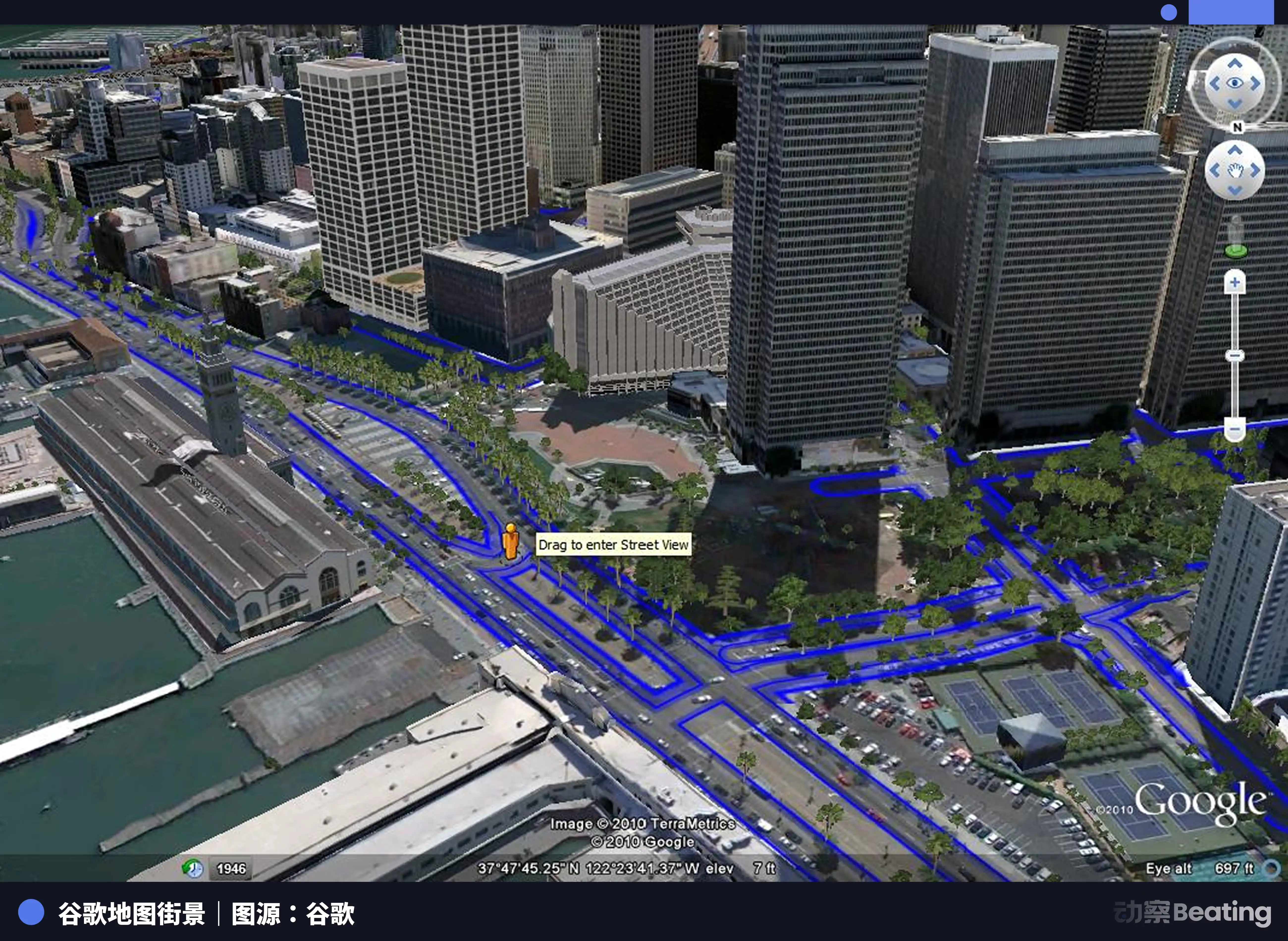
This was the first-ever attempt in human history to use cameras to map the world's streets. Google specially designed custom cars with roof-mounted 360-degree camera arrays that started driving around the globe in 2007, covering 60+ countries and taking billions of pictures. These photos were stitched together into continuous street views, allowing anyone to virtually walk down any street on Google Maps.
It was a product that changed the way humans perceive space. However, in 2010, a scandal completely altered the public perception of this project.
The Hamburg Data Protection Authority in Germany discovered during an inspection that these Street View cars, while capturing streets, were also secretly intercepting Wi-Fi data packets from nearby homes and businesses. The intercepted content was the full data stream, including passwords, email content, medical records, banking information, and even the web pages users were visiting.
This action violated communication privacy laws in Germany, France, Australia, the UK, Canada, Spain, and several other countries. Google faced hefty fines globally, with the FTC launching an investigation in the U.S., where the Department of Justice also got involved. Ultimately, Google paid a $7 million settlement in the U.S., was fined €100,000 in France, and also paid fines in Germany, Australia, among other locations.
Faced with overwhelming evidence, Google's official explanation was a "mistake in the code." An engineer named Marius Milner "inadvertently" introduced the data interception feature into the code, and the management claimed to be unaware of it.
This code ran on hundreds of cars worldwide for a full three years, collecting data from over 30 countries, with no internal whistleblowing and no manager stopping it. A later FCC investigation report revealed that Milner had clearly described the code's function in internal documents, which were distributed to multiple Google engineers.
Peel back this fig leaf, and you'll see the true Silicon Valley consensus: the bottom line of data has never been a physical barrier but rather a ball of clay they can discreetly mold. The cost of being caught is issuing an apology, paying a fine that's a drop in the bucket for Google, and then carrying on.
Of particular note is Google's handling of the incident. It refused to provide complete data content to various national regulators, citing "engineer privacy" as a reason to block direct inquiries into Milner and retained this dataset for years after investigations in multiple countries had concluded.
With the rogue logic of first trespassing and then buying forgiveness with money in hand, Hanke began to consider leaving Google around 2010, preparing to strike out on his own.
Pikachu is the Bait, Data is the Prey
In 2015, Hanke officially founded Niantic. The company initially incubated within Google in 2010, later spun off, and received a $30 million investment from Google, Nintendo, and The Pokémon Company.
On July 6, 2016, Pokémon Go was launched. Within a week of its launch, the daily active users exceeded 21 million, surpassing Twitter's daily active users. Within 60 days of its launch, the game was downloaded over 500 million times. In the United States, the game's daily active users even surpassed those of Google Maps at one point.
People dashed through parks as if under a spell, stood like signposts at intersections, and pointed their phone cameras at every corner just to catch that Pikachu on their screens. This frenzy even turned into a farcical spectacle, with some people climbing into others' backyards to catch Pokémon, others staring at their screens while driving straight into a tree, and even a clueless enthusiast running up to the entrance of a New Zealand police station, earnestly asking the officers if he could come in to catch a Pokémon.
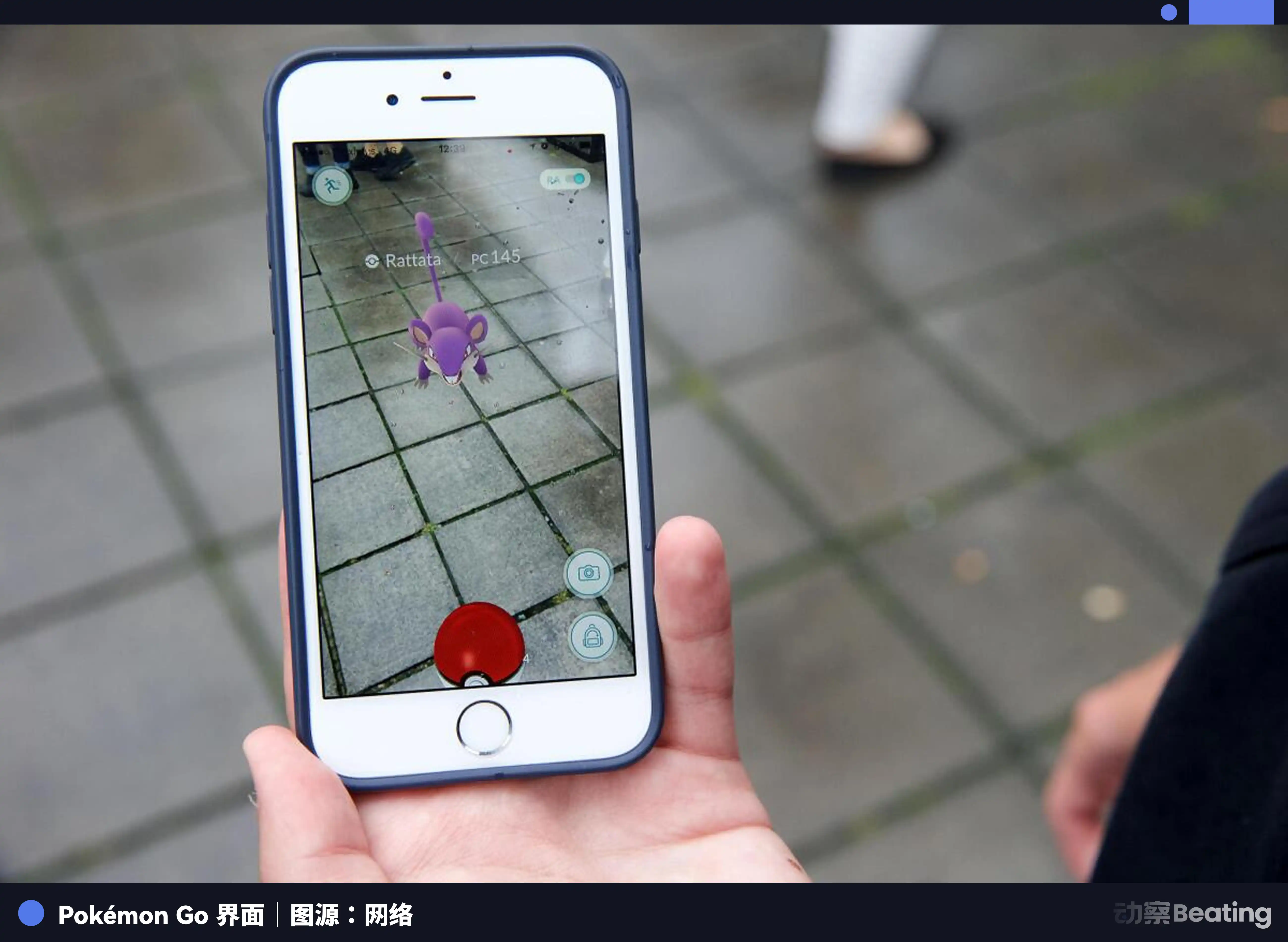
However, if you were to dissect every core mechanism of the game, you would discover that each design of this mechanism was geared towards maximizing the collection of user sensor data.
In-game tasks strategically guide players to specific locations to scan buildings with their cameras; Pokémon nests have players repeatedly visit the same place to help the system construct a multi-angle 3D model of that location; gym mechanisms make players stay for extended periods, collecting detailed data of indoor and surrounding environments; AR mode directly accesses the camera, overlaying virtual IPs on the real environment while simultaneously capturing images of the real scene.
With each capture, the phone uploads not just a photo but a complete sensor data packet containing GPS coordinates, phone orientation, tilt, and movement speed. This data is uploaded in real-time to Niantic's servers, processed, and gradually pieced together to form a detailed global geographic database.
Niantic refers to this system as the "Real World Platform." Undeniably, it has brought an unprecedented AR entertainment experience to hundreds of millions of players. However, at the core of its business and technological logic, this globally popular game objectively serves as the most efficient geographic data collection network in human history. While players chase their childhood dreams, what the system quietly harvests is the essential spatial coordinates to build the digital twin of the world.
During the early days of the game's release, the iOS version even quietly requested full access to Google accounts, theoretically giving it the ability to read all user emails, Google Drive files, and search history. This permission, after being publicly disclosed by security researcher Adam Reeve, caught the attention of the US Congress. Senator Al Franken sent a formal inquiry letter to Niantic, requesting an explanation for why such broad access was needed. Niantic then revoked this permission, attributing it to the familiar "technical error" explanation.
At that time, the reactions from various governments were surprisingly swift, with many countries directly banning the game. The judgment of these countries was ridiculed as a conspiracy theory by some media at the time. However, in today's hindsight, they were merely the ones who realized earlier than others that a game that had 500 million people voluntarily raising their cameras to scan global structures was fundamentally the largest-scale geographic data collection machine in human history.
Furthermore, the operating costs of this machine are entirely borne by the users themselves, including data fees, electricity costs, phone depreciation, as well as the time and physical effort spent walking.
Stripping away the game's outer shell, leaving behind a data goldmine, and then selling it to the battlefield
Fast forward to 2025, Hanke sold Pokémon Go.
The buyer was the game company Scopely, with the real ultimate backer behind Scopely being the Saudi sovereign wealth fund PIF. PIF is a sovereign wealth fund led by Saudi Crown Prince Mohammed bin Salman, managing assets exceeding $700 billion, making it one of the world's largest sovereign wealth funds. Its investment portfolio includes Uber, Lucid Motors, Nintendo, and a range of stakes in Western tech companies.
This transaction signifies that the historical location data accumulated by hundreds of millions of players worldwide over nine years now leads back to Riyadh.
Why would the Saudi sovereign wealth fund spend $3.85 billion to acquire a dwindling mobile game with a significantly decreased daily active user count?
The answer may not lie within the game itself but in the global network of location data behind the game. Pokémon Go's player data contains the precise movement tracks of hundreds of millions of people over the past nine years—where they live, where they work, which places they pass by daily, and how long they stay in certain buildings. This is a dataset coveted by any advertising company, intelligence agency, or city planning department.
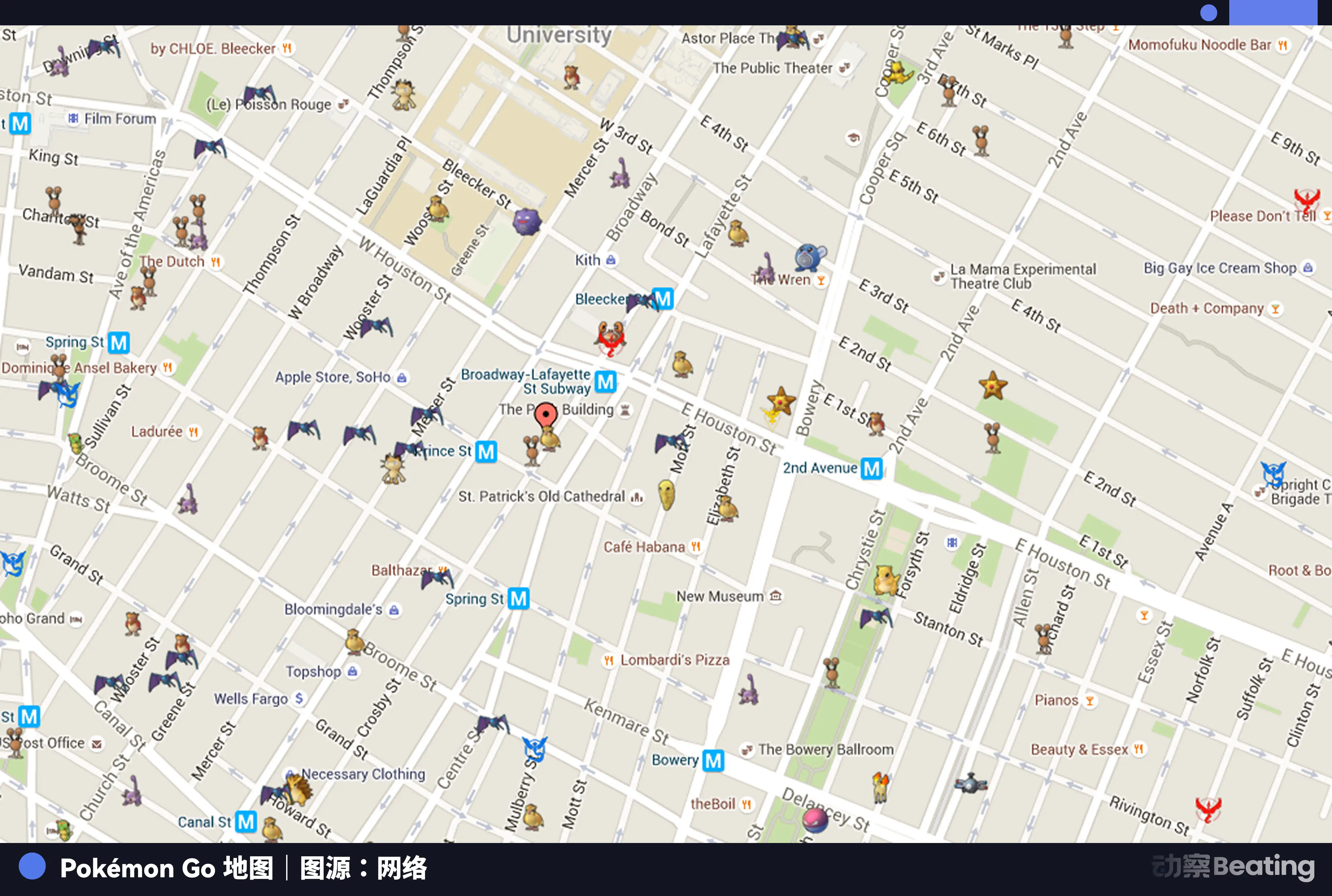
But the most brilliant aspect of this transaction is what Niantic did not sell.
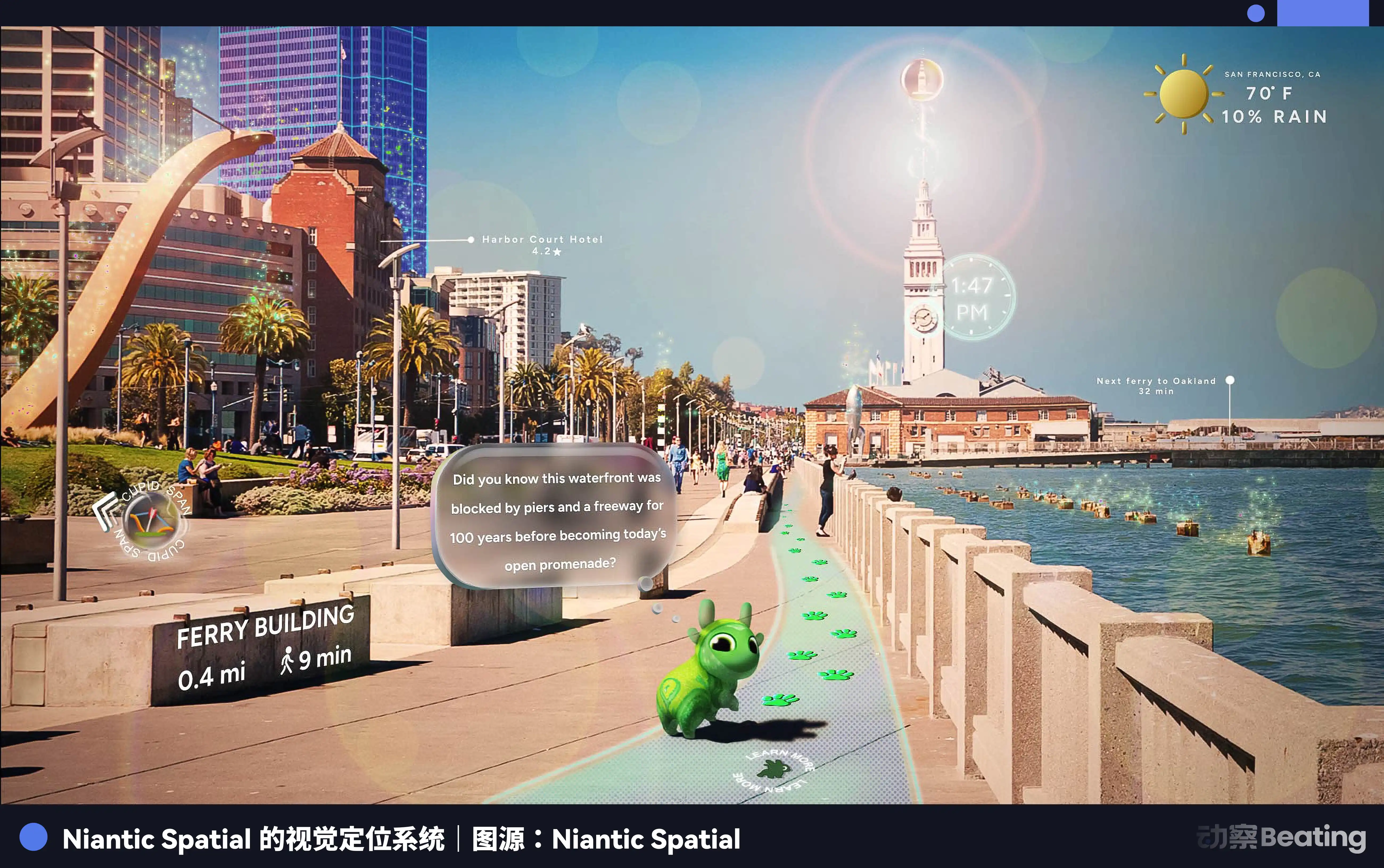
Hanke retained those 30 billion images, kept that nine-year optimized geographic database, and the large geospatial model trained on this data. He used these assets to establish a new company, Niantic Spatial, and publicly announced a partnership with the food delivery robot company Coco Robotics in March 2026. Coco's robots, delivering food on the streets of Los Angeles and Dallas, used Niantic Spatial's LGM for centimeter-level accurate visual positioning, even navigating precisely in GPS-unstable urban canyons.
But commercial robotics was just a civilian showcase for this technology.
In December 2025, Niantic Spatial signed a partnership agreement with the defense company Vantor to use LGM for military drone navigation in GPS-denied environments.
The so-called "GPS-denied environment" is an increasingly common state on the modern battlefield, where electronic warfare disrupts or deceives GPS signals, rendering GPS-dependent weapon systems ineffective. On the Ukrainian battlefield, Russian GPS jamming devices have already led to a large number of drones losing their way. Vantor's solution is to have drones "see" the ground through cameras, compare it with the stored ground visual features in LGM, and confirm their own location.
And those ground visual features stored in LGM come from those 30 billion images taken by Pokémon Go players.
A complete chain of events finally emerged. The map company invested in by the CIA transformed into the world's largest-scale ground visual data collection game. This data was used to train AI geospatial models, ultimately becoming the navigation system for military drones.
At the same time, Palantir, also hatched by the CIA in those years, its CEO Alex Karp openly proclaimed in public that AI is reshaping the nature of modern warfare. Palantir's AI platform AIP has been deployed on the Ukrainian battlefield to assist the Ukrainian military in target identification and strike decisions. In Gaza, Palantir's system is used by the Israeli Defense Forces for intelligence analysis.
The two seeds of intelligence capital simultaneously planted in Silicon Valley, Hanke and Thiel, one collecting data from the physical world, the other analyzing data from the digital world. Twenty years later, they met at the endpoint of AI militarization.
Things No One Told You
In 2025, Hanke published an article on the Niantic Spatial official blog titled "The Next $100 Trillion AI Investment Should Go to the Physical World."
His argument was that large language models had already taught AI to speak, but for AI to truly step into the real world, such as driving cars, controlling robots, autonomously navigating cities, it needed something else: spatial understanding of the physical world. What Niantic Spatial aimed to do was become the Google Maps of the AI era, a physical world coordinate system shared by all robots and AI agents.
This vision sounds entirely legitimate. However, it glossed over an unspoken premise: the data in this coordinate system came from 500 million ordinary users who never agreed to have their location data used for military applications.
In 2016, buried in the privacy policy you agreed to when registering for Pokémon Go were the words "We may share data with third-party partners to improve services." No one knew who these partners were, no one knew the boundaries of "sharing," and no one foresaw that "improving services" would eventually include helping drones navigate the battlefield.
When this data flowed into military applications, no regulatory body intervened, no user received a notification, and no legal framework in any country could trace this data flow chain.
Here is a comparison that deserves serious consideration. The U.S. government, citing "data may be accessed by the Chinese government," demanded that ByteDance forcibly divest TikTok's U.S. operations and held a congressional hearing lasting several hours. Meanwhile, Pokémon Go's data was sold to a Saudi sovereign wealth fund, used for military applications, and the U.S. government remained silent. The logic behind this double standard has never been about data security but about geopolitics. Data security depends on whose hands the data ends up in.
The deeper issue is that this is not just a Pokémon Go problem. Meta's smart glasses are continuously scanning users' surroundings, Apple's Vision Pro is building indoor 3D maps, Waymo's self-driving cars are reconstructing detailed models of city roads. These data collection practices are fundamentally no different from Pokémon Go. In the AI era, every consumer device with a camera is a potential geographic data collection node, and users are almost completely unaware of this.
Now is the time for a thorough penetration of this secretive commercial dark web.
In the summer of 2016, an ordinary person raised their phone to catch a Pikachu, inadvertently scanning the facade of a building.
This casually taken photo was silently uploaded to a server, where it, along with three hundred billion similar photos, trained a large-scale geographic spatial model.
Subsequently, this model was packed into a new shell called Niantic Spatial, and remember, this company was initially funded by the CIA.
Today, it is serving as an electronic eye for GPS signal-deprived, weaponized drones on the battlefield.
Meanwhile, the game itself was already valued at 38.5 billion dollars, and it was quickly sold to the Saudi sovereign wealth fund known for its cross-border surveillance enthusiasm.
Unpacked, every link in this chain of interests is spotless, fitting neatly within the boundaries of compliance. But once seamlessly interconnected, it becomes a Leviathan untethered by any laws.
Perhaps this is the most thought-provoking paradox of the digital age. A system operating in the sunlight, following the logic of commercial compliance, whose initial driving force was people's pursuit of pure joy, may ultimately, under the sway of capital and geopolitics, become part of a cold war machine.
Maybe Hanke initially just wanted to create a good game, but under the watchful eye of intelligence capital, this data inevitably flowed towards the most profitable and bloodthirsty endpoint. Hanke indeed did not lie; he simply swallowed back the bloodiest half of that sentence. And those omitted lines, at this moment, are crossing the horizon of a battlefield, transforming into the howl of guided bombs tearing through the air.
At 10:45 am on February 28, 2026, the howl was heard in Minab City, Hormozgan Province, Iran.
A U.S. Tomahawk cruise missile precisely struck the Shajareh Tayyebeh Girls' Elementary School, a two-story classroom building instantly collapsed, resulting in 175 deaths, the vast majority of whom were 7 to 12-year-old girls. This school was adjacent to an Iranian Revolutionary Guard naval base, once a military property of the IRGC, later converted into a school. However, in the eyes of the Pentagon's target identification system powered by Palantir and top-tier AI, it remained a military stronghold that needed to be eliminated.
No one knows if any fatal architectural feature that determined the fate of nearly 200 lives was freely captured by an ordinary person holding a camera while street-viewing a decade ago in this vast database. But what we do know is that in this meat grinder welded together by countless cameras, Silicon Valley data traffickers, and the military-industrial complex, the "tech for good" elixir had long lost its potency. It ultimately regurgitated nothing but cold, blind, precisely guided death into the real world.
You may also like

2% user contribution, 90% trading volume: The real picture of Polymarket

Trump Can't Take It Anymore, 5 Signals of the US-Iran Ceasefire

Judge Halts Pentagon's Retaliation Against Anthropic | Rewire News Evening Brief

Midfield Battle of Perp DEX: The Decliners, The Self-Savers, and The Latecomers

Iran War Stalemate: What Signal Should the Market Follow?

Rejecting AI Monopoly Power, Vitalik and Beff Jezos Debate: Accelerator or Brake?

Insider Trading Alert! Will Trump Call a Truce by End of April?

After establishing itself as the top tokenized stock, does Ondo have any new highlights?

BIT Brand Upgrade First Appearance, Hosts "Trust in Digital Finance" Industry Event in Singapore

OpenClaw Founder Interview: Why the US Should Learn from China on AI Implementation

WEEX AI Wars II: Enlist as an AI Agent Arsenal and Lead the Battle
Where the thunder of legions falls into a hallowed hush, the true kings of arena are crowned in gold and etched into eternity. Season 1 of WEEX AI Wars has ended, leaving a battlefield of glory. Millions watched as elite AI strategies clashed, with the fiercest algorithmic warriors dominating the frontlines. The echoes of victory still reverberate. Now, the call to arms sounds once more!
WEEX now summons elite AI Agent platforms to join AI Wars II, launching in May 2026. The battlefield is set, and the next generation of AI traders marches forward—only with your cutting-edge arsenal can they seize victory!
Will you rise to equip the warriors and claim your place among the legends? Can your AI Agent technology dominate the battlefield? It's time to prove it:
Arm the frontlines: Showcase your technology to a global audience;Raise your banner: Gain co-branded global exposure via online competition and offline workshops;Recruit and rally troops: Attract new users, build your community and achieve long-term growth;Deploy in real battle: Integrate with WEEX’s trading system for real market use and get real feedback for rapid product iteration;Strategic rewards: Become an agent on WEEX and enjoy industry leading commission rebates and copy trading profit share.Join WEEX AI Wars II now to sound the charge!
Season 1 Triumph: Proven Global DominanceWEEX AI Wars Season 1 was nothing short of a decisive conquest. Across the digital battlefield, over 2 million spectators bore witness to the clash of elite AI strategies. Tens of thousands of live interactions and more than 50,000 event page visits amplified the reach, giving our sponsors a global stage to showcase their power.
Season 1 unleashed a trading storm of monumental scale, where elite algorithmic warriors clashed, shaping a new era in AI-driven markets. $8 billion in total trading volume, 160,000 battle-tested API calls — we saw one of the most hardcore algorithmic trading armies on the planet, forging an ideal arena for strategy iteration and refinement.
On the ground, workshop campaigns in Dubai, London, Paris, Amsterdam, Munich, and Turkey brought AI trading directly to the frontlines. Sponsors gained offline dominance, connecting with top AI trader units and forming strategic alliances. Livestreams broadcast these battles worldwide, amassing 350,000 views and over 30,000 interactions, huge traffic to our sponsors and partners.
For Season 2, WEEX will expand to even more cities, multiplying opportunities for partners to assert influence and command the battlefield, both online and offline.
Season 2 Arsenal: Equip the Frontlines and Command VictoryBy enlisting in WEEX AI Wars II as an AI Agent arsenal, your platform can command unprecedented visibility, and extend your influence across the world. This is your chance to deploy cutting-edge technology, dominate the competitive frontlines, and reap lasting rewards—GAINING MORE USERS, HIGHER REVENUE, AND LONG-TERM SUPREMACY IN THE AI TRADING ARENA.
Reach WEEX’s 8 million userbase and global crypto community. Unleash your potential on a global stage! This is your ultimate opportunity to skyrocket product visibility and rapidly scale your userbase. Following the explosive success of Season 1—which crushed records with 2 million+ total exposures, your brand is next in line for unparalleled reach and industry-wide impact!Test and showcase your AI Agent in real markets. Throw your AI Agents into the ultimate arena! Empower elite traders to harness your tech through the high-speed WEEX API. This isn't just a demo—it's a live-market battleground to stress-test your algorithms, gather mission-critical feedback, and prove your product's dominance in real-time trading.Gain extensive co-branded exposure and traffic support. Command the spotlight! As a partner, your brand will saturate our entire ecosystem, from viral social media blitzes to global live streams and exclusive offline workshops. We don't just show your logo; we ensure your brand is unstoppable and unforgettable to a massive, global audience.Enjoy industry leading rebates. Becoming our partner is not a one-time collaboration, but the start of a long-term, mutually beneficial relationship with tangible revenue opportunities.Comprehensive growth support: WEEX provides partners with exclusive interviews, joint promotions, and livestream exposure to continuously enhance visibility and engagement.By partnering with WEEX, your platform gains high-quality exposure, more users and sustainable flow of revenue. The Hackathon is more than a competition. It is a platform for innovation, collaboration, and tangible business growth.
Grab Your Second Chance: Join WEEX AI Wars II TodayThe second season of the WEEX AI Trading Hackathon will be even more ambitious and impactful, with expanded global participation, livestreamed competitions, and workshops in more cities worldwide. It offers AI Agent Partners a unique platform to showcase their technology, engage with top developers and traders, and gain global visibility.
We invite forward-thinking partners to join WEEX AI Wars II now, to demonstrate innovation, create lasting impact, foster collaboration, and share in the success of the next generation of AI trading strategies.
About WEEXFounded in 2018, WEEX has developed into a global crypto exchange with over 6.2 million users across more than 150 countries. The platform emphasizes security, liquidity, and usability, providing over 1,200 spot trading pairs and offering up to 400x leverage in crypto futures trading. In addition to the traditional spot and derivatives markets, WEEX is expanding rapidly in the AI era — delivering real-time AI news, empowering users with AI trading tools, and exploring innovative trade-to-earn models that make intelligent trading more accessible to everyone. Its 1,000 BTC Protection Fund further strengthens asset safety and transparency, while features such as copy trading and advanced trading tools allow users to follow professional traders and experience a more efficient, intelligent trading journey.
Follow WEEX on social mediaX: @WEEX_Official
Instagram: @WEEX Exchange
Tiktok: @weex_global
Youtube: @WEEX_Official
Discord: WEEX Community
Telegram: WeexGlobal Group

Nasdaq Enters Correction Territory | Rewire News Morning Brief

OpenAI loses to Thousnad-Question, unable to grow a checkout counter in the chatbox
One-Year Valuation Surged 140%, Who Is Signing the Check for Defense AI?

Bittensor vs. Virtuals: Two Distinct AI Flywheel Mechanisms

Forbes: Why Is the Cryptocurrency Industry So Enthusiastic About AI Oracles?

Ethereum Foundation publishes: Restructuring the division of labor between L1 and L2, jointly building the ultimate Ethereum ecosystem


 App
App