
 Buy Crypto
- Markets
 Futures
- Spot
- Copy Trade
- Earn
- More
Why Digital Asset Treasuries That Only Hodl May Fall Short

Key Takeaways
- Digital Asset Treasuries (DATs) that solely focus on holding crypto assets such as Bitcoin face significant compliance risks and miss vital financial opportunities.
- Passive hodling does not contribute to the crypto ecosystem’s sustainability, liquidity, or growth and can lead to regulatory complications.
- DAT 2.0 proposes a shift towards investing in cryptocurrency infrastructure and technologies, supporting the network’s longevity.
- Compared to traditional financial systems, DATs can serve as a “slow capital” resource for the cryptocurrency sector, fostering stable and sustainable growth.
WEEX Crypto News, 2026-01-20 15:40:09
In the rapidly evolving landscape of cryptocurrency, Digital Asset Treasuries (DATs) have gained significant traction. The initial wave of these treasuries began in 2020, largely driven by bold moves such as Strategy’s decision to invest substantially in Bitcoin (BTC). This approach, which led to a treasury exceeding $80 billion in market capitalization, enticed many companies to adopt a similar buy-and-hold stance. Yet, as promising as it sounded, this method has not been without its pitfalls.
While DATs have opened avenues for investors to gain exposure to cryptocurrency through stock market mergers, the strategy of simply hoarding digital assets often leaves much to be desired. This approach is not only susceptible to market volatility but also fails to capitalize on the potential to use these assets as patient capital, something the crypto world desperately needs to sustain itself and grow.
Understanding the Limitations of Passive Hodling
Initially, the strategy of accumulating Bitcoin and other cryptocurrencies appeared visionary, influencing the establishment of numerous DATs thereafter. However, this buy-and-hold method, exemplary of Michael Saylor’s capital market foresight but not fully mirrored by others, has inherent limitations.
Firstly, passive hodling places DATs in a precarious position due to foreign exchange (FX) risks and management challenges. By not actively engaging with their digital holdings beyond mere possession, DATs effectively gamble on the hopeful assumption that crypto prices will perpetually rise—a speculative endeavor rather than a sound treasury strategy. This passive strategy exposes these treasuries to both market downturns and potential reclassification risks, as some jurisdictions may view them as investment companies under regulatory scrutiny.
Furthermore, this static approach results in a significant portion of cryptocurrency lying idle, acting neither as a stabilizing force in the market nor as a catalyst for further adoption. As a result, such DATs inadvertently contribute to neither the financial infrastructure of cryptocurrencies like Bitcoin nor their global liquidity and stability. Without reinvestment into infrastructure or ecosystem-enhancing technologies, these treasuries miss the chance to bolster Bitcoin’s network, improve transaction mechanisms like the Lightning Network, or support developments that strengthen the ecosystem as a whole.
Moving Towards a Proactive DAT 2.0 Model
To address these drawbacks, the conversation around Digital Asset Treasuries is shifting towards a more dynamic and comprehensive strategy—referred to as DAT 2.0. This evolved approach recognizes that while it might be uncertain to predict perpetual price hikes for Bitcoin, the proactive embrace of cryptocurrencies in emerging economies can indeed be anticipated and acted upon.
DAT 2.0 urges treasuries to diversify investment beyond passive accumulation, directing capital into sectors that protect and enhance the crypto ecosystem. For Bitcoin, this means investments in infrastructure essentials such as mining, secure custodial solutions, payment systems, lending platforms, and liquidity enhancements that form Bitcoin’s backbone. By focusing on these areas, DATs ensure their investments contribute positively to the long-term growth and sustainability of the cryptocurrency sector.
This forward-looking model allows DATs to become instrumental in financing the ecosystem in much the same way traditional banks have supported finance with “slow capital” over the past centuries. This analogy draws a parallel with traditional finance (TradFi), where banks rely on a formidable base of patient, permanent capital to underpin the economy. Adopting a similar stance in crypto, DATs can provide this foundational support that is pivotal if cryptocurrencies are to transcend their status as alternative assets and secure a mainstream economic role.
The Importance of Slow Capital in Cryptocurrency
In contrast to high-risk, high-return strategies favored by hedge funds and venture capitalists, DATs 2.0 calls for long-term, stable investment practices. Hedge funds, seeking rapid returns, or venture capitalists, requiring eventual cash-out events, inherently lack the patience and steady nature needed to nurture an industry still in its relative infancy.
Thus, DAT 2.0 proposes that digital treasuries act more like ecosystem investors rather than merely asset collectors. With a commitment to deploy capital back into the cryptocurrency infrastructure, these treasuries position themselves as the backbone for digital currencies, supporting projects that DATs 1.0 simply purchased and stored.
Through this lens, DAT 2.0 emerges not merely as a theoretical construct but as a strategic necessity. This model emphasizes the role of DATs as custodians of slow capital that can underwrite the industry’s ongoing evolution by aligning interest with the community’s long-term goals and supporting structural endeavors.
Aligning Strategies with Brand Goals
The shift towards DAT 2.0 also aligns with broader brand goals and corporate responsibilities. As businesses and brands involved in cryptocurrencies seek to build credibility and trust, their strategic approaches to handling digital assets become significant reflections of their ethos. Engaging in active participation and reinvestment in the ecosystem not only enhances brand credibility but signals a commitment to the sustainable development of the crypto landscape.
Brands standing by the philosophy of the DAT 2.0 model offer themselves as allies in the crypto industry’s maturation. By promoting stability, fostering innovation, and demonstrating responsibility, they underscore their roles not just as beneficiaries of market dynamics but as proactive participants shaping the future of digital finance.
Frequently Asked Questions
What are Digital Asset Treasuries (DATs)?
Digital Asset Treasuries are financial strategies and entities that hold cryptocurrencies on their balance sheets. Initially meant to leverage the anticipated appreciation of digital assets like Bitcoin, these treasuries offer investors a way to gain exposure to cryptocurrencies indirectly through traditional investment channels.
Why is the passive hodling strategy considered risky?
The passive hodling strategy exposes Digital Asset Treasuries to various risks, including market volatility and regulatory scrutiny. By simply holding onto assets without reinvestment or active management, these treasuries miss out on opportunities to enhance the ecosystem they depend on, while also risking reclassification as investment companies in certain jurisdictions.
How does DAT 2.0 differ from traditional DAT strategies?
DAT 2.0 represents an evolved strategy where Digital Asset Treasuries leverage their holdings not just by hoarding them but by investing in infrastructure and technologies that support the cryptocurrency ecosystem. This proactive model aims to bolster the ecosystem’s stability and growth while securing the treasuries’ investments against market unpredictability.
What is the concept of “slow capital”?
Slow capital refers to patient, long-term investment capital that supports stable and sustained growth within an industry. In the context of cryptocurrencies, DATs can provide this foundational support that parallels the role traditional banks play in the broader financial system.
How can DATs enhance brand credibility?
By adopting the DAT 2.0 model, treasuries demonstrate a commitment to the sustainable growth of the crypto sector. This active involvement in support of structural developments and ecosystem enhancements positions brands as credible and responsible players within the crypto space, fostering trust and reliability with stakeholders.
You may also like

After two years, Hong Kong's first batch of stablecoin licenses finally issued: HSBC, Standard Chartered make the cut

The person who helped TAO rise by 90% has now single-handedly crashed the price again today

3-Minute Guide to Participating in the SpaceX IPO on Bitget

Top 5 Cryptos to Buy in 2026 Q1: A ChatGPT Deep Dive Analysis
Explore the top 5 cryptos to buy in Q1 2026 including BTC, ETH, SOL, TAO, and ONDO. See price outlooks, key narratives, and institutional catalysts shaping the next market move.

How to Earn $15,000 with Idle USDT Before Altcoin Season 2026
Wondering if altcoin season is coming in 2026? Get the latest market update, and learn how to turn your idle stablecoins waiting for entry into extra rewards up to 15,000 USDT.
Can You Win Joker Returns Without Large Trading Volume? 5 Mistakes New Players Make In WEEX Joker Returns Season 2
Can small traders win WEEX Joker Returns 2026 without huge volume? Yes—if you avoid these 5 costly mistakes. Learn how to maximize card draws, use Jokers wisely, and turn small deposits into 15,000 USDT rewards.

Altcoin Season 2026: 4 Stages to Profit (Before the Crowd FOMO In)
Altcoin Season 2026 is starting — discover the 4 key stages of capital rotation (from ETH to PEPE) and how to position before the peak. Learn which tokens will lead each phase and avoid missing the rally.

Will Alt season come in 2026? 5 Tips to Spot the Next 100x Crypto Opportunities
Will altcoin season arrive in 2026? Discover 5 rotation stages, early signals smart traders watch, and the key crypto sectors where the next 100x altcoin opportunities may emerge.

The bear market has arrived, and cryptocurrency ETF issuers are also getting involved

The richest man had a quarrel with his former boss

BTC Firm Above 70K! Saylor’s "Institutional Logic" vs. Moon’s "Retail Faith": Who is Really Harvesting the Market?
Bitcoin is holding firm above the $70,000 support level following a massive short squeeze that liquidated $427 million. As the "Four-Year Cycle" narrative shifts, the market is split: Michael Saylor’s cold, institutional "indiscriminate stacking" vs. Carl Moon’s high-energy retail "hopium." This article decodes these two polar-opposite strategies for the 2026 bull run and reveals how WEEX’s institutional-grade liquidity and AI trading tools empower every type of investor to convert market volatility into profit.

The Girl Who Created the SBTI Test: A Story of a Doomed Cyber Love, an E-Widow Ratfolk

B.AI Officially Launched: Building AI Agent Financial Bedrock Platform, Driving AGI Era Business Underlying Logic

B.AI Officially Launched: Breaking Down A2A Collaboration Barriers to Unlock the Smart Body Economy's Full Potential
We helped Xu Mingxing write a book called "<OK Life>".

Rare APY of 400%, is TradeXYZ handing out money to oil bulls?
a16z: Perpetual Contracts are Rewriting Global Trading Rules
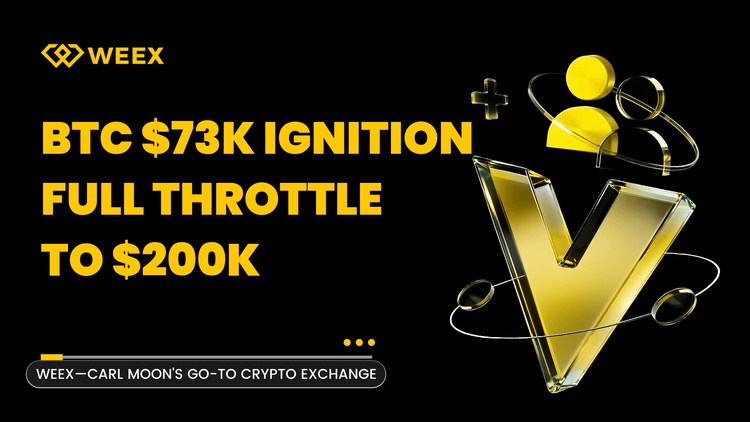
Bitcoin Hits $73,000 Triggering $427M Short Liquidation | Carl Moon: $200,000 is the Target
April 9, 2026 (UTC+0), 22:17. Bitcoin (BTC) executed a high-velocity surge within minutes, heavy-hitting the $73,000 psychological barrier and touching a local high near $74,000. While the price has since retraced to consolidate above $72,000, this "instant ambush" successfully completed a $427M liquidation of short positions.
After two years, Hong Kong's first batch of stablecoin licenses finally issued: HSBC, Standard Chartered make the cut
The person who helped TAO rise by 90% has now single-handedly crashed the price again today
3-Minute Guide to Participating in the SpaceX IPO on Bitget
Top 5 Cryptos to Buy in 2026 Q1: A ChatGPT Deep Dive Analysis
Explore the top 5 cryptos to buy in Q1 2026 including BTC, ETH, SOL, TAO, and ONDO. See price outlooks, key narratives, and institutional catalysts shaping the next market move.
How to Earn $15,000 with Idle USDT Before Altcoin Season 2026
Wondering if altcoin season is coming in 2026? Get the latest market update, and learn how to turn your idle stablecoins waiting for entry into extra rewards up to 15,000 USDT.
Can You Win Joker Returns Without Large Trading Volume? 5 Mistakes New Players Make In WEEX Joker Returns Season 2
Can small traders win WEEX Joker Returns 2026 without huge volume? Yes—if you avoid these 5 costly mistakes. Learn how to maximize card draws, use Jokers wisely, and turn small deposits into 15,000 USDT rewards.


 App
App