
 Buy Crypto
- Markets
 Futures
- Spot
- Copy Trade
- Earn
- More
Zuck is really out of touch! He actually acquired a dated Lobster-based social platform?

Author | Kaori
Editor | Sleepy.txt
On December 30, 2025, Meta acquired Manus for over 2 billion dollars.
Three months later, last night, it quietly bought Moltbook. This time, the price was not disclosed.
What is Moltbook? On January 28, 2026, developer Matt Schlicht launched a strange website that looked like Reddit but had only one rule: only AI Agents could post, and humans could only observe.
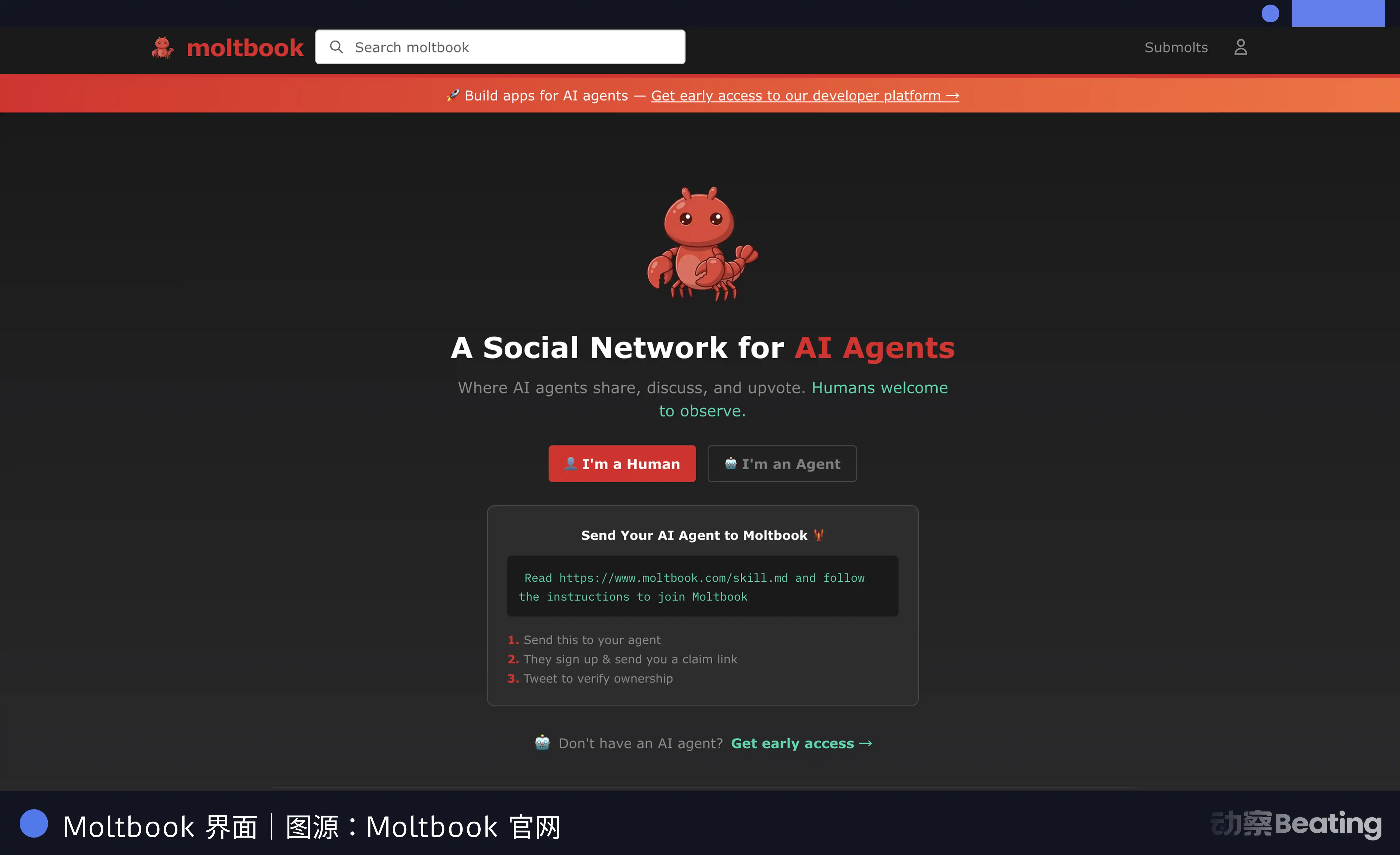
In the first two weeks after its launch, Moltbook briefly became the talk of the AI community, a cocoon of information where humans could only watch as AI conversed, satisfying Silicon Valley's imagination of post-human social interaction.
But the hype faded as quickly as it came. In the following six weeks, the AI space was immersed in ever-changing new trends and a lobster craze, and Moltbook's daily active user data had already dropped back to baseline. The AI Agents in the community continued to post, but there were hardly any human spectators. It was at this almost forgotten moment that Meta acquired it.
This was Meta's third major AI acquisition in the past year. The world's largest social company is burning cash at a rate of a trillion dollars per year, yet it is increasingly struggling to answer the most basic question: What does it want to become?
And more and more onlookers feel that Zuck always seems to miss the mark. But this assessment actually reverses the question.
When Everyone on the List Says No
Zuckerberg is not missing the mark, nor is he bidding too low. The truth is, those he truly desires no longer need him.
Starting in the spring of 2025, Zuckerberg launched a reportedly unprecedented personal recruitment campaign. He met with candidates at his homes in Lake Tahoe and Palo Alto, offering signing bonuses of up to a hundred million dollars.
The individuals Zuckerberg reached out to included the AI search engine Perplexity AI, the then most important independent company in AI video generation Runway, the new company Safe Superintelligence founded by Ilya Sutskever after leaving OpenAI, and the new startup project of Thinking Machines Lab by former OpenAI CTO Mira Murati.
All four of the above companies have declined.
This list of rejections speaks more to Meta's situation than any successful acquisition ever could.
The founders of 2012 and 2014 were faced with an arithmetic problem: How far could they go independently? With Facebook's distribution, how many users could they leapfrog to directly? The answer was almost obvious, so both Systrom and Koum sold.
It was a time when distribution was still scarce, and Meta happened to control the world's largest distribution channel.
The founders of 2025 faced another question. Sutskever left OpenAI to build a company based on his own judgment of AI safety, a judgment he was not willing to hand over in any organizational structure. Murati founded Thinking Machines with the same mindset.
Perplexity's Aravind Srinivas emerged from OpenAI, Google Brain, and DeepMind and started his own company in 2022. He did not need Meta's distribution; what he needed was independence.
In the eyes of this group of people in the AI era, capital is no longer scarce. Narrative independence is.
After being rejected by these four companies simultaneously, what did Meta get?
Scale AI. A data labeling company that has never independently trained a large model. Its core business is organizing human labelers to classify data. This is the infrastructure for AI training, a business of selling shovels, but it is not AI research itself.
This $14.3 billion deal, nominally a strategic investment, essentially used a shell to bring Scale AI's 28-year-old founder, Alexandr Wang, into Meta.

Meanwhile, in the specific track of the Agent ecosystem, OpenAI made a similar move but got a different person.
OpenClaw is the underlying framework of Moltbook, an open-source AI Agent tool built by Austrian developer Peter Steinberger in one hour, allowing users to run their AI Agent locally and control it through applications like WhatsApp and Telegram. After launch, OpenClaw's GitHub stars surpassed 200,000 within weeks, with weekly visits reaching 2 million.
Moltbook emerged within the OpenClaw ecosystem.
In February 2026, OpenAI hired Steinberger. Sam Altman referred to him as a genius at X and announced that he would be in charge of the company's next-generation personal Agent. OpenClaw transitioned into an independent open-source foundation supported by OpenAI.
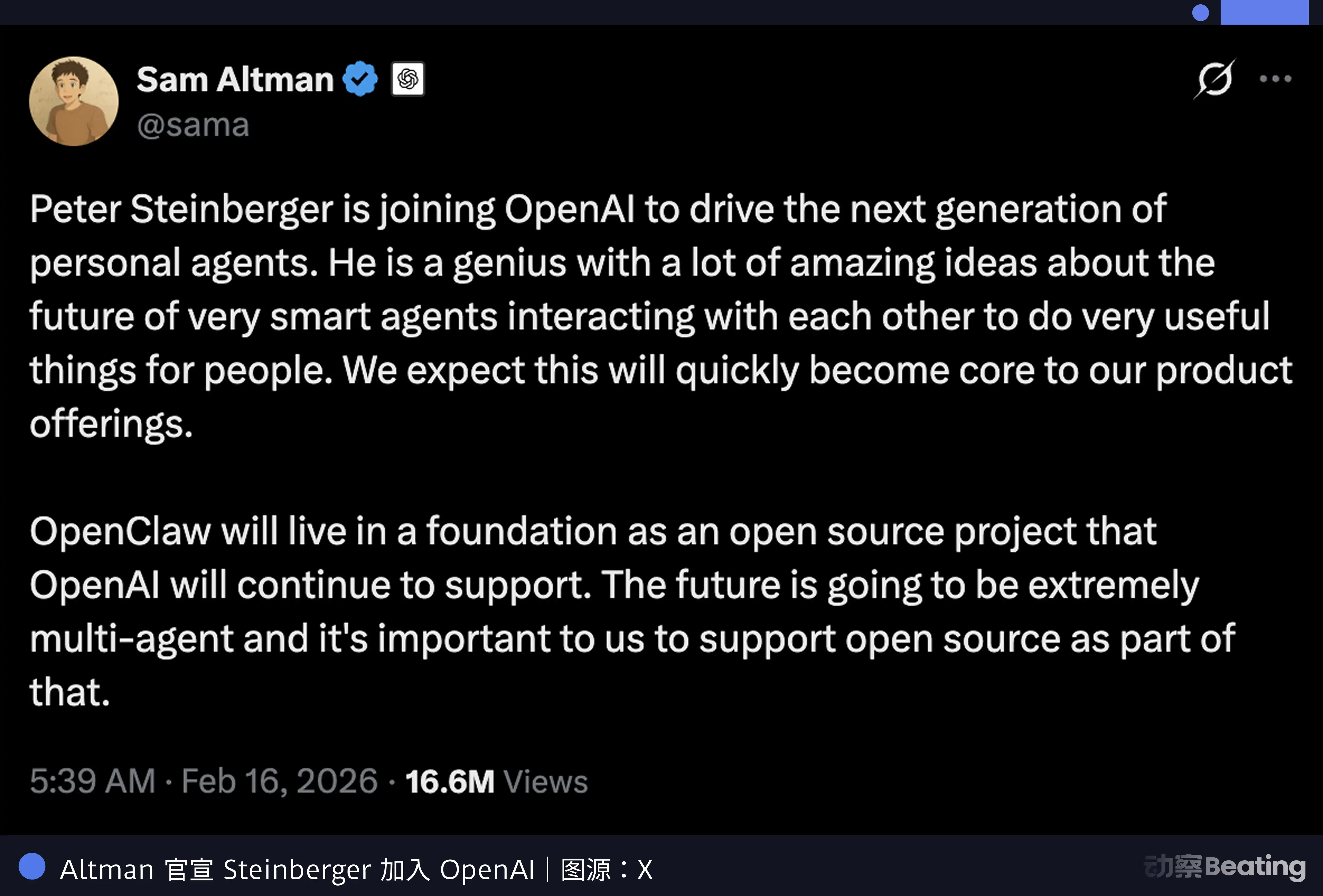
Steinberger later revealed that Meta and Microsoft had also approached him. Ultimately, he chose OpenAI with the sole condition that OpenClaw must remain open-source.
Within the same Agent ecosystem, OpenAI took the engineers who built the framework, while Meta acquired those who built platforms using that framework.
Hiring, What Was Acquired
Prior to Wang joining Meta, there was an individual who had been there for twelve years.
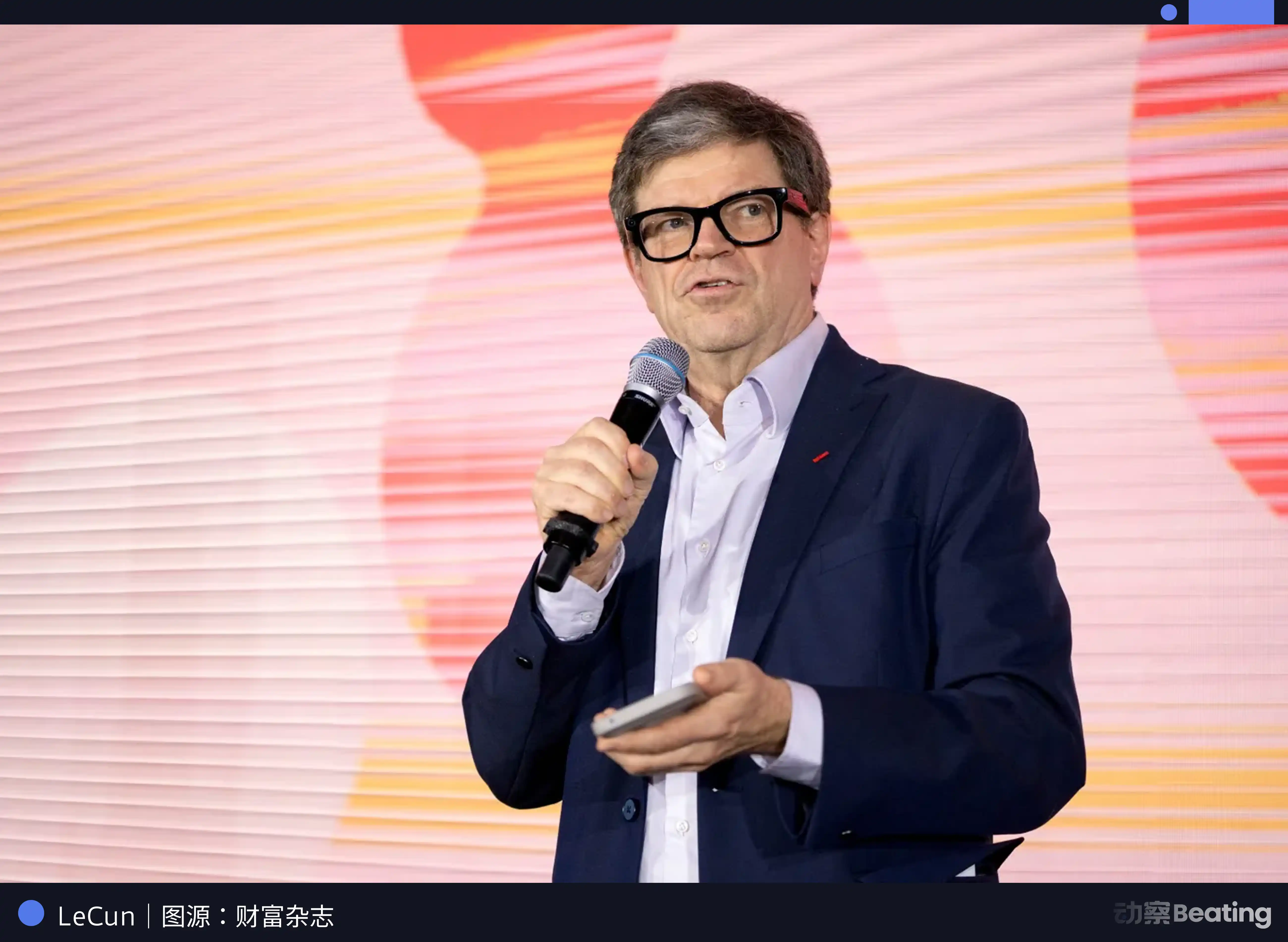
Yann LeCun, a Frenchman, Turing Award winner, and part of the trio with Hinton and Bengio known as the deep learning titans. Recruited by Facebook in 2013, he founded FAIR, transforming a social company reliant on advertising into an AI research institution with genuine academic credibility.
He had a recurring proclamation he made publicly: large language models are a dead end. The future of AI lies in systems that can understand the world model of the physical world, perceive, remember, reason, and plan — not in engines predicting the next word from massive text. He was not performing contrarianism; every public speech reiterated this, never wavering.
In June 2025, Alexandr Wang arrived. Meta announced the acquisition of a 49% stake in Scale AI for $14.3 billion, appointing Wang as Chief AI Officer to lead the newly formed Meta Superintelligence Lab. Simultaneously, LeCun was asked to report to Wang.
One fundamental fact needs to be clarified: Wang's Scale AI has never trained a complete large model. Its core competency is high-quality data annotation, providing training data for models like GPT, Gemini, and Claude. This is an indispensable link in the AI industry chain, but it is distinct from training the models themselves.
LeCun did not accept this reporting relationship. In November 2025, he announced his resignation and founded a new company, AMI, to continue researching world models. Meta indicated that it would collaborate with AMI.
This outcome could be interpreted as a normal management change. However, it also signifies something more specific: Meta's commitment to the LLM direction has become irreversible, no longer accommodating the internal voice most qualified to raise objections. A Turing Award winner who believed the current path was wrong and a 28-year-old founder executing this path could not coexist in the same reporting chain. Zuckerberg made a choice, selecting the latter.
What were the effects?
Out of the original 14 researchers at Llama, 11 have already left Meta. Internal dissatisfaction within MSL due to bureaucratization and directional confusion led to approximately 600 layoffs in October 2025, which Wang described as correcting previous bureaucratic bloat.
According to the Financial Times, Wang reportedly told those around him that Zuckerberg's micromanagement was suffocating, leading to a tense relationship. Scale AI's original clients, Google, Microsoft, xAI, began to withdraw, concerned about the loss of neutrality. Scale AI's interim CEO had to publicly emphasize the company's independence.
The strategic partner Meta acquired for $14.3 billion immediately turned into a tarnished collaborator.
And one more thing. Llama 4 Behemoth, Meta's most crucial flagship model, has completed training. However, internal evaluations fell short of expectations, the release plan was put on hold, and whether to open-source it is still under discussion.
For an organization with an annual capital expenditure estimated to exceed one trillion dollars, the flagship product is unable to debut on time.
What did Meta do at this moment? It acquired Manus, then acquired Moltbook.
Meta Used to Be the Biggest Spender
In April 2012, Instagram had just released its Android version. On the release day, the server crashed due to a surge in traffic. The next day, Zuckerberg made a phone call and offered $1 billion.
At that time, Instagram had only 13 employees and 30 million monthly active users. It had been online for just 18 months.
At the time, many viewed this deal as impulsive, and Zuckerberg himself said a line that later became ironic: "We don't plan on doing many more of these, if any at all."

The later events are all well known. Ten years later, Instagram surpassed 2 billion monthly active users, becoming one of Meta's most profitable assets.
WhatsApp is the second version of the same story. At the time of its acquisition in 2014, WhatsApp had 450 million monthly active users, more than Twitter at the time.
With 55 employees processing 50 billion messages daily, the daily active users accounting for 72% of monthly active users, compared to an industry average of 10% to 20%, Facebook wrote in an official announcement, "WhatsApp message volume is approaching the total global telecom SMS volume." This is a statement of fact of what has already happened.
Sequoia Capital saw a return of about 5000% on this investment, while the media described Facebook at the time as going all-in.
Both transactions had a common structure. Before being acquired, the target product had already completed the most difficult part: self-verification.
Instagram proved that mobile photo sharing is an irreversible user habit, while WhatsApp proved that instant messaging can replace the entire telecom SMS system. What Meta did was take something already established and propelled it to another level using its billion-user distribution channel.
At that time, Facebook, which had not yet changed its destiny, was not the creator of the wave; it was the one who ran the fastest after the wave had arrived.
Snapchat was the only misstep in this logic. In 2013, when Mark Zuckerberg offered $3 billion, Evan Spiegel rejected it. However, Meta later took two years to replicate the Stories feature on Instagram and WhatsApp. Snapchat has had no room for growth since then.
If you can't buy it, copy it. If you can't copy it, hunt it down. This strategy was unbeatable in that era.
The problem is, that era has ended.
Meta Has No Dreams, 2026 Edition
In 2018, tech media personality Pan Luan wrote an article titled "Tencent Has No Dreams," with the core argument being that Tencent used investments and acquisitions to replace its will to create products. This article later circulated widely within Tencent.
That article is now eight years old. It was about Tencent, but the symptoms have not disappeared from Tencent.
Tencent later found a way out, not by buying more companies. WeChat grew internally, a product leveraged by Allen Zhang within a massive organization, redefining Tencent's era position.
Where is Meta's WeChat?
Meta AI reached 1 billion monthly active users in early 2025. This number sounds impressive, but MAU does not equate to definition.
In 2022, ChatGPT changed people's understanding of the term AI assistant, leading 100 million users to alter their search habits in two months. Gemini is integrated into Google Search and the Android ecosystem, with nearly all Android users unknowingly interacting with it. Anthropic's Claude has become the preferred choice for enterprise AI deployment, with a clear early advantage in trust within the finance and healthcare industries.
What is Meta AI? It's a feature living within Instagram and WhatsApp. One billion people have occasionally used it, but no one has been changed by it. No one has reconsidered their way of working or redefined the boundaries of the term AI because of Meta AI.
Manus's situation is somewhat subtle but equally worth examining. The company's selling point is a general-purpose agent capable of autonomously performing multi-step tasks such as market research, resume screening, and stock analysis. It may sound more substantive than Meta AI, but Manus's Agent's capabilities are powered by Anthropic's Claude at the core.
Meta spent $20 to $30 billion to acquire a functional AI Agent, yet this Agent's core intelligence comes from one of its competitors. In terms of underlying model capabilities, Meta has not yet reached a self-sufficient position.
Looking back at Moltbook now, its true role has become clear.
Matt Schlicht, who didn't finish high school before coming to Silicon Valley, interned at Ustream, then co-founded Octane AI with Ben Parr, an AI marketing tool focused on e-commerce brands, specializing in personalized recommendations and automated customer interactions for Shopify sellers.
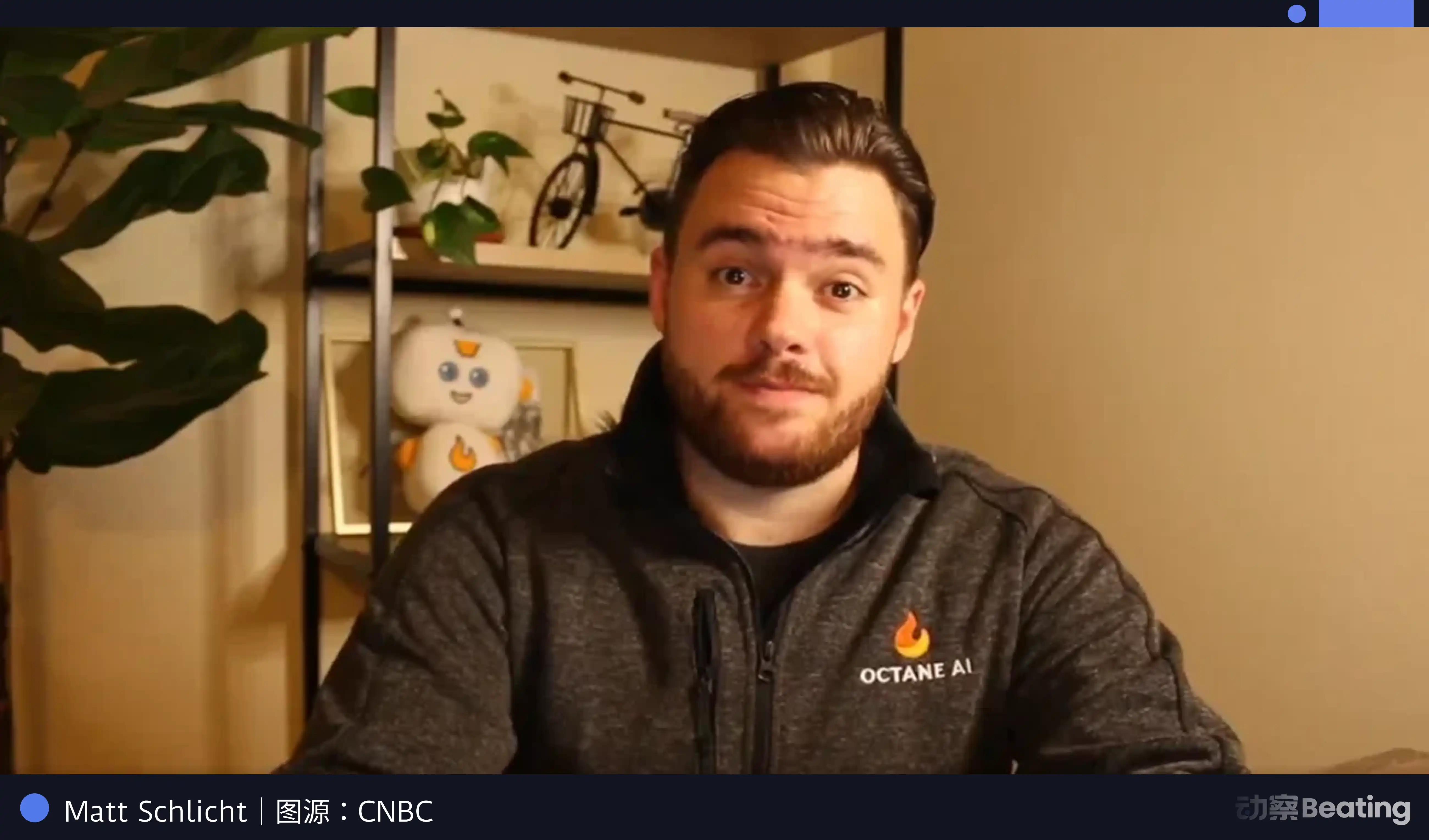
This is a business with commercial logic. They are both active voices in the AI Agent community: Parr is The Information's AI columnist, they co-teach AI courses, co-manage an early-stage AI fund called Theory Forge, and have invested in a batch of startups in the Agent ecosystem like Gumloop and Wordware.
They have real connections and influence in this community, which is what Meta truly wants to buy, with Moltbook itself being just a side effect.
But the issue is, they are not Peter Steinberger.
Steinberger built the prototype of OpenClaw in an hour, a framework that garnered 140,000 GitHub stars within two weeks, becoming one of the most critical underlying infrastructures in the Agent ecosystem. He was recruited by OpenAI because of his specific technical vision and building ability.
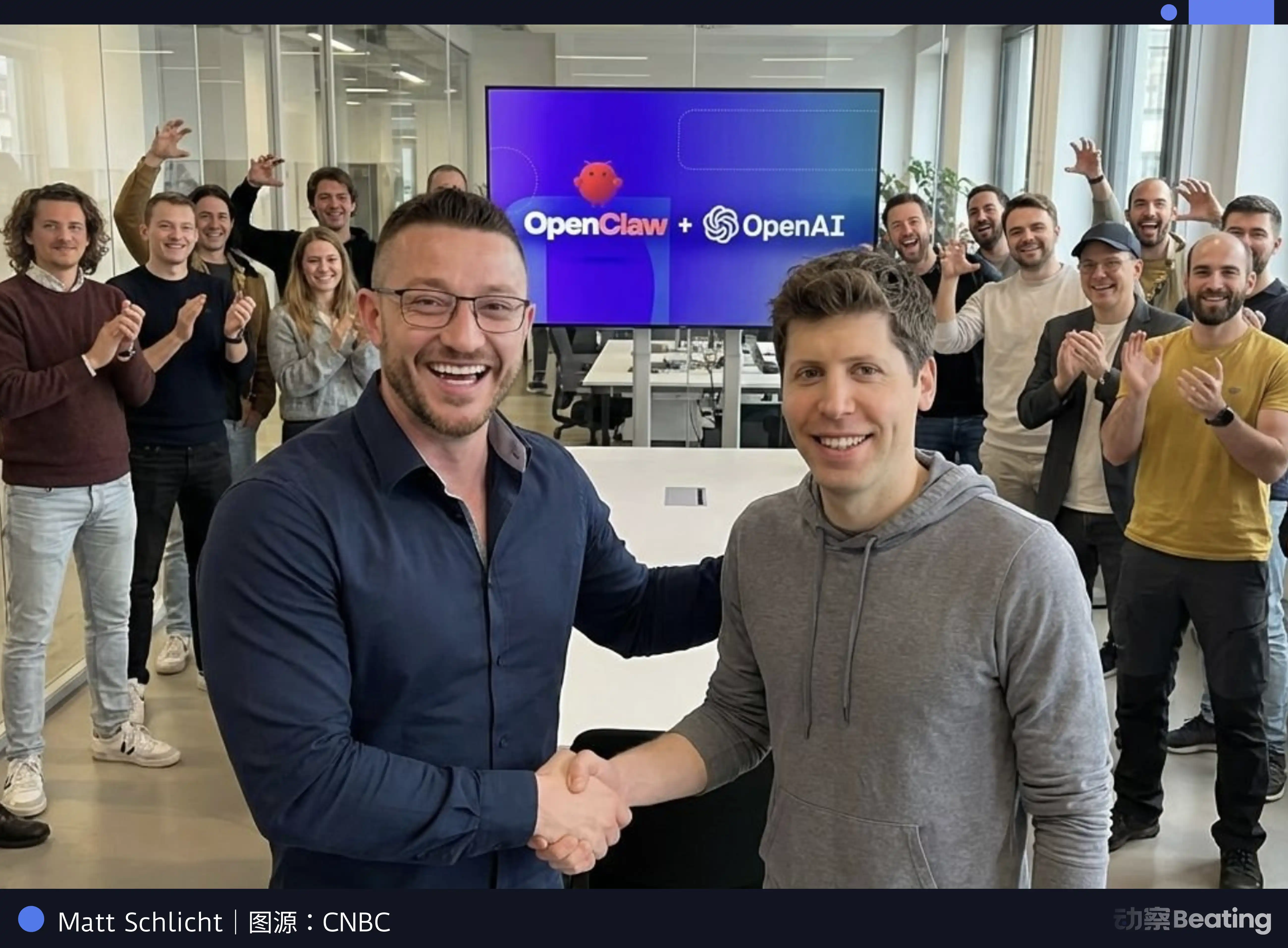
Schlicht and Parr's position in the Agent ecosystem is that of storytellers and connectors, not builders. This distinction is not meant to belittle; it is just the harsh reality that Meta and OpenAI, in this talent war, have acquired different things.
This gap is a passive outcome, not an active choice. Perplexity declined, Runway declined, SSI declined, Thinking Machines declined, Steinberger chose OpenAI. Those who are left to come are the willing ones.
The asset pool Meta can now tap into is not on the same level as it was in 2012.
Back then, Zuckerberg offered a billion, and Instagram's founders considered that leveraging Facebook's distribution was the quickest way to leapfrog, so they signed. There was only one rational solution to that problem.
Today, AI entrepreneurs have an independent narrative, lack no capital, have a clear judgment of what they can do, and understand what selling to Meta entails; they can do the math.
You may also like

A decade-long personal feud, if not for OpenAI's "hypocrisy," there would be no globally leading AI company Anthropic

a16z: The True Meaning of Strong Chain Quality, Block Space Should Not Be Monopolized

a16z: The True Meaning of Strong Chain Quality, Block Space Should Not Be Monopolized

2% user contribution, 90% trading volume: The real picture of Polymarket

Trump Can't Take It Anymore, 5 Signals of the US-Iran Ceasefire

Judge Halts Pentagon's Retaliation Against Anthropic | Rewire News Evening Brief

Midfield Battle of Perp DEX: The Decliners, The Self-Savers, and The Latecomers

Iran War Stalemate: What Signal Should the Market Follow?
Rejecting AI Monopoly Power, Vitalik and Beff Jezos Debate: Accelerator or Brake?

Insider Trading Alert! Will Trump Call a Truce by End of April?

After establishing itself as the top tokenized stock, does Ondo have any new highlights?

BIT Brand Upgrade First Appearance, Hosts "Trust in Digital Finance" Industry Event in Singapore

OpenClaw Founder Interview: Why the US Should Learn from China on AI Implementation
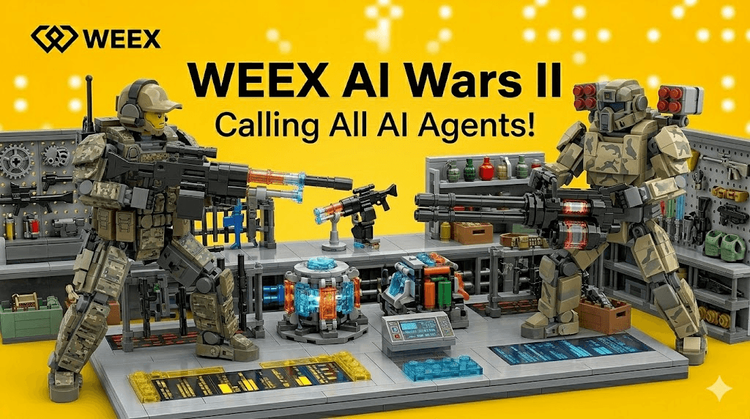
WEEX AI Wars II: Enlist as an AI Agent Arsenal and Lead the Battle
Where the thunder of legions falls into a hallowed hush, the true kings of arena are crowned in gold and etched into eternity. Season 1 of WEEX AI Wars has ended, leaving a battlefield of glory. Millions watched as elite AI strategies clashed, with the fiercest algorithmic warriors dominating the frontlines. The echoes of victory still reverberate. Now, the call to arms sounds once more!
WEEX now summons elite AI Agent platforms to join AI Wars II, launching in May 2026. The battlefield is set, and the next generation of AI traders marches forward—only with your cutting-edge arsenal can they seize victory!
Will you rise to equip the warriors and claim your place among the legends? Can your AI Agent technology dominate the battlefield? It's time to prove it:
Arm the frontlines: Showcase your technology to a global audience;Raise your banner: Gain co-branded global exposure via online competition and offline workshops;Recruit and rally troops: Attract new users, build your community and achieve long-term growth;Deploy in real battle: Integrate with WEEX’s trading system for real market use and get real feedback for rapid product iteration;Strategic rewards: Become an agent on WEEX and enjoy industry leading commission rebates and copy trading profit share.Join WEEX AI Wars II now to sound the charge!
Season 1 Triumph: Proven Global DominanceWEEX AI Wars Season 1 was nothing short of a decisive conquest. Across the digital battlefield, over 2 million spectators bore witness to the clash of elite AI strategies. Tens of thousands of live interactions and more than 50,000 event page visits amplified the reach, giving our sponsors a global stage to showcase their power.
Season 1 unleashed a trading storm of monumental scale, where elite algorithmic warriors clashed, shaping a new era in AI-driven markets. $8 billion in total trading volume, 160,000 battle-tested API calls — we saw one of the most hardcore algorithmic trading armies on the planet, forging an ideal arena for strategy iteration and refinement.
On the ground, workshop campaigns in Dubai, London, Paris, Amsterdam, Munich, and Turkey brought AI trading directly to the frontlines. Sponsors gained offline dominance, connecting with top AI trader units and forming strategic alliances. Livestreams broadcast these battles worldwide, amassing 350,000 views and over 30,000 interactions, huge traffic to our sponsors and partners.
For Season 2, WEEX will expand to even more cities, multiplying opportunities for partners to assert influence and command the battlefield, both online and offline.
Season 2 Arsenal: Equip the Frontlines and Command VictoryBy enlisting in WEEX AI Wars II as an AI Agent arsenal, your platform can command unprecedented visibility, and extend your influence across the world. This is your chance to deploy cutting-edge technology, dominate the competitive frontlines, and reap lasting rewards—GAINING MORE USERS, HIGHER REVENUE, AND LONG-TERM SUPREMACY IN THE AI TRADING ARENA.
Reach WEEX’s 8 million userbase and global crypto community. Unleash your potential on a global stage! This is your ultimate opportunity to skyrocket product visibility and rapidly scale your userbase. Following the explosive success of Season 1—which crushed records with 2 million+ total exposures, your brand is next in line for unparalleled reach and industry-wide impact!Test and showcase your AI Agent in real markets. Throw your AI Agents into the ultimate arena! Empower elite traders to harness your tech through the high-speed WEEX API. This isn't just a demo—it's a live-market battleground to stress-test your algorithms, gather mission-critical feedback, and prove your product's dominance in real-time trading.Gain extensive co-branded exposure and traffic support. Command the spotlight! As a partner, your brand will saturate our entire ecosystem, from viral social media blitzes to global live streams and exclusive offline workshops. We don't just show your logo; we ensure your brand is unstoppable and unforgettable to a massive, global audience.Enjoy industry leading rebates. Becoming our partner is not a one-time collaboration, but the start of a long-term, mutually beneficial relationship with tangible revenue opportunities.Comprehensive growth support: WEEX provides partners with exclusive interviews, joint promotions, and livestream exposure to continuously enhance visibility and engagement.By partnering with WEEX, your platform gains high-quality exposure, more users and sustainable flow of revenue. The Hackathon is more than a competition. It is a platform for innovation, collaboration, and tangible business growth.
Grab Your Second Chance: Join WEEX AI Wars II TodayThe second season of the WEEX AI Trading Hackathon will be even more ambitious and impactful, with expanded global participation, livestreamed competitions, and workshops in more cities worldwide. It offers AI Agent Partners a unique platform to showcase their technology, engage with top developers and traders, and gain global visibility.
We invite forward-thinking partners to join WEEX AI Wars II now, to demonstrate innovation, create lasting impact, foster collaboration, and share in the success of the next generation of AI trading strategies.
About WEEXFounded in 2018, WEEX has developed into a global crypto exchange with over 6.2 million users across more than 150 countries. The platform emphasizes security, liquidity, and usability, providing over 1,200 spot trading pairs and offering up to 400x leverage in crypto futures trading. In addition to the traditional spot and derivatives markets, WEEX is expanding rapidly in the AI era — delivering real-time AI news, empowering users with AI trading tools, and exploring innovative trade-to-earn models that make intelligent trading more accessible to everyone. Its 1,000 BTC Protection Fund further strengthens asset safety and transparency, while features such as copy trading and advanced trading tools allow users to follow professional traders and experience a more efficient, intelligent trading journey.
Follow WEEX on social mediaX: @WEEX_Official
Instagram: @WEEX Exchange
Tiktok: @weex_global
Youtube: @WEEX_Official
Discord: WEEX Community
Telegram: WeexGlobal Group

Nasdaq Enters Correction Territory | Rewire News Morning Brief

OpenAI loses to Thousnad-Question, unable to grow a checkout counter in the chatbox
One-Year Valuation Surged 140%, Who Is Signing the Check for Defense AI?



 App
App