
Extreme fear in the crypto market: what to do in 2026

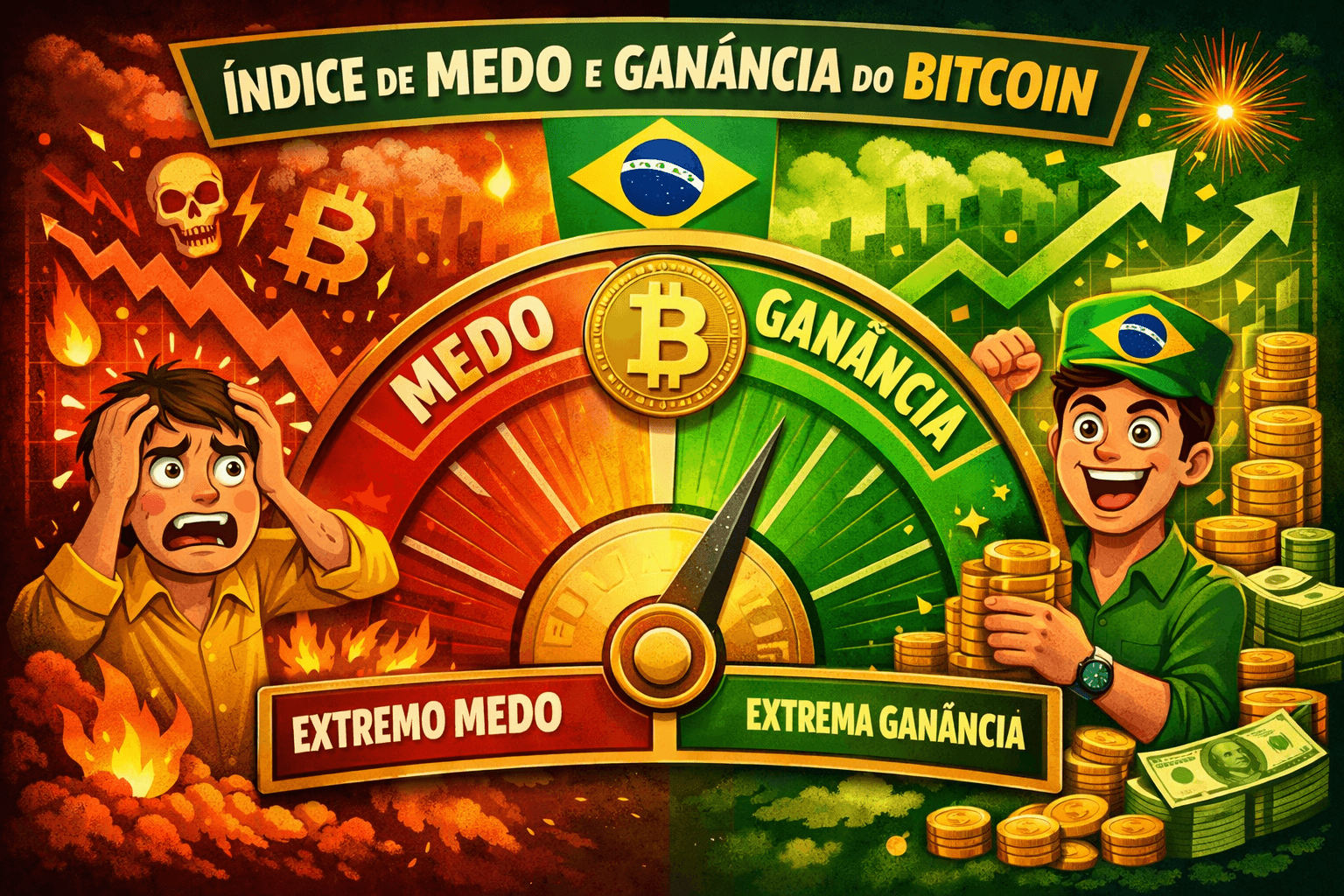
Bitcoin has fallen nearly 50% from its all-time high of $126,000, recorded in October 2025. The Fear & Greed Index, which acts as a thermometer for crypto market sentiment, hit 5 points at the end of February 2026, the lowest level in history, and remains below 20 in early March.
In this panic-stricken scenario, two reactions are common among investors: selling everything to stop the bleeding, or waiting for the perfect bottom to jump in all at once. The problem is that both usually lead to regret.
Instead of predicting where Bitcoin will go, this article will provide concrete criteria to help you decide what to do with your investments now, based on your profile, your horizon, and the data that truly matters.
Extreme fear in the crypto market: why this sentiment can work in your favor
The fear you feel when watching Bitcoin fall is the same sentiment that paralyzes most investors during exactly the best entry moments in the history of the crypto market.
The Fear & Greed Index measures collective sentiment on a scale of 0 to 100, where numbers below 25 indicate extreme fear—the zone where investors sell on impulse, driving prices down beyond what the fundamentals justify. When this happens, real opportunities appear for those who act strategically.
This fear is data that needs context, and the right question is not whether the market will go up, but “given my profile and my investment horizon, does this price level make sense for me?” In the following sections, you will find the criteria to answer this and understand how WEEX can help you act at the right time, without relying on perfect timing.
What history says about those who bought in extreme fear (and those who regretted it)
Before making any decision, it is worth looking at what happened to investors who were in this same position in previous cycles.
When it worked
In March 2020, the Covid panic dropped Bitcoin to less than $5,000 and the index neared zero. It seemed like the end, but those who accumulated during that moment of extreme fear saw the asset multiply more than ten times in less than a year. The same pattern repeated in 2022: those who maintained regular contributions during months of freefall built the average price that transformed the following cycle, with Bitcoin reaching its all-time high of $126,000 in 2025.
When it didn't work
In May 2022, the index also marked extreme fear and it looked like the bottom. Bitcoin fell another 60% in the following weeks, and those who bet everything at once at that moment took months to recover, or sold at a loss before that.
The lesson is direct: history favors gradual accumulation, not an all-in bet at a single point. This concretely changes how you should act now.
Bitcoin falling in 2026: what the data says before you act
In these first months of 2026, we have seen that Bitcoin has been struggling to break a resistance level since the first days of the year. The 50% drop from the ATH last year is scary, but it is structurally less severe than previous cycles: annualized volatility is practically half of what was recorded in the last two bear markets.
We can say that the market is more mature, but two contradictory signals require attention before you act:
Negatives: Bitcoin ETFs with five consecutive weeks of net outflows, geopolitical tensions in the Middle East, and persistent correlation with US stocks pressuring sentiment.
Positives: institutional whales accumulating in silence, selling pressure decreasing, and technical analysis pointing to a possible bottom in February 2026, with recovery expected starting in March.

What this means for you: if your horizon is less than a year, the current risk is high. If it is longer than two years, the long-term structure remains intact, and the current price may look like an opportunity a few cycles from now.
DCA or wait for the bottom? Which strategy makes sense for your profile
Here, we can say that there is only one right answer for your current moment. The table below translates the three most common situations among investors in 2026:
Profile | Situation | What to do |
Never invested in crypto | Wants to enter, but fears losing | Start small with regular contributions |
Already has a position and is at a loss | Bought above $90,000 and is anxious | If the horizon is long, additional contributions reduce the average price. If it is short, review exposure before increasing |
Has cash waiting for the bottom | Wants to hit the perfect timing | Historical data shows that waiting for the exact bottom costs more than entering gradually |
Why DCA is the most honest strategy at this moment
DCA (dollar-cost averaging) consists of contributing a fixed amount at regular intervals, regardless of the price, removing the pressure of timing the market, which no one does consistently.
In the previous cycle, those who applied this strategy during the drop built an average price low enough to turn months of uncertainty into one of the best returns in Bitcoin's history.
Before buying Bitcoin now: 3 questions that define your decision
Having a defined strategy is half the battle. The other half is ensuring that this strategy makes sense for your reality. Answer honestly:
What is my investment horizon? Less than a year: the risk in the current scenario is high and volatility may harm your plans. More than two years: history favors those who accumulate in moments of extreme fear, and the current price may seem irrelevant a cycle from now.
How much can I lose without compromising my financial life? Bitcoin may fall further before rising. Only enter with the amount you can handle seeing drop without panicking.
Do I have an exit strategy? Buying without knowing when and how to sell is the main cause of losses in the crypto market. At WEEX, you set price alerts and programmed orders directly on the trading screen before even making the first contribution, so your exit is already defined before the market pressures you to decide on impulse.
These questions don't stop the decision; they make the decision smarter.
Extreme fear is data, not a sentence
The Fear & Greed Index below 20 points doesn't tell you to buy or run away; it indicates that the market is in a zone historically favorable for those who act with a strategy, and unfavorable for those who act on impulse.
The investor who defines clear criteria now tends to be better positioned when the cycle turns. What is missing is not the perfect moment, but the decision to have a plan before euphoria returns and prices have already risen.
Create your account at WEEX, and start building your position in Bitcoin and other cryptocurrencies with security, practicality, and without needing to be an expert in technical analysis. The market may be in extreme fear, your strategy doesn't have to be.
Disclaimer
WEEX and its affiliates provide digital asset exchange services, including derivatives and margin trading, only where legal and to qualified users. All content is general information and not financial advice—seek independent advice before trading. Cryptocurrency trading is high-risk and can result in total loss. By using WEEX services, you accept all related risks and terms. Never invest more than you can afford to lose. Consult our Terms of Use and Risk Warning for details.