
GitHub Security: What the VS Code Extension Breach Means


GitHub security came under fresh scrutiny after the company confirmed that an employee device was compromised through a poisoned VS Code extension, leading to unauthorized access and exfiltration of GitHub internal repositories. As of May 21, 2026, GitHub's current assessment is that the activity affected internal repositories only, while attacker claims of about 3,800 repositories are broadly aligned with the company's investigation.
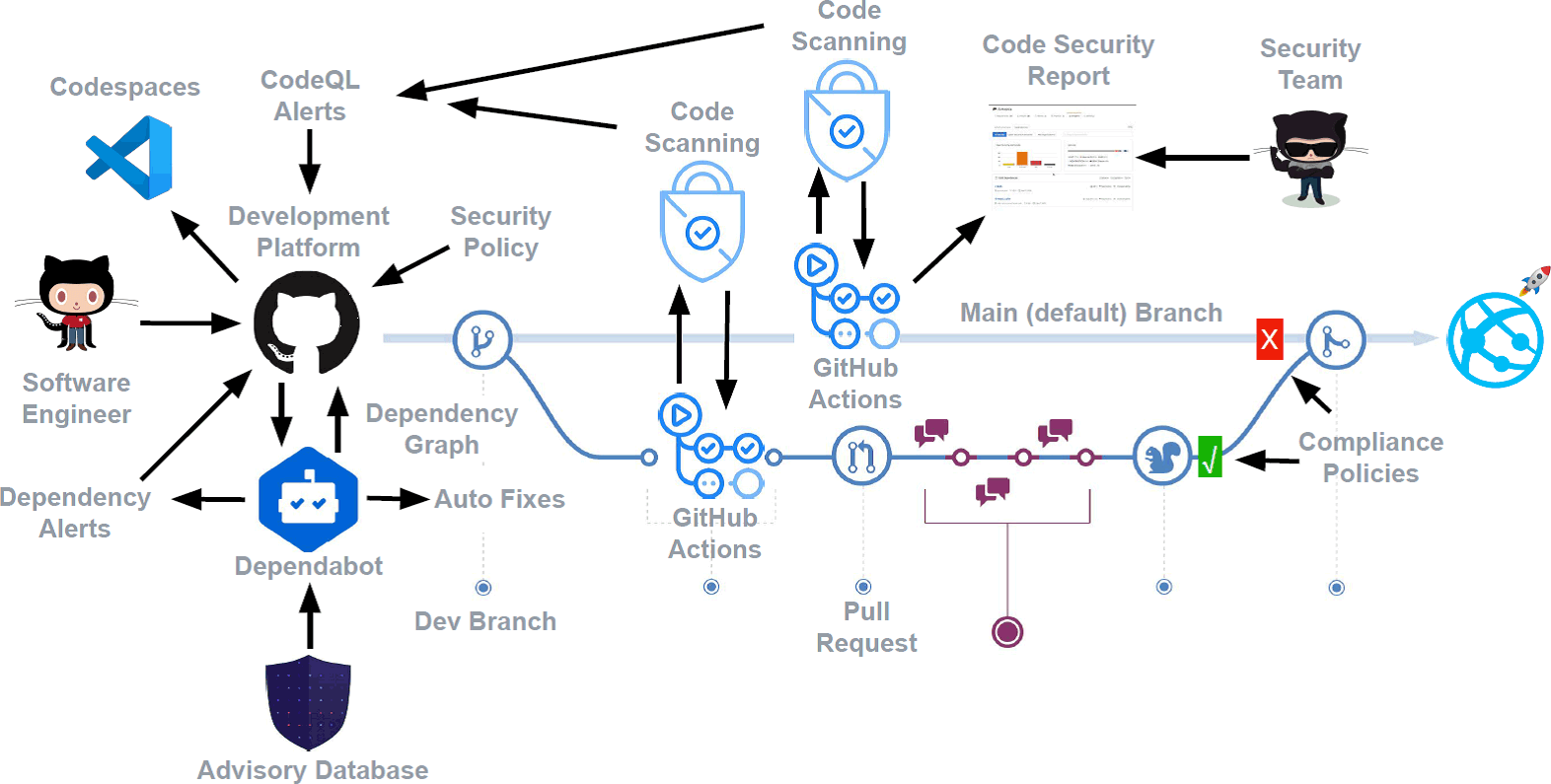
The bigger point is not just that GitHub was targeted. It is that modern software supply-chain attacks increasingly start with the tools developers trust most: code editors, extensions, package managers, CI/CD tokens, and endpoint credentials. For crypto exchanges, wallets, market makers, infrastructure providers, and protocol teams, that makes GitHub security a direct operational risk, not a back-office IT issue.
What Happened In The GitHub Security Incident?
GitHub said it detected and contained the compromise of an employee endpoint involving a malicious VS Code extension. The company removed the malicious extension version, isolated the affected device, launched incident response, rotated critical credentials with priority given to higher-impact secrets, and continued reviewing logs for follow-on activity.
| Detail | Current Status As Of May 21, 2026 |
|---|---|
| Initial vector | Poisoned VS Code extension on an employee device |
| Affected assets | GitHub internal repositories |
| Approximate scale | Attacker claims of about 3,800 repositories align with GitHub's current assessment |
| Customer data | No confirmed impact outside GitHub internal repositories at the time of reporting |
| GitHub response | Extension removal, endpoint isolation, credential rotation, log analysis, monitoring |
| Full report | GitHub said a fuller incident report will follow after investigation |
The extension has not been publicly named in the reporting reviewed. That matters because teams should avoid assuming the issue is solved by blocking one known package. The more useful lesson is broader: editor extensions can run with significant local access, and a trusted-looking development tool can become a credential collection point.
Why A VS Code Extension Can Become A Serious Attack Path
VS Code extensions are powerful because they sit close to source code, terminals, package managers, environment variables, SSH keys, cloud credentials, and local project files. Microsoft's own VS Code documentation notes that extensions run through the extension host with the same permissions as VS Code itself. Workspace Trust can reduce some automatic code execution risk, but it cannot fully neutralize a malicious extension once a user installs and runs it.
For crypto teams, this is especially sensitive. A compromised developer workstation may expose deployment scripts, RPC keys, exchange API credentials, signing infrastructure references, private package tokens, or CI secrets. Even if no customer wallet is directly touched, internal source code can give attackers a map of where to look next.
This is why account and device security should include developer tooling, not only wallet hygiene and phishing awareness.
Why GitHub Security Matters To Crypto Companies
Crypto businesses run on code, keys, and trust boundaries. A GitHub security incident involving internal repositories is not the same as a confirmed user-fund loss, but internal code exposure can still matter in practice.
Attackers use stolen repositories to understand architecture, identify dependency weaknesses, search for hardcoded secrets, map build pipelines, and plan targeted phishing against maintainers. If a repository contains old credentials, test keys with unexpected privileges, deployment notes, or support excerpts, the risk can grow after the initial breach.
For crypto teams, the harder lesson is that a developer convenience can quietly become a production risk. Teams that maintain trading systems, custody workflows, smart contracts, or exchange integrations should treat endpoint compromise as a potential supply-chain event, not merely a laptop cleanup task.
Practical GitHub Security Controls Teams Should Review
The strongest response is layered. No single control stops every malicious extension, but several controls can reduce blast radius.
| Control | Why It Matters |
|---|---|
| Approved extension allowlist | Reduces exposure to unknown or newly compromised extensions |
| Verified publisher checks | Helps avoid impersonation and low-trust packages |
| Least-privilege repository access | Limits what one endpoint or account can reach |
| Short-lived credentials | Reduces value of stolen tokens |
| Secret scanning and rotation drills | Finds exposed credentials before attackers reuse them |
| Separate production access | Keeps developer workstations away from high-impact systems |
| CI/CD token review | Prevents build pipelines from becoming lateral movement paths |
| Endpoint telemetry | Detects unusual file access, exfiltration, and outbound traffic |
In practice, the failure point is often stale access. A developer gets broad repository permissions for a deadline, keeps them indefinitely, installs a useful extension, and later that extension or its update becomes hostile. Good GitHub security is partly about making sure one normal workstation mistake cannot expose the whole organization.
Crypto operators should pair repository controls with risk management practices, especially when engineering access intersects with market infrastructure or customer-facing systems.
What Individual Developers Should Do Now
Developers should review installed VS Code extensions, remove anything unnecessary, check publisher history, and be cautious with new extensions that request broad access or have sudden ownership changes. Teams should also review whether extensions auto-update without internal approval.
For repositories that handle wallets, bots, exchange API keys, signing code, or trading infrastructure, developers should inspect .vscode settings, tasks, launch configurations, package lockfiles, and scripts that run automatically. The same caution applies to AI coding tools and agents that can read files, run commands, or interact with terminals.
A cleaner setup is not glamorous, but it is usually cheaper than post-incident credential rotation across dozens of systems. Traders and builders using exchange infrastructure should also separate code experimentation from live trading accounts and production keys before interacting with spot markets.
Conclusion
The GitHub security incident shows that developer tools are now part of the attack surface. The immediate facts point to internal repository exfiltration through a poisoned VS Code extension, with GitHub rotating credentials and continuing its investigation. The strategic lesson is broader: source code platforms, editor extensions, package managers, and CI systems are all part of the same trust chain.
For crypto teams, the right response is not panic. It is reducing the blast radius of ordinary developer activity. Review extension policies, tighten repository access, rotate sensitive credentials, monitor endpoints, and assume that attackers are studying the tools your engineers use every day.
FAQ
Was customer data affected in the GitHub security incident?
GitHub's current assessment says the activity involved GitHub internal repositories only, with no confirmed impact to customer information stored outside those repositories as of May 21, 2026.
Did GitHub name the malicious VS Code extension?
The reports reviewed did not identify the extension publicly. Teams should focus on extension governance broadly rather than waiting for one package name.
Why are VS Code extensions risky?
VS Code extensions can run with meaningful local permissions and may access project files, development workflows, and credentials available to the editor environment.
What should crypto teams check first?
Start with installed extensions, repository permissions, exposed secrets, CI/CD credentials, endpoint logs, and any developer accounts with access to production or custody-related systems.
Risk Warning
Crypto assets are volatile and may result in partial or total loss. Security incidents can also create indirect trading and custody risks, including delayed withdrawals, compromised API keys, exposed infrastructure, liquidity disruption, smart-contract deployment errors, and counterparty risk. Always separate development credentials from trading or custody access, and avoid using leverage or live funds when security status is uncertain.
You may also like

How WEEX TradFi Connects Crypto Traders to Gold, Oil, Stocks, and Global Markets
Discover how WEEX TradFi helps crypto traders access traditional assets with USDT, including gold, oil, stocks, commodities, and indices in one platform.

Nexus Token Price: NEX Price, Catalysts, Risks
Track the Nexus token price, NEX market cap, supply, launch catalysts, WEEX listing context, and key risks before trading.
What Is WEEX TradFi? A Beginner’s Guide to Trading Global Assets with USDT
Learn what WEEX TradFi is, how it lets users trade gold, oil, stocks, commodities, and indices with USDT, and what beginners should know before trading TradFi futures.

MTFR Crypto: What Mom Trust Fund Reserve Really Is
MTFR Crypto is a Solana meme token built around trust-fund satire. Learn how it works, where it trades, and the biggest risks.

Venice Token Price Prediction: VVV Outlook for 2026-2030
Venice Token price prediction for 2026-2030, covering VVV tokenomics, AI utility, burns, bullish catalysts, risks, and forecast scenarios.

Reserve Bank of India Surplus: Why the RBI Dividend Matters
Reserve Bank of India surplus explained: latest RBI dividend, why it rose, how it affects India’s fiscal outlook, rupee liquidity, and crypto markets.
What Is Public Asset Control (PAC) Token? Risks and Reality
Public Asset Control token is a Solana-based PAC token with asset-control branding. Learn what PAC is, what is verified, and the risks to check.

GOOG Stock: Alphabet’s 2026 AI Rally, Valuation and Risks
GOOG stock trades near record highs after Alphabet’s strong Q1 2026 results. Here’s what investors should watch in AI, cloud, valuation and risk.

Mastering Zest Protocol ($ZEST) Initial Listing on WEEX
WEEX is thrilled to announce the launch of Zest Protocol ($ZEST), offering users a pathway to engage with this project.

Where Can I Buy WCOR Coin? It Is Worth Buying in 2026
Where can I buy WCOR coin? Read the latest WCOR price, market data, risks, and whether World Collective Oil Reserve is worth buying on WEEX.

E Token MP: Online Fertilizer Token Booking Guide for Farmers
Learn what E Token MP is, how Madhya Pradesh farmers can book fertilizer tokens online, required documents, eligibility, and common issues.

WEEX Welcome Rewards: Unlock Up to 10,000 USDT
Join the WEEX Welcome Rewards event for new users. Complete sign-up, app login, deposit, futures trading, Trade to Earn, and Auto Earn tasks to unlock up to 10,000 USDT.
Dominion Energy Stock: Dividend, Merger News and 2026 Outlook
Dominion Energy stock now trades around a merger story dividend income and regulated utility growth. Here is what D investors should watch in 2026.
Global Digital Oil Reserve: What GDOR Traders Must Check
Learn what Global Digital Oil Reserve (GDOR) is, why its oil-reserve claim needs proof, and how to check liquidity, contracts, and risk.
Can I Trade Futures with $200? Beginner’s Guide on WEEX
Many newcomers to crypto wonder if starting futures trading with just $200 is realistic, especially when platforms promise…
Is $CHIP a Scam? Decoding the Crash and Pump Dump Red Flags
The $CHIP token has sparked heated debates in the crypto community, with its rapid price swings raising questions…
$CHIP Hype vs Reality: Is This the Next Crypto Trap?
The buzz around $CHIP token has exploded lately, with social media ablaze about its potential as the next…
What is Hormuz Reserve Protocol (HRP) Coin
Hormuz Reserve Protocol (HRP) Coin is a unique geopolitical DeFi narrative token on the Solana blockchain that captures…
How WEEX TradFi Connects Crypto Traders to Gold, Oil, Stocks, and Global Markets
Discover how WEEX TradFi helps crypto traders access traditional assets with USDT, including gold, oil, stocks, commodities, and indices in one platform.
Nexus Token Price: NEX Price, Catalysts, Risks
Track the Nexus token price, NEX market cap, supply, launch catalysts, WEEX listing context, and key risks before trading.
What Is WEEX TradFi? A Beginner’s Guide to Trading Global Assets with USDT
Learn what WEEX TradFi is, how it lets users trade gold, oil, stocks, commodities, and indices with USDT, and what beginners should know before trading TradFi futures.
MTFR Crypto: What Mom Trust Fund Reserve Really Is
MTFR Crypto is a Solana meme token built around trust-fund satire. Learn how it works, where it trades, and the biggest risks.
Venice Token Price Prediction: VVV Outlook for 2026-2030
Venice Token price prediction for 2026-2030, covering VVV tokenomics, AI utility, burns, bullish catalysts, risks, and forecast scenarios.
Reserve Bank of India Surplus: Why the RBI Dividend Matters
Reserve Bank of India surplus explained: latest RBI dividend, why it rose, how it affects India’s fiscal outlook, rupee liquidity, and crypto markets.


