
How to Buy Russian Oil Asset Reserve (ROAR) Crypto: 2026 Step-by-Step Guide
A memecoin that borrows the language of sovereign wealth and energy markets does not appear every day. Russian Oil Asset Reserve (ROAR) does exactly that. It launched on Solana in April 2026 and quickly drew attention from traders looking for the next narrative-driven opportunity.
But before you learn how to buy Russian Oil Asset Reserve (ROAR) crypto, it is important to understand what this token actually is. This guide will walk you through everything you need to know, from the basics of ROAR to a complete step-by-step buying process, plus the risks you should never ignore.
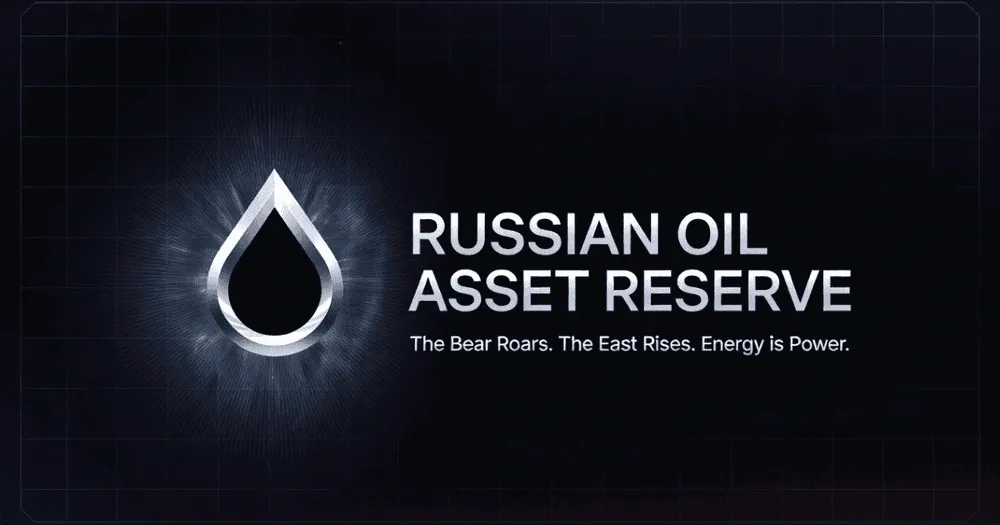
What Is Russian Oil Asset Reserve (ROAR)?
Russian Oil Asset Reserve (ROAR) is a Solana-based meme coin built around an energy and geopolitical narrative. It uses Solana’s Token-2022 standard and has a fixed maximum supply of 1 billion tokens with 6 decimal precision. The mint authority has been revoked, which means the total supply cannot be increased after deployment.
Despite its name, ROAR does not represent ownership of oil reserves or any form of tokenized exposure to physical commodities. There is no audited backing, custodial infrastructure, or verifiable connection to Russian energy assets. Instead, the project relies on narrative positioning, referencing global oil markets and geopolitical influence to attract attention.
In practice, this places Russian Oil Asset Reserve (ROAR) crypto in the same category as other narrative-driven tokens where value is driven by perception rather than underlying assets.
Where Can You Buy Russian Oil Asset Reserve (ROAR)?
Before diving into how to buy Russian Oil Asset Reserve (ROAR), you need to know where it is available. ROAR is not listed on major centralized exchanges like Binance or Coinbase. Trading takes place primarily on Solana-based decentralized exchanges (DEXs).
The most active trading environment has been on Meteora, with ROAR typically paired against USDC or SOL. Additional routing is available through aggregators like Jupiter. Liquidity remains limited, often in the tens of thousands of dollars, which means trade size can have a direct impact on price execution.
How to Buy Russian Oil Asset Reserve (ROAR) Crypto: Step-by-Step
How to buy Russian Oil Asset Reserve (ROAR) crypto is different from purchasing large-cap cryptocurrencies like Bitcoin or Ethereum. Since ROAR trades primarily within the Solana ecosystem, the process involves using a non-custodial wallet and interacting with decentralized exchanges.
Follow these seven steps carefully.
Step 1: Set Up a Solana Wallet
Download and install a Solana-compatible wallet. Create a new wallet and store your recovery phrase securely offline. This phrase is essential for restoring access if your device is lost or compromised. Never share it with anyone.
Step 2: Buy SOL or USDC on a Centralized Exchange
To buy ROAR, you need SOL or USDC as the base asset for trading. Purchase these tokens on a centralized exchange such as WEEX. SOL is often the most convenient choice because it is the native token of the Solana network.
Step 3: Transfer Funds to Your Solana Wallet
Withdraw your SOL or USDC from the exchange to your Solana wallet address. Confirm that the Solana network is selected during withdrawal to avoid sending funds to the wrong chain. Double-check the wallet address before confirming the transaction.
Step 4: Connect Your Wallet to a Decentralized Exchange
Access a Solana DEX such as Meteora or use an aggregator like Jupiter. Click “Connect Wallet” and select your wallet provider. Once connected, your token balance will be visible in the interface.
Step 5: Find the Correct ROAR Token Address
Search for ROAR within the DEX interface. Because meme coins often have copycat tokens, it is critical to verify that you are selecting the correct asset. Use the official contract address from trusted sources.
Official ROAR Token Address: RoARruzbesVGAZgCzSoQCEdyVWytvzLbyNaxXBF7dnF
Always verify this address before any transaction. Fake tokens with similar names are common.
Step 6: Swap SOL or USDC for ROAR
Enter the amount of SOL or USDC you want to trade. The platform will display an estimated amount of ROAR you will receive. Due to limited liquidity, set slippage tolerance appropriately, typically between 1 percent and 5 percent. Confirm the swap and approve the transaction in your wallet.
Step 7: Confirm and Store Your Tokens
After the transaction is completed, ROAR will appear in your wallet. If it does not display automatically, you can add it manually using the contract address. You can keep the tokens in your wallet or move them to a more secure setup such as a hardware wallet for long-term storage.
Basic Safety Considerations When You Buy ROAR
Before you complete any transaction, keep these safety tips in mind.
- Verify the token contract address before every transaction to avoid fake listings
- Start with a small test trade before committing larger amounts
- Be mindful of slippage and price impact in low-liquidity pools
- Use only trusted DEX interfaces and avoid unknown links
- Never share your wallet recovery phrase with anyone
- Double-check the network (Solana) when withdrawing from centralized exchanges
Should I Buy Russian Oil Asset Reserve (ROAR) Crypto
Understanding the risks is just as important as knowing how to buy ROAR crypto. ROAR has no verified backing, no revenue model, and no clear utility. Its price depends almost entirely on market sentiment and liquidity. Despite its name, ROAR is not linked to real oil reserves or any physical commodity.
Low liquidity and high volatility are major concerns. Limited pool depth can lead to high slippage and difficulty exiting positions. Prices can rise or fall rapidly, and sharp drawdowns are common. The lack of a widely recognized audit and an anonymous team add further uncertainty.
Russian-themed branding may trigger regulatory scrutiny on some platforms. Price is driven by hype cycles rather than fundamentals, and sentiment can change quickly. These factors make ROAR suitable only for high-risk, speculative exposure, not long-term investment.
Is ROAR a Good Investment?
ROAR does not meet the criteria of a traditional investment asset. It has no verified linkage to real-world oil reserves, no revenue-generating mechanism, and no clear utility within a broader protocol ecosystem. While its branding suggests exposure to energy markets, there is no evidence supporting that claim.
From a risk perspective, ROAR operates in the high-volatility, micro-cap segment of the market. Liquidity is limited and concentrated in a small number of decentralized exchange pools. The absence of a publicly known team adds another layer of uncertainty.
In practice, ROAR behaves more like a speculative trading instrument than a long-term investment. Outcomes depend heavily on timing and market momentum rather than underlying fundamentals.
Conclusion
Russian Oil Asset Reserve (ROAR) is a reminder of how powerful narrative can be in crypto markets. A name that suggests sovereign wealth and energy dominance can attract attention quickly. But in practice, the token functions like any other speculative memecoin on Solana. It offers no direct link to oil reserves or real-world assets.
For market participants, the key is not just knowing how to buy Russian Oil Asset Reserve (ROAR) crypto, but understanding what it represents. Access is straightforward through wallets and decentralized exchanges, yet the risks are equally clear. Limited liquidity, sharp volatility, and the absence of fundamentals mean outcomes can change quickly.
Approach ROAR with caution, clear expectations, and disciplined risk management. That is essential in a market where narrative often moves faster than reality.
Ready to trade? WEEX offers zero fees, instant execution, and the security you need. Sign up on WEEX Now and Start Trading!
FAQ
What is Russian Oil Asset Reserve (ROAR)?
ROAR is a Solana-based meme coin that launched in April 2026. It uses an energy and geopolitical narrative but has no verified backing from physical oil reserves or any government entity.
Where can I buy Russian Oil Asset Reserve (ROAR) crypto?
ROAR is not listed on major centralized exchanges. It trades primarily on Solana-based decentralized exchanges like Meteora, with additional routing available through Jupiter aggregator.
What is the official ROAR contract address?
The official contract address is: RoARruzbesVGAZgCzSoQCEdyVWytvzLbyNaxXBF7dnF. Always verify this address before trading to avoid fake tokens.
Is ROAR backed by real oil reserves?
No. Despite its name, ROAR has no verified linkage to physical oil reserves, custodial infrastructure, or Russian energy assets. The backing is narrative-based only.
Is ROAR a good long-term investment?
For most investors, no. ROAR has no revenue model, no clear utility, and high volatility. It is best understood as a speculative trading instrument rather than a long-term investment.
You may also like

World Collective Oil Reserve (WCOR) Price Prediction 2026-2045: Expert Insights
WCOR (World Collective Oil Reserve) is a Solana-based cryptocurrency token that promotes an “oil reserve + real-world asset (RWA) narrative.” However, there is no public evidence that it is actually backed by physical oil assets. It is essentially a highly speculative, narrative-driven token. Its current market cap is around $14 million, with relatively low liquidity and high volatility, and its price is mainly driven by market sentiment and hype. Most analyses suggest limited short-term upside, with a possible gradual increase to around $0.02 by 2030. Overall, it is considered a high-risk crypto asset driven more by narrative speculation than fundamentals.

WEEX Gold & Silver 0% Fees Event: Trade Metals, Crude Oil and Stock Futures With Zero Fees
Join the WEEX 0-fee futures event from April 16 to May 31, 2026. Trade eligible gold, silver, crude oil, and stock futures with 0% fees.

Can PAC Coin Reach $1 Soon? Analyzing Public Asset Control
PAC is a Solana-based meme token with a government-themed narrative, but it is highly speculative.
At its current price (~$0.0009) and 1B supply, reaching $1 would require a $1B market cap, which is very unlikely.
Short-term moves to $0.001 or $0.01 are more realistic, but the token is highly volatile due to low liquidity and hype-driven trading.
Overall, $1 is not a realistic target, and PAC is better suited for short-term speculation than long-term investment.

What Is SAOS? Strategic American Oil Supply Token Explained
SAOS is a meme token on Solana with a 75,000 USD market cap and 22,000 USD locked liquidity, positioned around oil supply themes but lacking real asset backing
It thrives on pure narrative speculation, with no utility, website, or doxxed team, making it highly volatile and attention-dependent
Traders should distinguish SAOS from legitimate real-world asset projects, as its branding is speculative rather than substantive
Positive aspects include locked liquidity reducing rug pull risks, but low trading activity signals high uncertainty
NBIS Stock: What Nebius’ AI Cloud Surge Means Now
NBIS stock jumped as Nebius reported rapid AI cloud growth. See the key Q1 2026 numbers, catalysts, valuation risks, and what to watch next.

What Is Public Asset Control (PAC) Coin? Explained for Beginners
Public Asset Control (PAC) is a Solana-based token that uses a “government asset control” narrative involving oil and gold themes, but it has no verified ties to any real institutions or governments. It is mainly an entertainment-focused, speculative meme coin.
The project’s claims about links to entities like BlackRock or Palantir are unverified, and its own disclaimer states it is not a real financial or institutional asset. Like many new Solana tokens, PAC is highly volatile, with low liquidity and limited transparency, including no fully verified audit.
Overall, PAC is a high-risk speculative token driven by hype and storytelling rather than real utility. Beginners are advised to be cautious, verify contract details, and prioritize risk control before considering any trading.

Public Asset Control: What PAC Token Really Is
Public Asset Control PAC is a Solana token with bold asset-control branding. Learn what it is, what is verified, and the key trading risks.

Why Is Chinese Oil Asset Reserve (COAR Crypto) Trending Now?
Why is Chinese Oil Asset Reserve trending now? Learn the latest COAR crypto price action, trading volume, oil narrative, Solana pair data, and what is driving attention today.

How to Buy Chinese Oil Asset Reserve (COAR) Token in 2026: Latest Step-by-Step Guide, Contract Address, and Safe Buying Tips
How to buy Chinese Oil Asset Reserve (COAR) token step by step, including the official COAR contract address, Solana wallet setup, SOL funding, and latest market data.

COAR Coin: What Chinese Oil Asset Reserve Really Is
COAR coin is a new Solana oil-narrative token. Learn what Chinese Oil Asset Reserve claims, how to verify the contract, and key trading risks.

Did the CLARITY Act Pass Today? Latest Status and the History of the Crypto Bill
SEO meta description: Did the CLARITY Act pass today? Read the latest crypto bill update, the history of the CLARITY Act, House and Senate votes, and what happens next for U.S. crypto regulation.

What Is Chinese Oil Asset Reserve (COAR) Token? $COAR and Coar Stock Relationship Explained
Chinese Oil Asset Reserve (COAR) token explained, $COAR price, Solana details, and the relationship between COAR and Coar stock. Learn the latest facts.

Trade to Earn on WEEX: Join the Futures Trading Event and Earn Real-Time WXT Rewards Throughout May 2026
Join the WEEX Trade to Earn Series Five event from May 1–31, 2026 and earn real-time WXT rewards through futures trading. Boost your rebate level, complete missions, invite friends, and maximize your trade to earn rewards with USDT-M futures trading.

What Is World Cup Meme Coin? Football Meme Crypto Narrative Explained
World Cup meme coin $WCMEME is a Solana token that collapsed 96% in 24 hours. Learn how football meme narratives work and the risks involved.

Trade to Earn With Futures Trading on WEEX: How Smart Traders Are Turning Every Position Into WXT Rewards
Join the WEEX Trade to Earn Series Five campaign and earn real-time WXT rewards through futures trading from May 1–31, 2026. Upgrade mining levels, unlock higher rebate ratios, complete missions, and maximize your trade to earn rewards with USDT-M futures trading.

CBRS Stock: What to Know About Cerebras After Its IPO
CBRS stock surged after Cerebras priced its IPO at $185. Learn what the AI chipmaker does, why valuation matters, and what risks to watch.
SpaceX IPO Stock Market Impact: What Investors Should Watch
SpaceX’s IPO could reshape indexes, liquidity, space stocks, and crypto risk appetite. Here is what matters before the listing.

HMSTR Token Price: What Moves Hamster Kombat Now
Track HMSTR token price, supply, catalysts, and risks. Learn what drives Hamster Kombat price action and what traders should watch.
World Collective Oil Reserve (WCOR) Price Prediction 2026-2045: Expert Insights
WCOR (World Collective Oil Reserve) is a Solana-based cryptocurrency token that promotes an “oil reserve + real-world asset (RWA) narrative.” However, there is no public evidence that it is actually backed by physical oil assets. It is essentially a highly speculative, narrative-driven token. Its current market cap is around $14 million, with relatively low liquidity and high volatility, and its price is mainly driven by market sentiment and hype. Most analyses suggest limited short-term upside, with a possible gradual increase to around $0.02 by 2030. Overall, it is considered a high-risk crypto asset driven more by narrative speculation than fundamentals.
WEEX Gold & Silver 0% Fees Event: Trade Metals, Crude Oil and Stock Futures With Zero Fees
Join the WEEX 0-fee futures event from April 16 to May 31, 2026. Trade eligible gold, silver, crude oil, and stock futures with 0% fees.
Can PAC Coin Reach $1 Soon? Analyzing Public Asset Control
PAC is a Solana-based meme token with a government-themed narrative, but it is highly speculative.
At its current price (~$0.0009) and 1B supply, reaching $1 would require a $1B market cap, which is very unlikely.
Short-term moves to $0.001 or $0.01 are more realistic, but the token is highly volatile due to low liquidity and hype-driven trading.
Overall, $1 is not a realistic target, and PAC is better suited for short-term speculation than long-term investment.
What Is SAOS? Strategic American Oil Supply Token Explained
SAOS is a meme token on Solana with a 75,000 USD market cap and 22,000 USD locked liquidity, positioned around oil supply themes but lacking real asset backing
It thrives on pure narrative speculation, with no utility, website, or doxxed team, making it highly volatile and attention-dependent
Traders should distinguish SAOS from legitimate real-world asset projects, as its branding is speculative rather than substantive
Positive aspects include locked liquidity reducing rug pull risks, but low trading activity signals high uncertainty
NBIS Stock: What Nebius’ AI Cloud Surge Means Now
NBIS stock jumped as Nebius reported rapid AI cloud growth. See the key Q1 2026 numbers, catalysts, valuation risks, and what to watch next.
What Is Public Asset Control (PAC) Coin? Explained for Beginners
Public Asset Control (PAC) is a Solana-based token that uses a “government asset control” narrative involving oil and gold themes, but it has no verified ties to any real institutions or governments. It is mainly an entertainment-focused, speculative meme coin.
The project’s claims about links to entities like BlackRock or Palantir are unverified, and its own disclaimer states it is not a real financial or institutional asset. Like many new Solana tokens, PAC is highly volatile, with low liquidity and limited transparency, including no fully verified audit.
Overall, PAC is a high-risk speculative token driven by hype and storytelling rather than real utility. Beginners are advised to be cautious, verify contract details, and prioritize risk control before considering any trading.
