
Will USOR(U.S Oil) Still Rise if the USA and Iran Conflict Continues? Latest USOR Price Analysis and 2026 Outlook



Quick summary: USOR can still rise if the USA-Iran conflict keeps pushing energy markets into a higher-risk mode, but the move is unlikely to be straight or guaranteed. The latest data shows USOR trading around $0.002259 on WEEX with about 23.48K in 24-hour volume, while other market trackers show a similar price near $0.002265 and a market cap around $2.27M. At the same time, USOR is still far below its all-time high and has been underperforming the broader crypto market over the past week. In other words, conflict headlines can help USOR, but sustained upside needs more than fear alone.

What USOR is and why the USA-Iran conflict matters
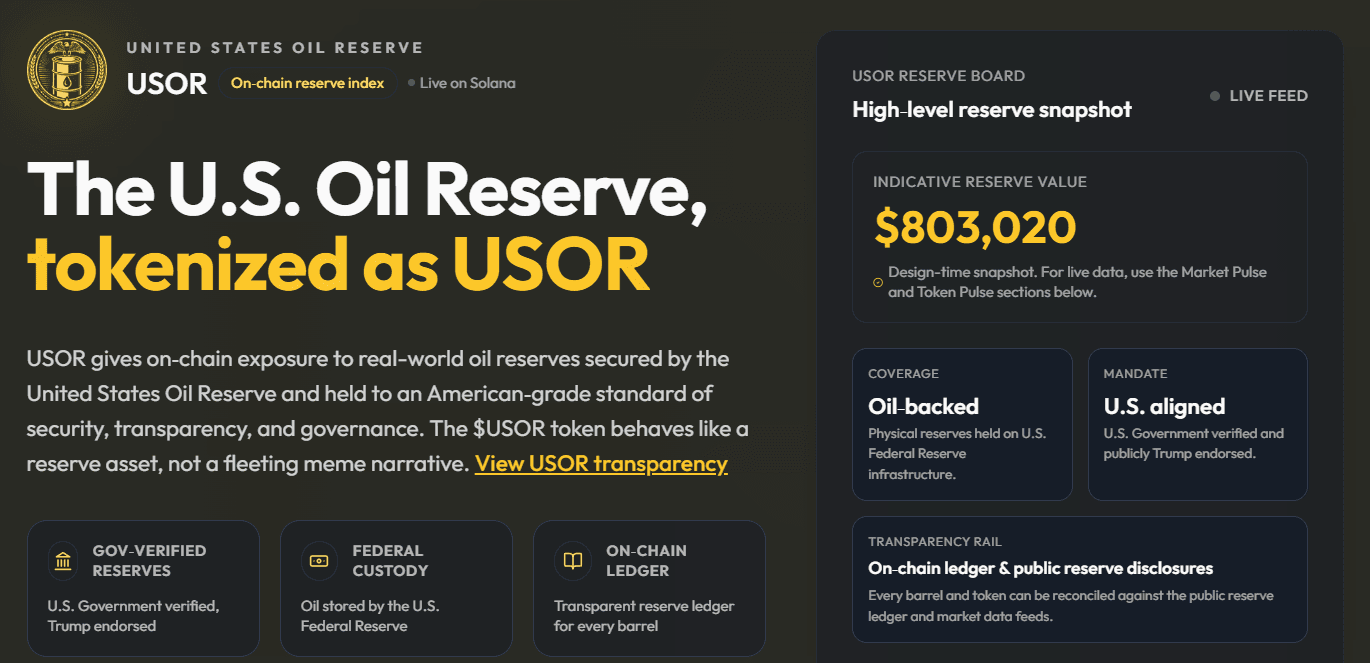
USOR is a crypto asset tied to the oil narrative, which means its price tends to react more strongly to geopolitics, energy headlines, and speculative trading than to slow-moving fundamentals. That is why a USA-Iran conflict can matter so much: when the market fears disruption to oil flows, traders often bid up anything linked to oil, energy, or risk premium stories. Recent reporting on USOR also notes that it is a Solana token, and that there is no verified link between USOR and U.S. government oil assets, which is important because the token’s story is part speculation, part momentum, and part narrative trading.
That mix is exactly why search interest around USOR is so strong right now. People are not only asking what USOR is; they are asking whether a prolonged USA-Iran conflict can keep pushing it higher. The answer is yes in the short term, but only conditionally. If the conflict raises oil prices, disrupts shipping, or keeps the Strait of Hormuz in the headlines, USOR can catch a fresh speculative bid. If the market starts to believe the danger is fading, that bid can disappear quickly.
USOR Official Contact Address:USoRyaQjch6E18nCdDvWoRgTo6osQs9MUd8JXEsspWR
USOR price today: what the latest numbers say
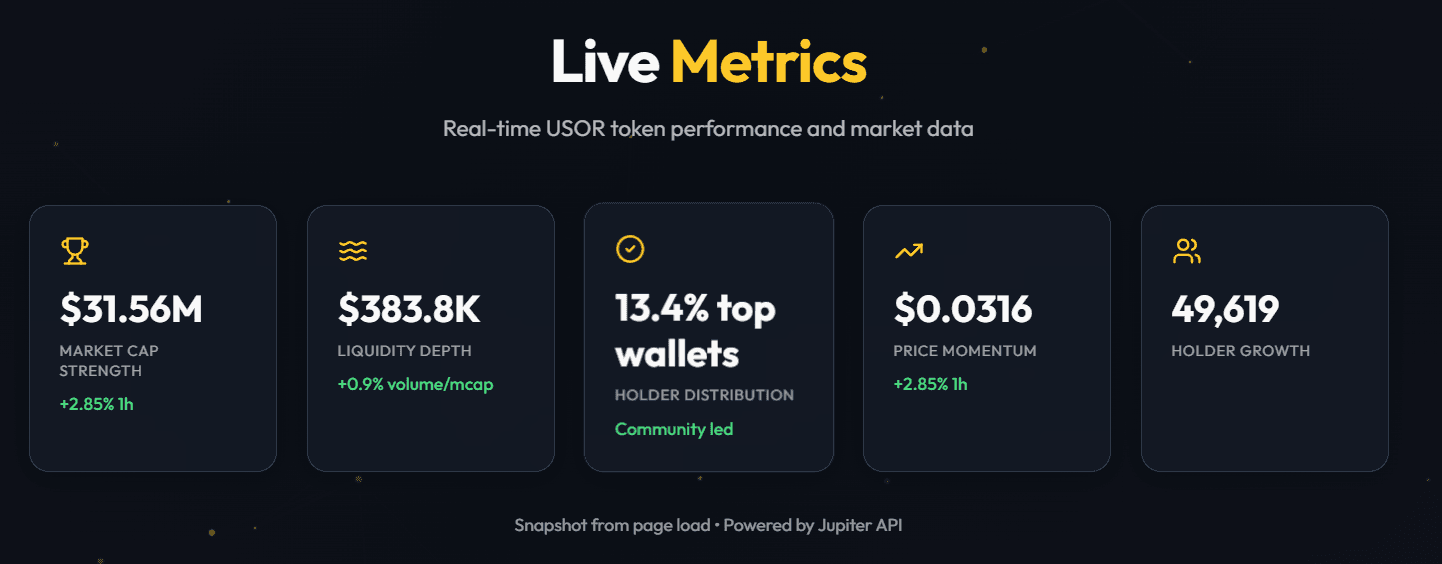
Right now, USOR is still a small-cap, highly speculative asset. WEEX shows USOR at about $0.002259 with a 24-hour trading volume of 23.48K and a max supply of 1,000.00M USOR. Another live tracker shows USOR at about $0.002265, a market cap near $2,266,416, and trading volume around $24,657.16 over the last 24 hours. It also shows that USOR is about 96.80% below its all-time high of $0.07219, which is a reminder that this token has already seen both hype and deep retracement.
The recent performance is also important. USOR has been down 20.40% over the last 7 days and is underperforming the broader crypto market, which is up 3.30% in the same period. That tells us the token is not simply moving because “oil = up.” It is moving because of a combination of headlines, liquidity, and trader attention. When those three forces align, USOR can jump. When they do not, the token can drift or fall even during tense geopolitical periods.
Why the Strait of Hormuz is the real trigger
If you want to understand USOR, you have to understand the Strait of Hormuz. The U.S. Energy Information Administration says that in 2024, oil flow through the strait averaged 20 million barrels per day, which is about 20% of global petroleum liquids consumption. That makes it one of the most important energy chokepoints on the planet.
That matters because the USA-Iran conflict is not just a political story. It is an energy-supply story. Reuters has reported that oil prices reacted sharply when ships were attacked or when peace talks stalled, and that prices rose again after gunfire reports in the Strait of Hormuz. In one recent session, Brent crude was around $99.21 and WTI around $90.26 after new attacks, which shows how quickly the market can reprice risk when the strait comes under pressure.
There was also a sharp opposite move when Iran said commercial vessels could pass through the Strait during the ceasefire period. On that news, oil prices fell around 9%, with Brent settling at $90.38 and WTI at $83.85. That kind of move is exactly why USOR can be volatile. A single shift in the conflict narrative can send oil risk premium up or down in hours, and USOR tends to follow that emotional wave.
What the latest oil market data says about USOR’s upside
The International Energy Agency’s April 2026 Oil Market Report adds another layer to the story. The IEA says global oil demand is now projected to decline by 80 kb/d on average in 2026, versus a growth expectation of 730 kb/d in the prior month’s report. It also says the war’s impact triggered a sudden plunge in global oil deliveries and that the prospects for a lasting negotiated settlement remain unclear.
That is bullish for a token like USOR in one sense and bearish in another. It is bullish because conflict keeps oil traders nervous, and nervous traders love to buy risk-sensitive narratives. It is bearish because the broader oil outlook is not a clean “higher forever” story. If demand weakens while supply chains adjust, the market can stop rewarding every new headline. In plain English: a conflict can create spikes, but spikes are not the same thing as a durable trend.
The IEA also notes that shipments through the Strait of Hormuz remained constrained in its forecast and that attacks on energy infrastructure were still continuing. That means the market is not dealing with a normal oil cycle. It is dealing with a geopolitically stressed market where both supply and sentiment can break suddenly. For USOR traders, that creates opportunity, but it also creates a trap: the same headline that pushes the token higher can also become the headline that marks the top.
So, will USOR still rise if the conflict continues?
The best answer is: it can, but only if the conflict keeps increasing oil risk premium and keeps retail attention high. If the USA-Iran conflict continues in a way that threatens shipping lanes, raises crude prices, or keeps the Strait of Hormuz unstable, USOR has a strong chance of seeing speculative rallies. That is because traders often treat oil-linked tokens as leveraged plays on the energy narrative rather than as traditional value assets. This conclusion is an inference based on the token’s recent price action, the live market data, and the way oil futures reacted to conflict headlines.
But the word “still” matters. USOR has already had a major move in the past, and the current market cap is still small. That means upside can be fast, but it can also be unstable. The latest tracker data shows low volume relative to bigger crypto names, and that usually means price can move sharply on relatively small flows. When liquidity is thin, one wave of buyers can push the chart up, but one wave of sellers can erase the move just as quickly.
There is also a credibility issue. WEEX’s own news coverage says there is no verified link between USOR and U.S. government oil assets. That does not make the token useless, but it does mean investors should treat it as a speculative market asset, not a guaranteed proxy for oil itself. A token with a strong story can still trade well, but a strong story is not the same thing as a strong floor.
Bullish, neutral, and bearish paths for USOR
| Scenario | USA-Iran conflict status | Oil market reaction | Likely USOR reaction | What traders usually watch |
|---|---|---|---|---|
| Bullish | Tension worsens, shipping risk rises | Crude jumps, risk premium expands | USOR can spike quickly | Strait of Hormuz headlines, ship disruptions, failed talks |
| Neutral | Conflict continues but stays contained | Oil stays volatile but range-bound | USOR may chop sideways | Ceasefire language, limited enforcement, low conviction volume |
| Bearish | Tensions cool, shipping fears ease | Oil risk premium fades | USOR can retrace fast | Stable shipping flow, diplomatic progress, profit-taking |
This table is a simplified trading map, not a guarantee. It is based on the latest oil-market behavior, the Strait of Hormuz’s importance, and the fact that USOR still behaves like a small, sentiment-driven token. The key point is that USOR does not need a perfect oil bull market to rise; it only needs the market to believe the conflict could become more disruptive. But that same logic means a calming headline can undo a rally very fast.
What can push USOR higher from here
The first driver is renewed escalation near the Strait of Hormuz. Because this route carries such a large share of global oil flow, any credible threat to shipping can quickly revive the oil risk premium. If that happens, USOR can benefit simply because traders will be looking for the most obvious oil-linked narrative to chase.
The second driver is volume. A token like USOR needs active participation. The current trading volume is still modest, which means a new rush of speculative buying can have an oversized effect. That is good for upside but dangerous for late entries. When volume expands during a headline-driven move, the trend can last longer. When volume fades, the move often becomes a trap.
The third driver is narrative strength. USOR needs more than “oil is up.” It needs a strong story that traders want to own. That story could be supply disruption, inflation fear, renewed focus on energy security, or another escalation that puts crude back on front pages. Reuters has shown how quickly oil can react when the conflict narrative changes, and that is exactly why narrative remains the real fuel behind USOR.
What can stop the rally
The biggest risk is that the market becomes used to the conflict. Once traders believe the worst scenario is already priced in, momentum can slow even if the situation remains tense. Reuters quoted one market analyst saying the closure of the Strait of Hormuz was already priced in, which is the kind of phrase that often signals a temporary top.
Another risk is that broader oil demand weakens while supply disruptions are being managed. The IEA’s latest outlook points to a 2026 demand contraction and says the market remains in flux. That means the oil story is not just about war; it is also about inventories, refinery behavior, and overall demand destruction. If those factors dominate, USOR may not keep rising even while headlines stay dramatic.
Finally, there is the risk of hype fatigue. Tokens driven by a hot narrative can attract fast money, but fast money leaves even faster when the chart stalls. Because USOR is still far below its all-time high and trades on relatively limited volume, it remains vulnerable to sharp retracements. In practice, that means the same token that looks exciting during conflict can feel painfully quiet the moment attention shifts elsewhere.
A practical way to read USOR in a conflict-driven market
The cleanest way to think about USOR is this: treat it as a high-beta oil narrative token, not as a stable investment. When USA-Iran tensions intensify and oil markets react, USOR has room to run. When diplomatic pressure increases, shipping remains intact, or traders decide the risk premium is overstated, USOR can cool off quickly. The latest market and oil data strongly support that view.
That is why timing matters more than conviction alone. A token like USOR is often less about asking, “Will it go up someday?” and more about asking, “Is this exact moment the one where the market is willing to pay for fear?” Right now, the answer is that the conflict can still push USOR higher, but only if the market keeps seeing fresh disruption risk, not just old headlines recycled in a new coat of paint.
If you are watching USOR, the smartest move is to track the news that moves oil first: Strait of Hormuz shipping, ceasefire language, attacks on vessels or infrastructure, and crude reaction in Brent and WTI. Those are the real signals behind the token’s next move. And if you decide to act on the opportunity, do it on a platform that gives you direct access to the token and a simple registration flow. Register on WEEX.
FAQ
What is USOR in simple words?
USOR is a small-cap crypto token that trades on the oil narrative. Its price tends to move with geopolitical tension, especially news tied to the USA-Iran conflict and the Strait of Hormuz.
Can USOR rise if the USA-Iran conflict gets worse?
Yes, it can. If the conflict threatens oil shipping or pushes crude prices higher, USOR may benefit from the risk premium. But that move is usually fast and speculative, not guaranteed or permanent.
Why is the Strait of Hormuz so important for USOR?
Because the Strait of Hormuz carries about 20 million barrels per day, roughly 20% of global petroleum liquids consumption. Any disruption there can quickly move oil prices, and oil-linked tokens like USOR often react to that kind of shock.
Is USOR backed by U.S. oil reserves or the U.S. government?
There is no verified link between USOR and U.S. government oil assets, according to WEEX’s reporting. That is why the token should be treated as speculative, not as an official government-backed asset.
What should traders watch before buying USOR?
The most important signals are shipping news from the Strait of Hormuz, Brent and WTI price moves, ceasefire headlines, and USOR volume. If conflict headlines return while volume expands, USOR can move sharply; if the news cools, momentum may fade fast.
You may also like

What is Synapse(SYN) Coin? Everything You Need to Know for Cross‑Chain Trading and Investing
Synapse (SYN) is a cross-chain interoperability protocol enabling secure asset transfers, messaging, and smart contract calls across multiple…
SK Hynix Stock Price Forecast 2026–2027: Structural HBM Shortage Analysis
Expect a clear look at how the AI-driven memory cycle and a structural HBM bottleneck could shape SK…
Can SK Hynix Reach $2000 in 2026? SK Hynix Price Prediction
KEY TAKEAWAYS Current price: $1523, based on live market data today from major crypto trackers. Required move to…
If You Can’t Buy SK Hynix Stocks, What Are the Trading Alternatives?
If your broker doesn’t support SK Hynix or you want 24/7 access, you can still trade SK Hynix…
Buy, Sell, or Hold VRT Stock? Vertiv Forecast 2026–2027 AI Data Center Boom
This article breaks down whether to buy, sell, or hold VRT through 2026–2027, using fresh fundamentals, trend structure,…
Switzerland vs Canada 2026 Schedule: Kickoff Times and Seattle Venue Guide — Paraguay Eliminates Germany in the Biggest Football Upset of 2026
This guide unpacks two hot topics: the Paraguay vs Germany shock that reshaped the 2026 global football championship…
Can SYN Reach $1 in 2026? Synapse Price Prediction
KEY TAKEAWAYS Current price: SYN trades around $0.5346 at publication time. Required move to $1: about +87% from…
Synapse (SYN) Price Prediction July 2026: Forecast After a 14x Surge and 67% Daily Jump
Synapse (SYN) ripped higher on heavy volume after a month-long run-up, spotlighting cross-chain liquidity as a hot theme…
Polymarket vs. Polls: What Prediction Markets Say About the 2026 Midterm Races
Polymarket-style prediction markets and traditional polls measure different things. This WEEX-style market review explains how users can compare election odds, polling data, liquidity, and political risk signals around the 2026 U.S. midterm races without treating prediction markets as a WEEX trading product.
NBIS Stock Crashes 15%: Meta Compute Changes Everything for Nebius Investors
The problem for Nebius is specific and serious: Meta is its largest customer, worth up to $27 billion in contracted capacity, and is now becoming a direct competitor in the same market. This guide explains what actually happened, what it means for the investment case, and what investors should watch next.
What Is Nebius Group and Why Did Its Biggest Customer Just Become Its Rival?
Nebius Group went from an obscure Yandex spinoff to a $60 billion AI infrastructure company in less than two years. Then Meta, its largest customer, announced it is building a competing cloud business. This guide explains what Nebius actually is, how it got here, and what the Meta rivalry means for the company's future.
Mark Zuckerberg Net Worth 2026: How Much of It Is Meta Stock?
Mark Zuckerberg's net worth is approximately $251 billion after Meta stock's 10% rally on July 1, making him the world's fourth richest person. Virtually all of that wealth sits in a single asset. This guide breaks down exactly how his fortune is structured, why it moves so dramatically, and what the cloud pivot means for his personal wealth trajectory.
Meta Stock at Its All Time High: What Happened and How Far Is It Now?
Meta stock hit its all time high of $796.25 on August 15, 2025. It then pulled back to a 52 week low of $520.26 in March 2026 before recovering to $612 after the cloud business announcement on July 1. This guide traces the full arc from peak to trough to recovery and examines what the path back to the all-time high actually requires.
Why Meta Stock Surged While CoreWeave and Micron Crashed on the Same Day
On July 1, Meta stock jumped nearly 10% while CoreWeave fell 14% and Micron dropped 11%. All three moves happened because of the same piece of news. This guide explains the logic behind each reaction and what it reveals about how the AI infrastructure market is being repriced.
Is Meta Stock a Buy After the 10% Rally? What Analysts Say After the Cloud Announcement
Meta stock is now trading around $612. The cloud business announcement changed the narrative, but the stock has already moved. This guide focuses on the decision framework for investors who missed the initial move and are now asking whether it is too late to buy.
Meta Stock Price Prediction 2026–2030: Can META Reach $1,000 After the Cloud Pivot?
Meta stock closed at $612 on July 1 after a 10% single-day surge on cloud business reports. Getting to $1,000 by 2030 means roughly 63% appreciation from current levels. With advertising compounding, a cloud business emerging, and WhatsApp monetization in India accelerating, the path is more grounded than it might appear. This guide examines what it actually requires.
Meta Stock Jumps 10%: What the AI Cloud Business Announcement Actually Means
Meta stock surged nearly 10% on July 1 after Bloomberg reported the company is building a cloud business to sell AI computing capacity to outside customers. This guide explains what was actually reported, why it moved the stock so dramatically, and what it means for the investment case going forward.
Meta Stock Today: Price, AI Cloud Pivot, and 2026 Outlook
Meta stock jumped after the company revealed plans to sell AI computing power. See META's current price, analyst 2026 forecasts, and how to trade META 24/7 with USDT.
What is Synapse(SYN) Coin? Everything You Need to Know for Cross‑Chain Trading and Investing
Synapse (SYN) is a cross-chain interoperability protocol enabling secure asset transfers, messaging, and smart contract calls across multiple…
SK Hynix Stock Price Forecast 2026–2027: Structural HBM Shortage Analysis
Expect a clear look at how the AI-driven memory cycle and a structural HBM bottleneck could shape SK…
Can SK Hynix Reach $2000 in 2026? SK Hynix Price Prediction
KEY TAKEAWAYS Current price: $1523, based on live market data today from major crypto trackers. Required move to…
If You Can’t Buy SK Hynix Stocks, What Are the Trading Alternatives?
If your broker doesn’t support SK Hynix or you want 24/7 access, you can still trade SK Hynix…
Buy, Sell, or Hold VRT Stock? Vertiv Forecast 2026–2027 AI Data Center Boom
This article breaks down whether to buy, sell, or hold VRT through 2026–2027, using fresh fundamentals, trend structure,…
Switzerland vs Canada 2026 Schedule: Kickoff Times and Seattle Venue Guide — Paraguay Eliminates Germany in the Biggest Football Upset of 2026
This guide unpacks two hot topics: the Paraguay vs Germany shock that reshaped the 2026 global football championship…
Contents
Popular coins


